Astronomy · stargazing · space science

The sky is out there. Start gazing.

Celestial event previews, plain-language science explainers, and honest gear notes — written by an amateur astronomer in Cyprus. 3–5 articles a week. No cosmic ballet.
A person gazing at the Milky Way from a mountain lake under a dark sky
Astrotourism

Kefalonia's Mount Aenos: stargazing from Greece's first and only dark sky park

Greece has one certified dark sky park. It’s on Kefalonia, on top of Mount Aenos, inside a national park that was established in 1962 to protect a fir tree found almost nowhere else. The fir is still there. So are skies dark enough to earn DarkSky International certification in 2023 — the first site in Greece to manage it. If you’re planning a Greek island trip this summer and you own a pair of binoculars, Aenos deserves a night. ...

June 7, 2026 · 7 min · Andreas Ioannou
JWST near-infrared image of the Cosmic Cliffs in the Carina Nebula, showing towering pillars of gas and dust backlit by young stars
Gear

Light pollution filters from a Bortle 7 balcony: what actually helps and what doesn't

I shoot from a fourth-floor balcony in Nicosia. Bortle 7 on a clear night, Bortle 8 when the football pitch lights are on. Every spring, someone in the astrophotography forums asks: “Which filter should I buy for light-polluted skies?” The answers range from “get an L-Pro” to “move to the countryside.” Neither is particularly useful if you’re standing on a balcony with a one-shot colour camera and two hours before the neighbour’s security light comes on. ...

June 6, 2026 · 8 min · Andreas Ioannou
A deep-field view of the sky captured by NASA's Spitzer Space Telescope showing hundreds of faint distant galaxies scattered across the frame
AI × astronomy

Rubin Observatory sends millions of alerts per night. Nine ML brokers sort them.

On February 25, 2026, the Vera C. Rubin Observatory in Chile sent its first batch of real-time alerts — 800,000 of them in a single night. Each one flagged something that changed in the sky: a new point of light, a brightening star, a moving dot that might be an asteroid. The Legacy Survey of Space and Time (LSST) had officially started talking. That was the gentle version. At full survey depth, Rubin will generate up to 10 million difference-image alerts every night. No research group, no observatory control room, no grad student with a caffeine problem can review that by hand. The only reason the alerts are useful at all is a network of nine community software platforms — called alert brokers — that run machine-learning classifiers on every packet before the Sun comes up. ...

June 4, 2026 · 6 min · Andreas Ioannou
Venus, Moon, and Jupiter in conjunction above the horizon
Celestial event

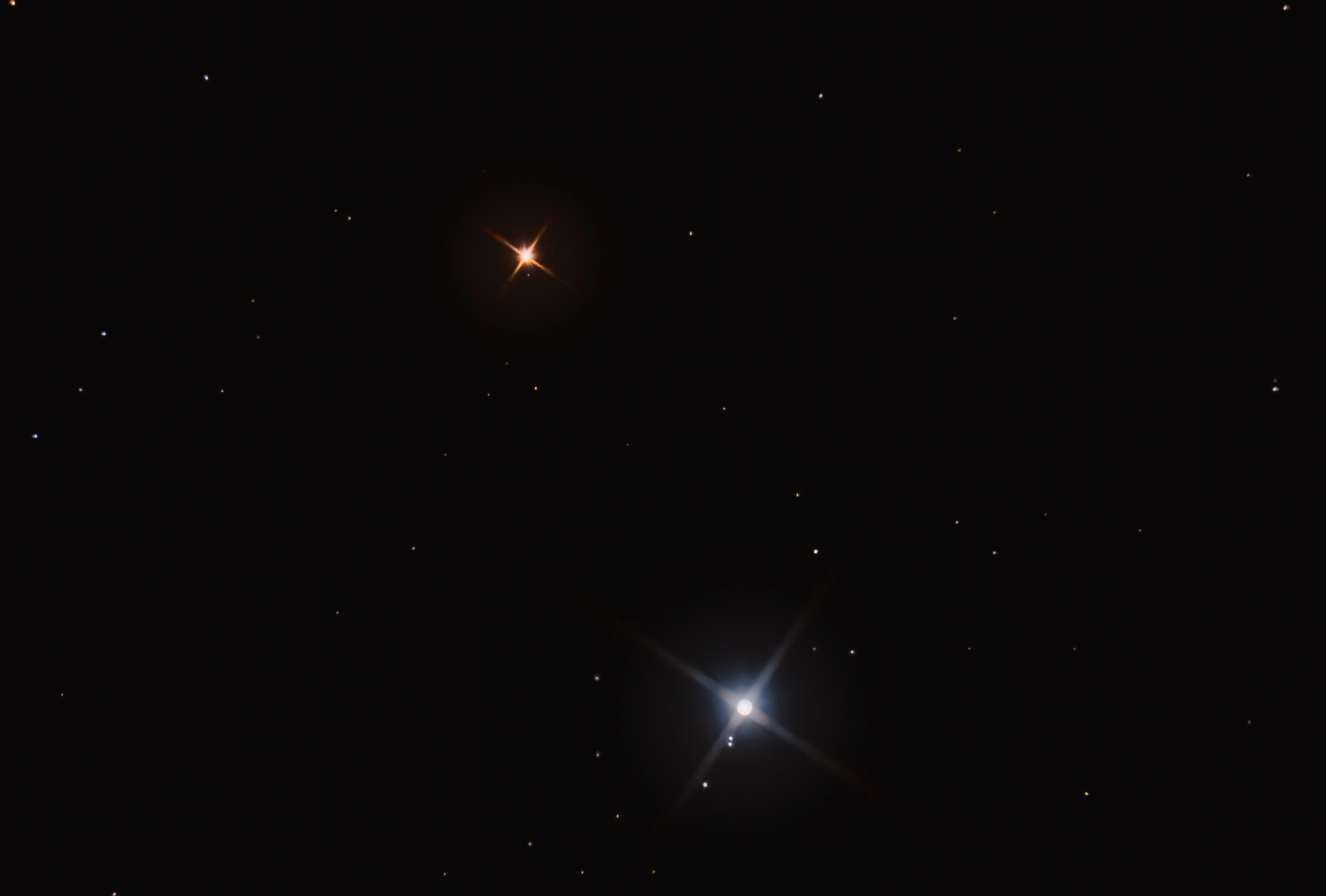
Venus–Jupiter conjunction on June 9: both planets fit in one binocular view

On the evening of June 9, Venus and Jupiter close to within roughly 1.5° of each other, about three full-moon widths, low in the western twilight. Venus, near magnitude −4, is the brighter of the two. Jupiter sits at about magnitude −2, dimmer but impossible to miss. Both planets fit comfortably inside a standard binocular field of view, and you don’t need anything more than your eyes to enjoy the pairing. The show runs for the better part of a week on either side of the closest approach, so one cloudy night won’t ruin it. ...

June 2, 2026 · 7 min · Andreas Ioannou
NASA Administrator Jared Isaacman views Blue Origin's Blue Moon Mark 1 lunar lander Endurance at the company's facility in Florida
Space news

NASA named it Moon Base, and the first lander launches this fall

On May 26, NASA Administrator Jared Isaacman stood at agency headquarters in Washington and gave the lunar program something it hasn’t had before: a name with “base” in it. The program is called Moon Base. Three uncrewed landers are targeting the lunar south pole before the end of 2026. Behind them, $440 million in contracts for two crewed rovers. Behind that, a phased timeline stretching into the 2030s for power grids, hopping drones, and eventually semi-permanent crew presence. ...

May 31, 2026 · 6 min · Andreas Ioannou
Saturn Atmosphere
Space science

JWST found methane on a Saturn-sized world with Earth-like temperatures

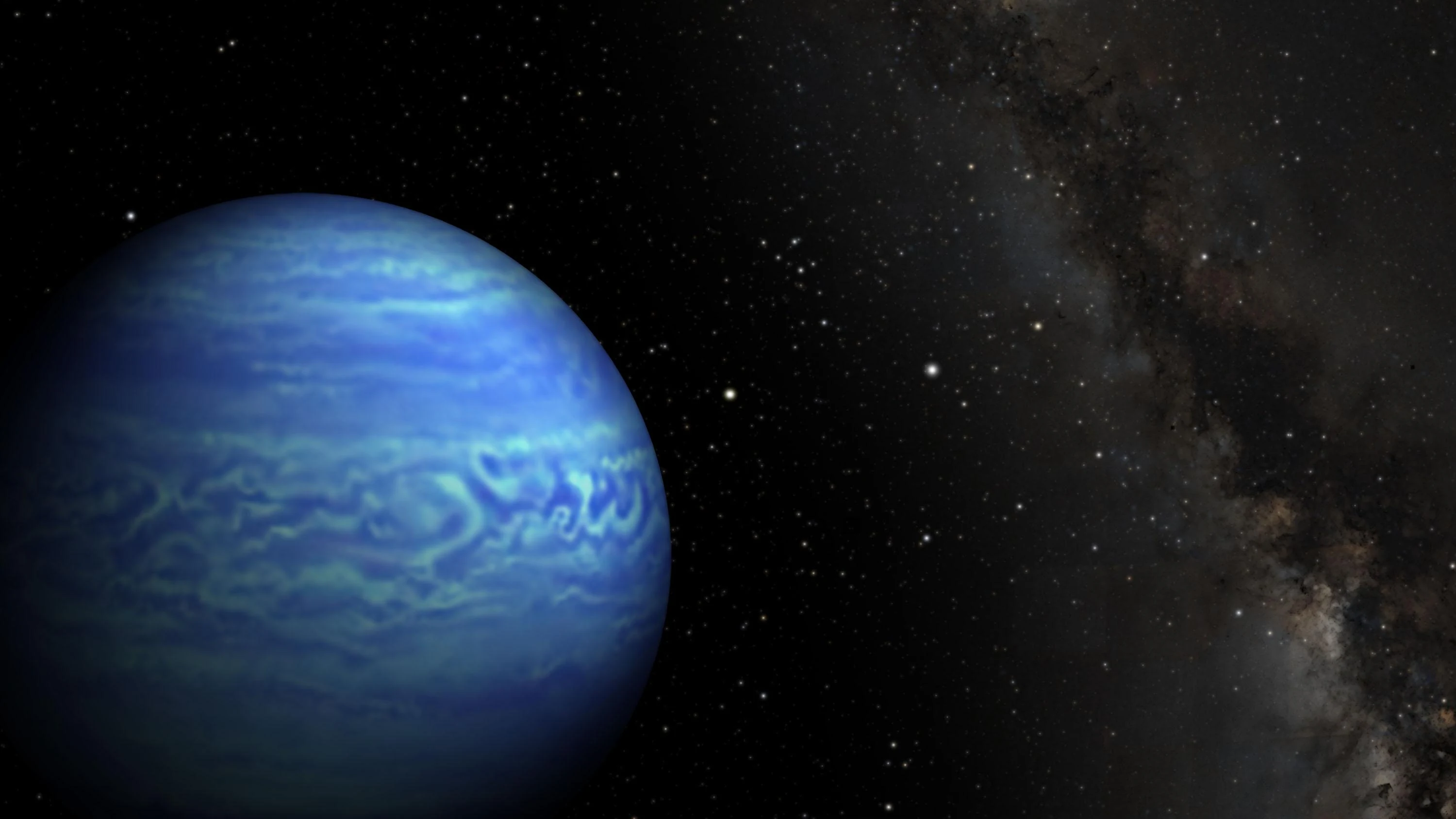
TOI-199b sits about 330 light-years from Earth, orbits a Sun-like star every 105 days, and holds an equilibrium temperature of roughly 352 K (79°C). That’s warm by terrestrial standards but downright mild for an exoplanet, where “hot Jupiter” atmospheres regularly top 1,500 K. A team led by Aaron Bello-Arufe at Penn State pointed JWST at a single transit of this world and pulled methane out of its atmosphere, making TOI-199b the first temperate giant exoplanet whose atmospheric composition has been directly measured. ...

May 30, 2026 · 6 min · Andreas Ioannou
Four planets aligned above the horizon in the predawn sky, photographed from Brisbane, Australia
Beginner stargazing

Five planets you can see without a telescope this June

All five naked-eye planets are out this June, split between the evening and morning sky. The headline act: Venus and Jupiter converge to within 1°38’ of each other on June 9, the two brightest objects in the night sky after the Moon, close enough to cover both with your thumb at arm’s length. You don’t need a telescope, a dark sky, or any experience. Here’s where and when to look. ...

May 28, 2026 · 6 min · Andreas Ioannou
Milky Way Untangled
Gear

How to choose a star tracker for Milky Way season

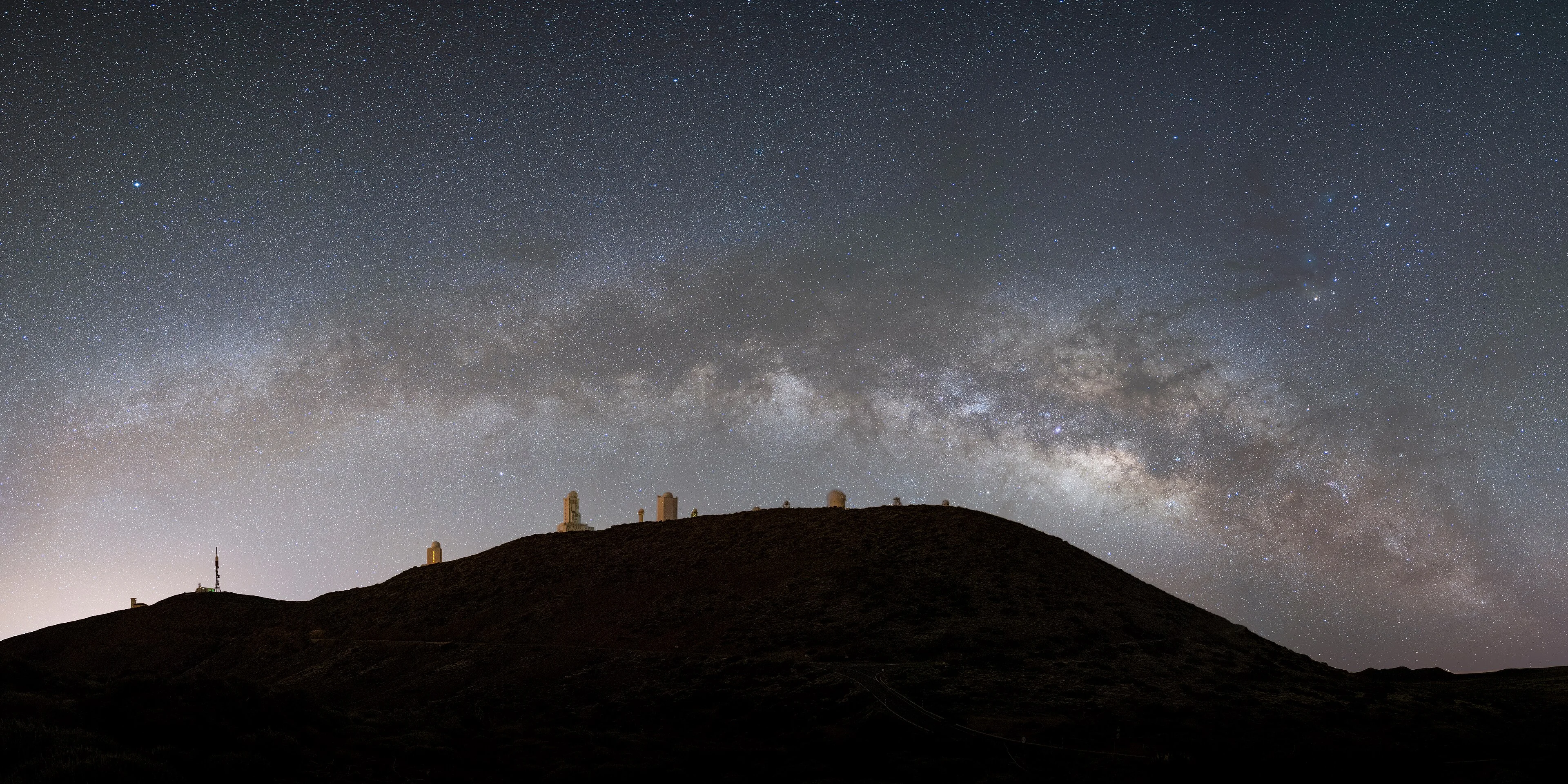
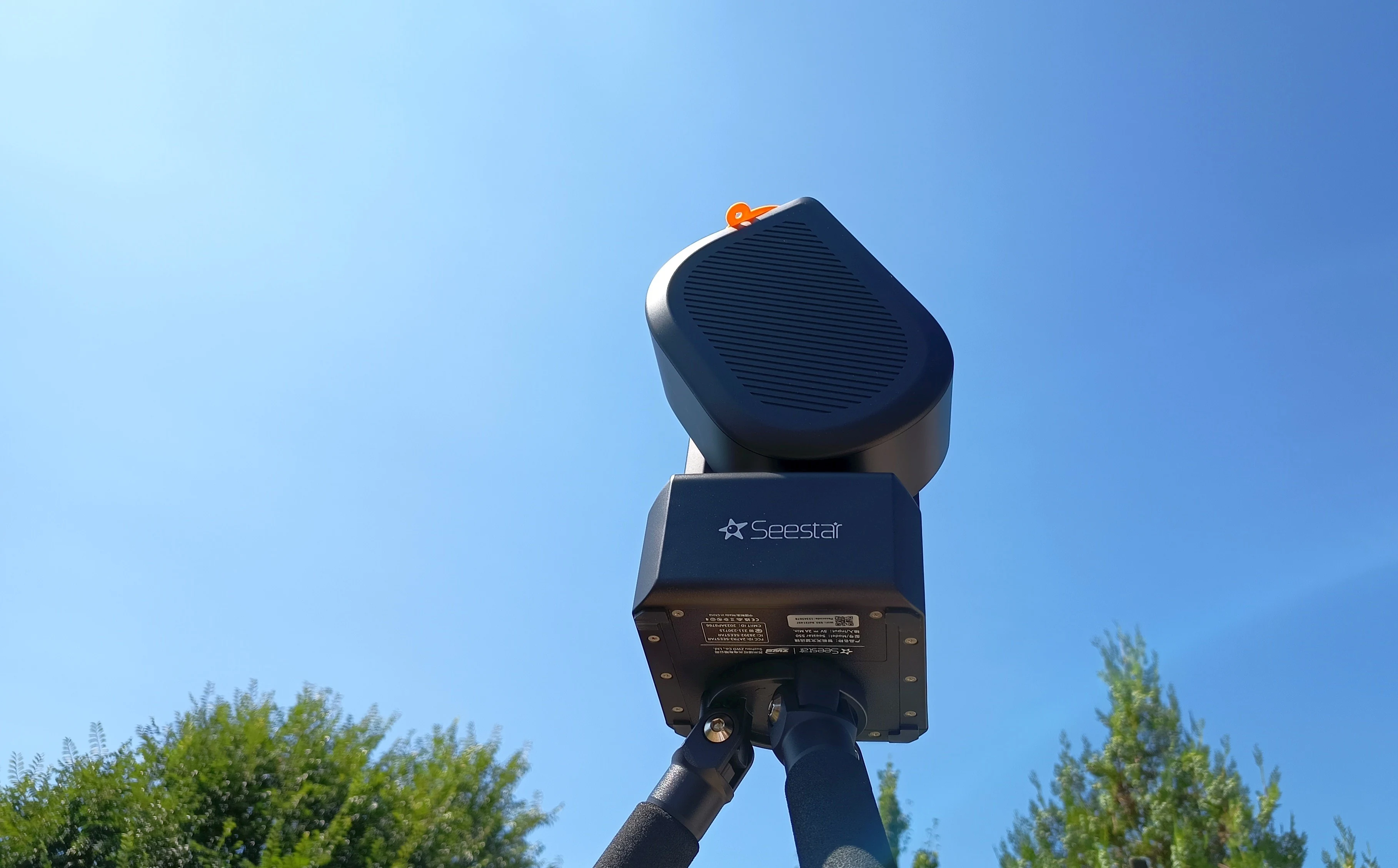
The Milky Way core is above the horizon from the northern hemisphere between roughly May and September. From my latitude in Nicosia (35°N), the galactic center tops out at about 26° above the southern horizon. Low enough that Troodos at 1,700 m is worth the midnight drive, but high enough to image from anywhere with a clear southern view. If you own a camera and a lens wider than 50 mm, a star tracker is the cheapest single upgrade that turns a noisy 15-second snapshot into a clean, deep wide-field frame. I’ve spent the past few months researching them before committing to one. Here’s what the specs mean and which three models are worth comparing. ...

May 26, 2026 · 7 min · Andreas Ioannou
The Telescopio Nazionale Galileo at Roque de los Muchachos Observatory on La Palma, with the Andromeda galaxy visible in the night sky
Astrotourism

La Palma: the island that wrote dark skies into law

La Palma has something no other island in the world can match: a national law — Ley 31/1988, the Ley del Cielo — that controls every streetlight, bans upward-pointing fixtures, and dims the grid after midnight. The law exists to protect the sky above the Roque de los Muchachos Observatory, where the 10.4 m Gran Telescopio Canarias sits at 2,396 m altitude. The side effect for visitors is an island with some of the darkest measured skies in Europe, over 300 clear nights per year, and 16 purpose-built astronomical viewpoints. ...

May 24, 2026 · 7 min · Andreas Ioannou
Image of Sun from NASA's Solar Dynamics Observatory
AI × astronomy

Machine learning is learning to hear inside the Sun

The Sun is a bell. Not a metaphor — the entire solar interior resonates with acoustic waves, trapped pressure oscillations that bounce between the surface and the core roughly every five minutes. The field that studies these oscillations is called helioseismology, and for three decades a network of ground stations has been recording every pulse. A team at the University of Sheffield and the National Solar Observatory just ran 30 years of those oscillations through three different machine learning architectures. All three converge on the same prediction: Solar Cycle 25 peaked in early 2025, and the next minimum falls around 2030–2031. The paper, published this month in Solar Physics, is one of the first to treat the Sun’s acoustic frequency shifts as a forecasting signal for the solar cycle — not just a diagnostic one. ...

May 21, 2026 · 6 min · Andreas Ioannou