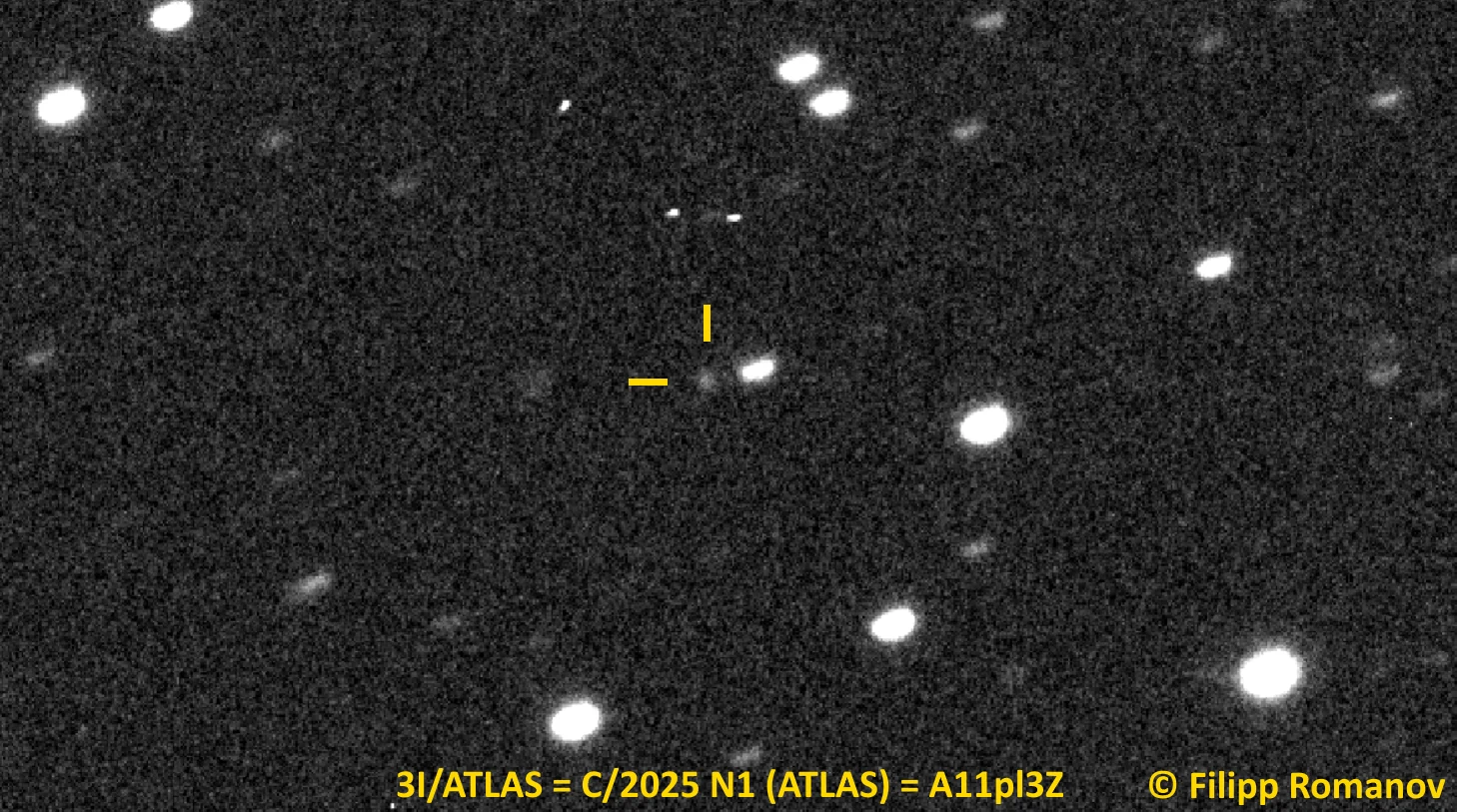
The faint interstellar comet 3I/ATLAS as a small diffuse smudge among background stars, imaged the day after its discovery.
Space science

3I/ATLAS: Webb's spectra point to an interstellar comet older than the Sun

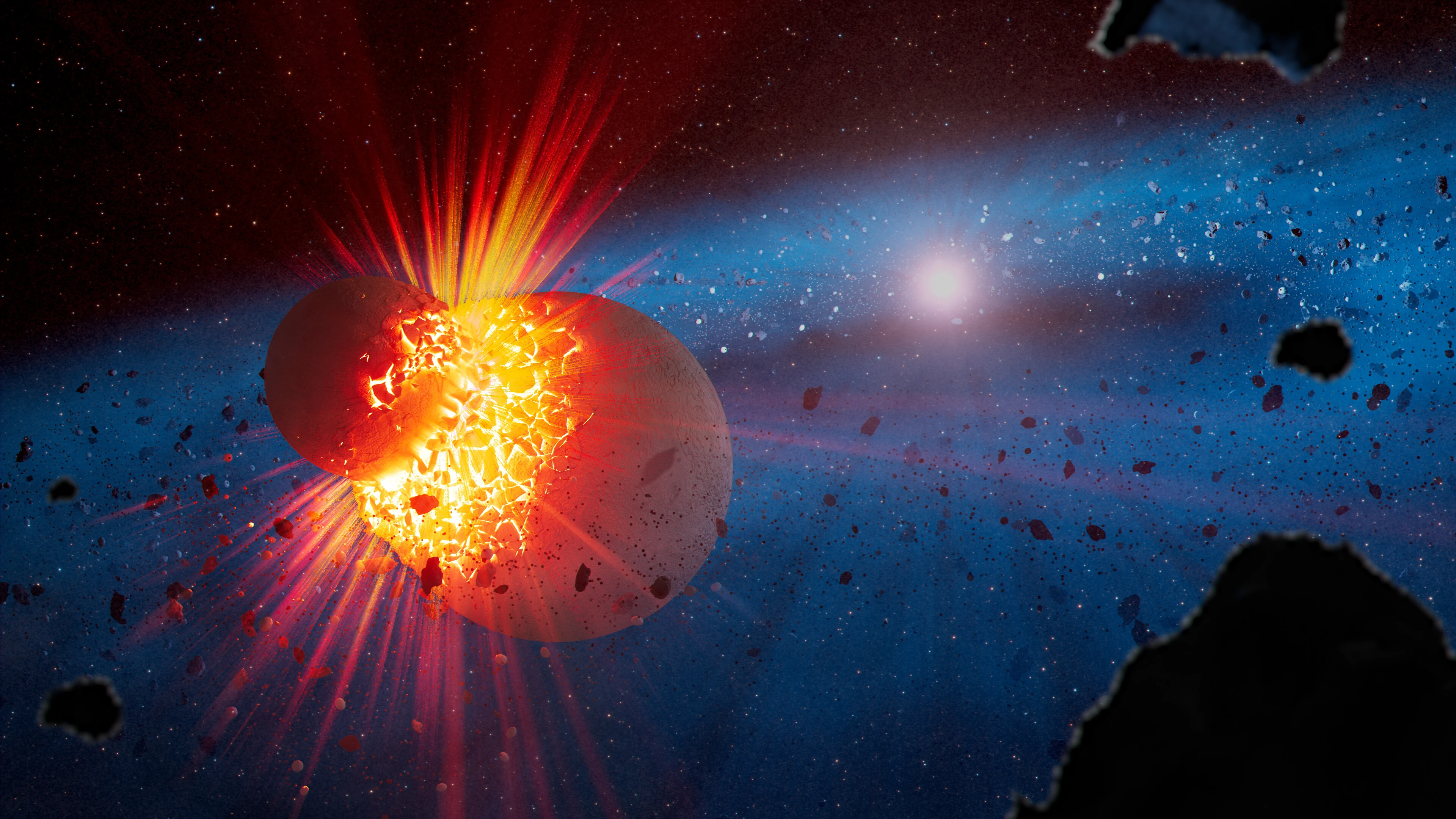
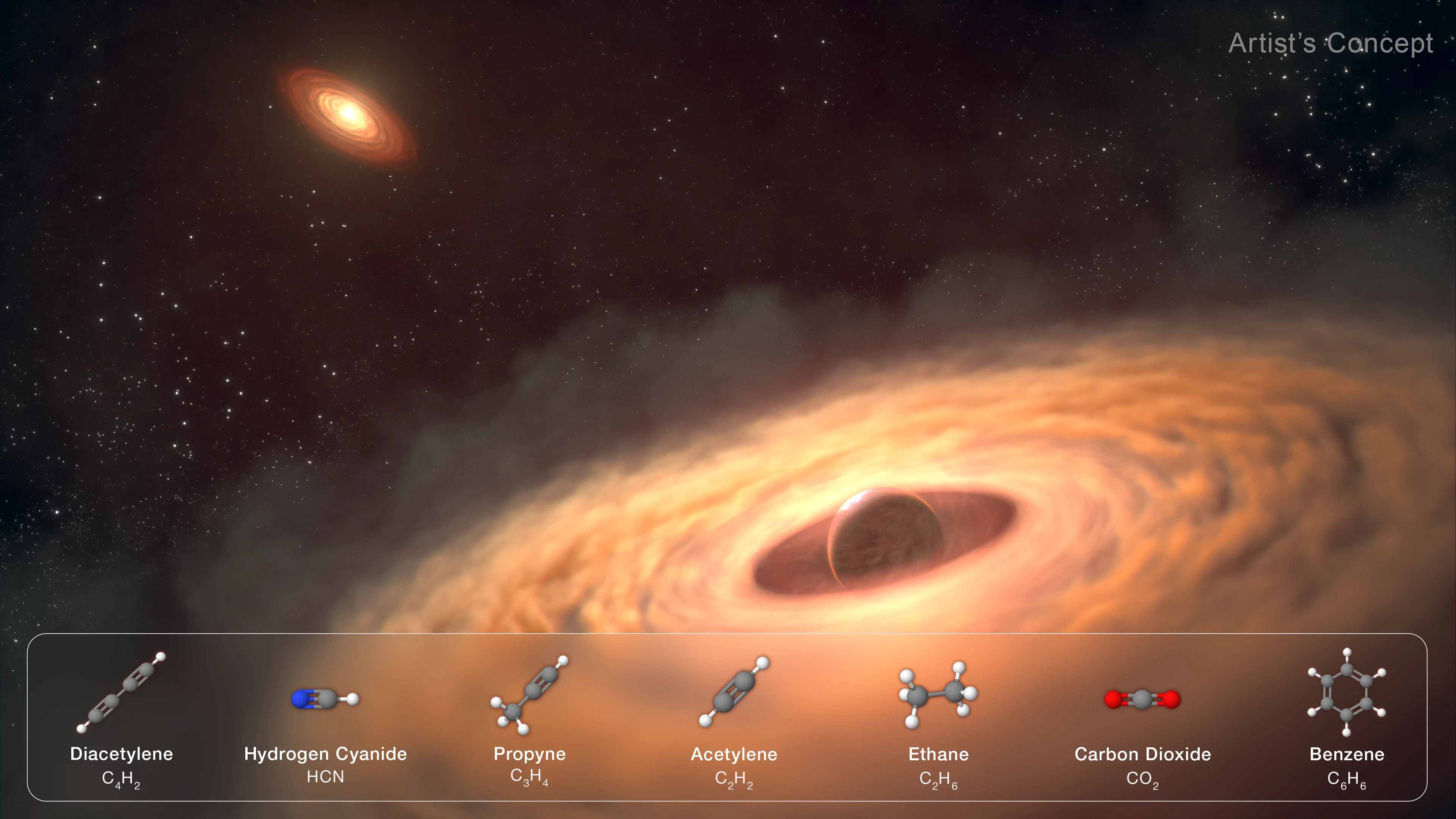
I’ve now watched three objects from other star systems pass through ours, and only one of them said anything worth hearing. The first, 1I/ʻOumuamua in 2017, was gone almost before we understood what it was: a fast, tumbling sliver that never grew a tail and left us arguing about its shape. The second, 2I/Borisov in 2019, was a proper comet with a coma and a tail, alien in origin, but the kind of object we already know how to study. The third is 3I/ATLAS, and it did what the other two wouldn’t. It stayed in front of the James Webb Space Telescope long enough for Webb to read its chemistry line by line, and the readout points to a comet that froze into existence before the Sun did. ...

July 11, 2026 · 7 min · Andreas Ioannou
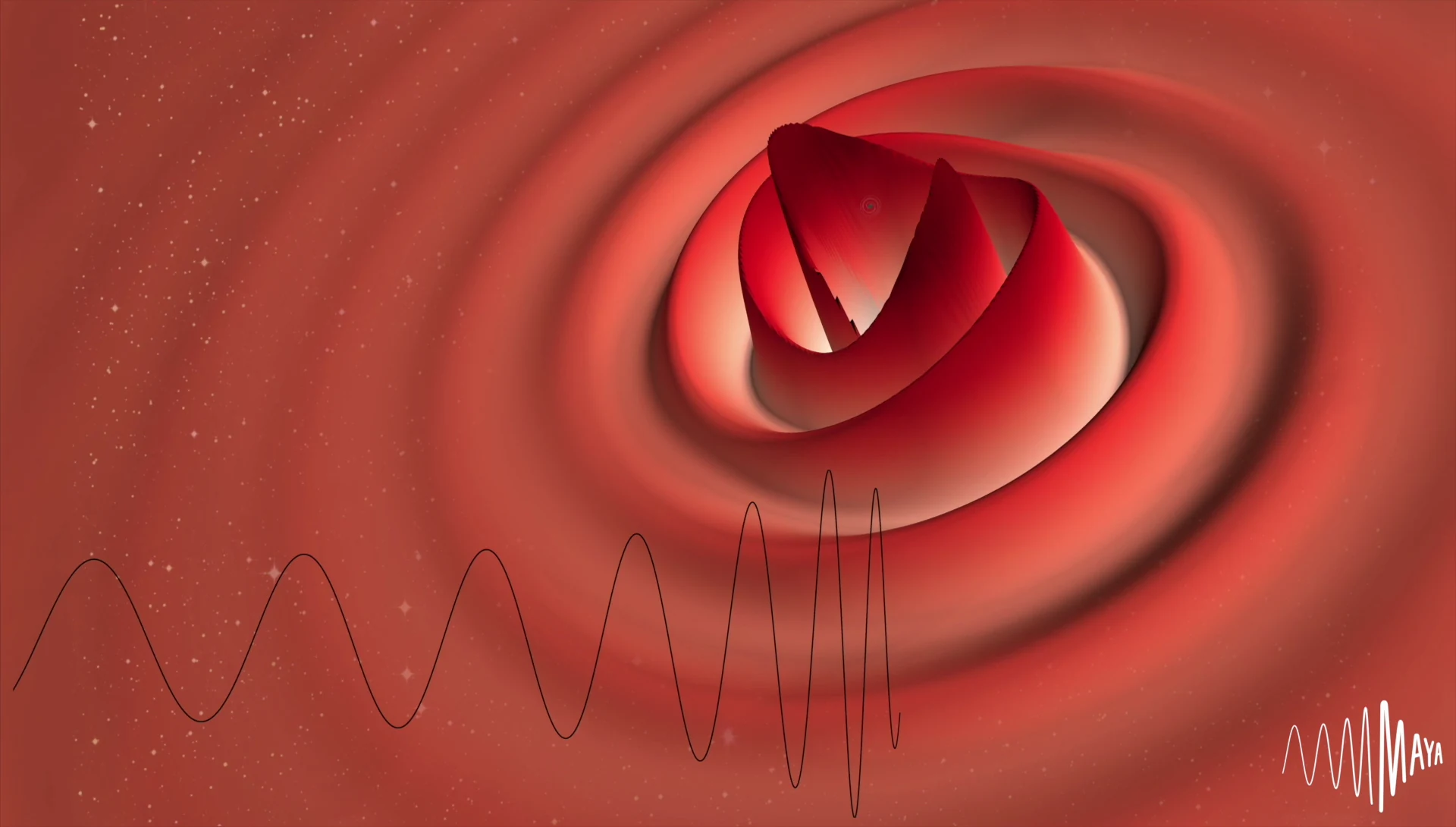
Numerical-relativity simulation showing two black holes spiralling together above a warped grid of spacetime, with the emitted gravitational waveform rippling outward
Space science

A decade ago LIGO caught one black hole collision. The catalog now holds 390.

On 14 September 2015, two detectors in Louisiana and Washington State registered a rising chirp that lasted about a fifth of a second: two black holes of roughly 36 and 29 solar masses spiralling together 1.3 billion light-years away, their final orbits stretching and squeezing the ground by less than the width of a proton. That single event, GW150914, opened gravitational-wave astronomy and won a Nobel Prize. On 26 May 2026, the LIGO–Virgo–KAGRA (LVK) collaboration released GWTC-5.0, the fifth edition of its Gravitational-Wave Transient Catalog. The running total of detected events since 2015 now stands at 390. A pile that size changes what the field can do. Gravitational-wave detection has crossed from hunting individual events into doing population statistics: this is a black-hole census now, and the population is starting to talk back. ...

July 7, 2026 · 7 min · Andreas Ioannou
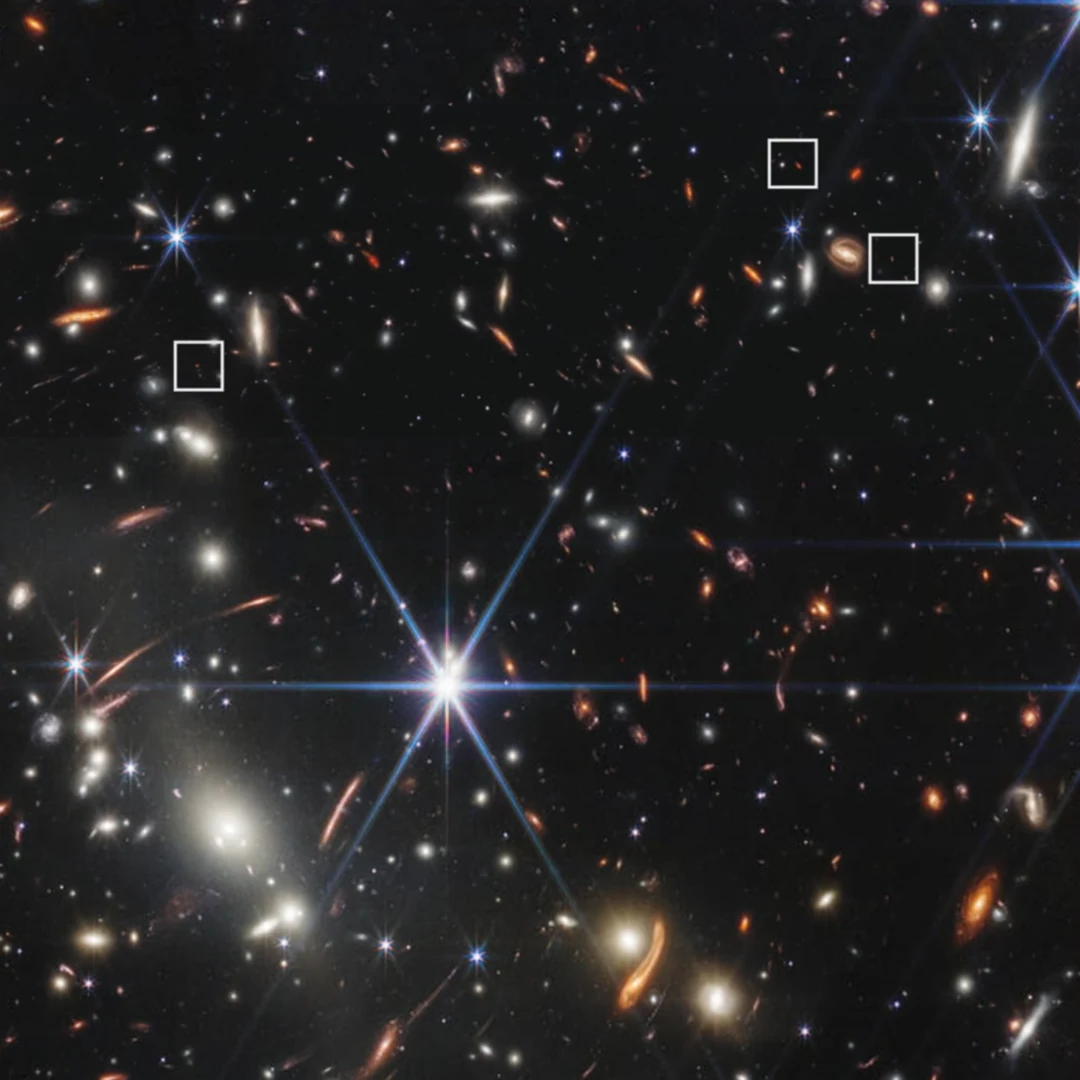
Webb deep field image of galaxy cluster SMACS 0723 showing thousands of orange and white galaxies with three highlighted early-universe objects
Space science

JWST's 'little red dots' aren't galaxies. They're black holes wrapped in gas.

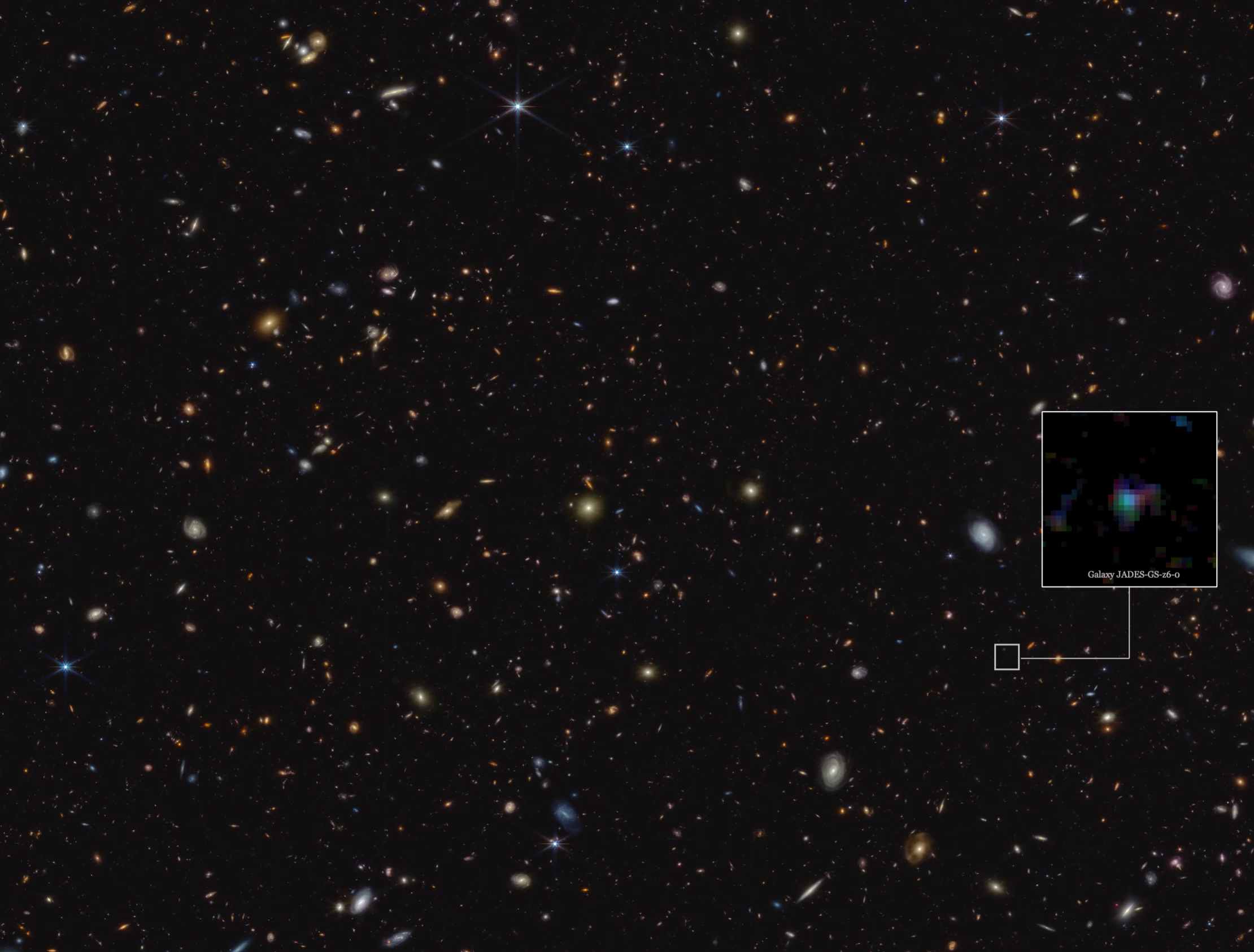
Since 2022, the James Webb Space Telescope has been turning up compact red objects in the deep universe that nobody predicted. More than 300 of these “little red dots” have been catalogued so far, all crammed into a narrow epoch between about 600 million and 1.6 billion years after the Big Bang. For four years, they’ve driven a sharp debate: are they impossibly massive galaxies, overgrown black holes, or something we haven’t modelled yet? A paper published on June 10 in The Astrophysical Journal by Vasily Kokorev and colleagues at the University of Texas at Austin delivers the strongest answer so far. The object they studied, GLIMPSE-17775, is a supermassive black hole cocooned in dense, hot gas — and the data suggest most little red dots are, too. ...

June 23, 2026 · 8 min · Andreas Ioannou
Infrared image of the Vela Molecular Ridge captured by NASA's SPHEREx, showing glowing interstellar dust and gas
Space science

Astronomers detected a true sugar in interstellar space for the first time

A Spanish-led team has detected erythrulose, a four-carbon ketose and the first true monosaccharide ever confirmed in interstellar space, inside a molecular cloud near the Galactic Center roughly 26,000 light-years from Earth. The preprint, posted to arXiv on June 2, draws a line from a specific interstellar molecule to the chemistry of TNA (Threose Nucleic Acid), a simpler genetic polymer that may have preceded RNA on early Earth. Not the first “sugar in space” headline, but the first actual sugar You may remember headlines from 2012 about sugar molecules found near a young star. Those referred to glycolaldehyde, a two-carbon hydroxyaldehyde with the formula C₂H₄O₂. It’s the simplest molecule that participates in sugar chemistry, and it can react with other molecules to eventually form ribose. But glycolaldehyde isn’t a sugar. It has two carbon atoms; the smallest molecule that counts as a monosaccharide needs at least three. ...

June 11, 2026 · 6 min · Andreas Ioannou
Saturn Atmosphere
Space science

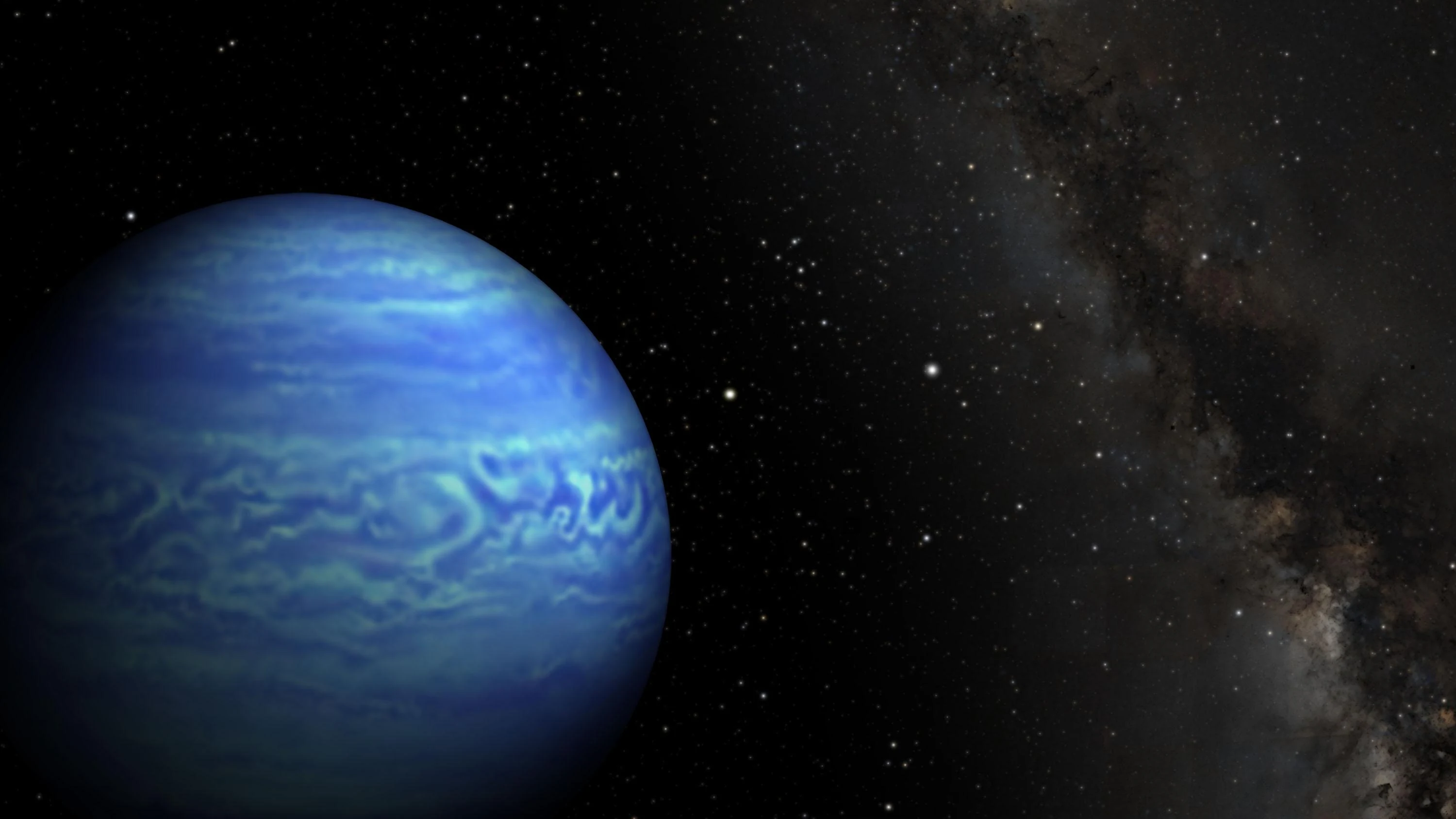
JWST found methane on a Saturn-sized world with Earth-like temperatures

TOI-199b sits about 330 light-years from Earth, orbits a Sun-like star every 105 days, and holds an equilibrium temperature of roughly 352 K (79°C). That’s warm by terrestrial standards but downright mild for an exoplanet, where “hot Jupiter” atmospheres regularly top 1,500 K. A team led by Aaron Bello-Arufe at Penn State pointed JWST at a single transit of this world and pulled methane out of its atmosphere, making TOI-199b the first temperate giant exoplanet whose atmospheric composition has been directly measured. ...

May 30, 2026 · 6 min · Andreas Ioannou
Thousands of galaxies in the Hubble Frontier Fields parallel observation near Abell 2744, showing the deep universe in the constellation Sculptor
Space science

JWST's largest survey mapped the cosmic web across 13 billion years

When you look at galaxies through a telescope — scattered across the field like grains on dark cloth — it’s tempting to think they’re placed at random. They aren’t. Galaxies live on a structure so vast that the only metaphor that survives at scale is a web: long filaments of matter, hundreds of millions of light-years across, connecting dense knots of galaxy clusters and skirting nearly empty voids. This month, the largest survey JWST has carried out gave us the clearest map of that web to date, tracing it back to a time when the universe was barely a billion years old. ...

May 17, 2026 · 7 min · Andreas Ioannou
The Cepheid variable star RS Puppis at the centre of a thick reflection nebula, photographed by Hubble
Space science

The cosmic distance ladder: how astronomers measure distances from the Moon to the edge of the universe

When I tell people the Andromeda galaxy is 2.5 million light-years away, the next question is almost always: how do you know? It’s a fair question. We’ve never sent anything past the outer edge of the Kuiper belt. The fastest probe humanity has ever launched would still take roughly 70,000 years to reach the nearest star. So how does anyone get from “I’m staring at a smudge above the rooftops of Nicosia” to “that smudge is around 24 quintillion kilometres away”? ...

May 3, 2026 · 9 min · Andreas Ioannou