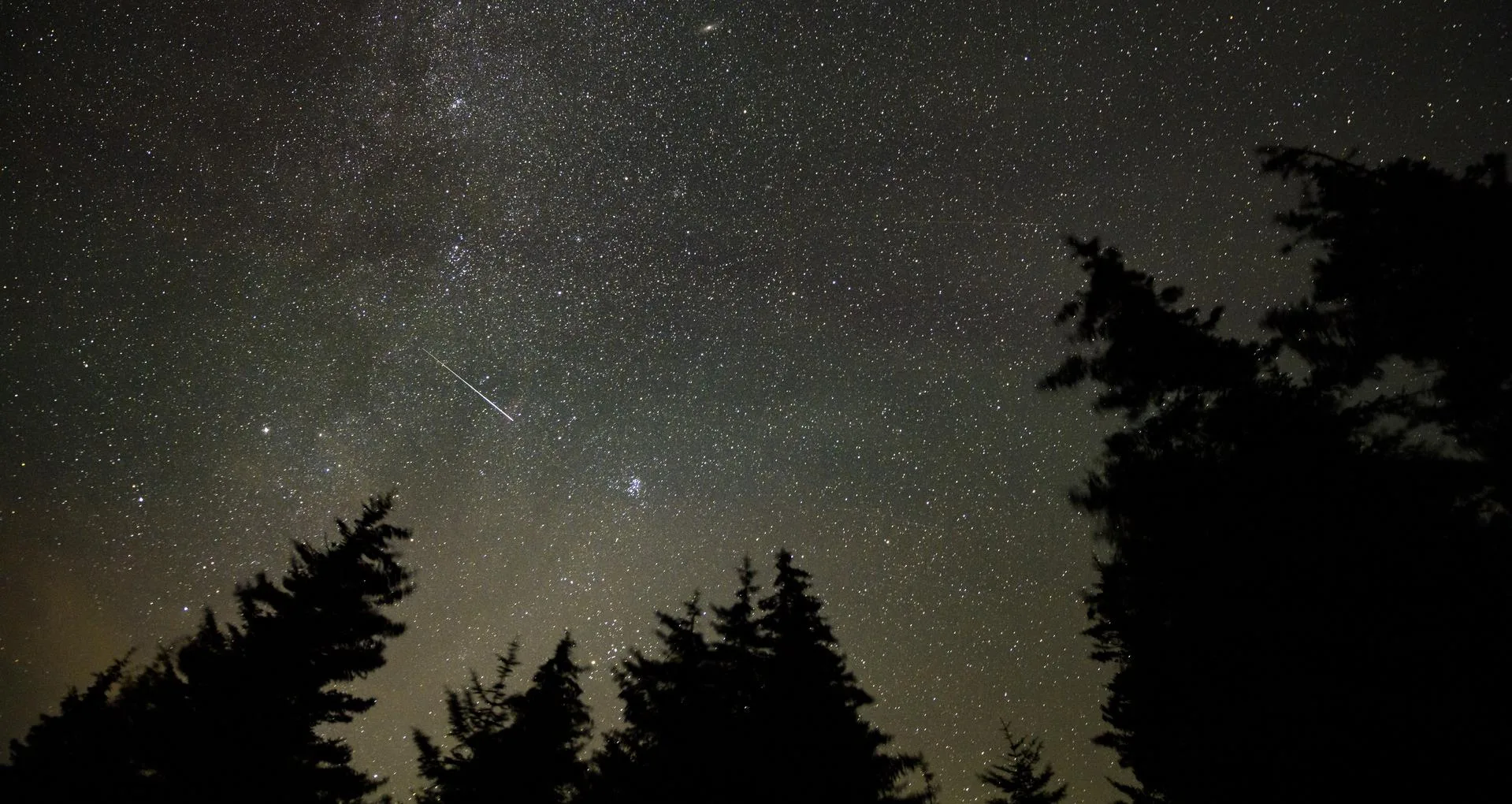
The Eta Aquariids peaked at 03:51 UTC on May 5, but this shower has a broad maximum — activity tonight and tomorrow morning (May 6–7) will be nearly as strong as peak night. The problem isn’t timing. It’s the moon: an 84%-illuminated waning gibbous will sit above the horizon during the entire pre-dawn window when the radiant is highest. That cuts your visible count roughly in half compared to a moonless year.
Here’s what you can realistically expect, and how to squeeze the most out of a moon-washed sky.
The numbers
- ZHR (zenithal hourly rate): ~50 meteors/hour under ideal conditions — radiant at zenith, no moon, limiting magnitude 6.5.
- Realistic northern-hemisphere rate (35°N, moonlit): 5–10 visible meteors/hour. The radiant never climbs above ~30° altitude before dawn from mid-northern latitudes, and the moon wipes out the faint ones.
- Southern hemisphere advantage: observers below the equator get the radiant higher in their sky before dawn, pushing rates toward 20–30/hour even with moonlight.
- Entry speed: 66 km/s — among the fastest of any annual shower. Eta Aquariids produce long, bright trains that persist for 1–2 seconds after the meteor fades.
- Active period: April 19 through May 28 (the extended activity window is why the peak plateau lasts several days).
When to go out
The radiant — in Aquarius, near the “Water Jar” asterism — doesn’t clear the horizon until roughly 02:30–03:00 local time from latitudes near 35°N. Before that, you’ll see zero Eta Aquariids no matter how dark your site is.
The practical viewing window:
| Time (EEST / UTC+3) | Time (UTC) | What’s happening |
|---|---|---|
| 03:00 | 00:00 | Radiant rises. A few earthgrazers possible — long, low-angle streaks along the horizon. |
| 03:30–04:30 | 00:30–01:30 | Radiant at ~15–25° altitude. Best rate/hour starts here. |
| 04:30–05:15 | 01:30–02:15 | Radiant near highest point before dawn washes out. Peak window. |
| 05:15+ | 02:15+ | Astronomical twilight begins from Cyprus. Rates drop fast as sky brightens. |
You get about 90 minutes of usable dark-sky time between radiant-high and dawn. That’s it.
Dealing with the moon
The waning gibbous rises before midnight and hangs in the southern sky all morning. You can’t wait it out — it won’t set before sunrise on any of the peak nights (May 5–7). Last quarter falls on May 9, so conditions improve slightly each night as the moon wanes and rises later, but the peak will be over by then.
Tactics that actually help:
- Face away from the moon. Point your gaze northeast to north — away from both the moon and the radiant itself. Meteors appear in all directions; you don’t need to stare at the radiant. Looking away from the moon keeps your pupils dilated and your contrast high.
- Use terrain or a building to block the moon. A hillside to the south, a wall, a parasol angled behind your recliner — anything that keeps direct moonlight out of your peripheral vision makes a measurable difference.
- Skip the binoculars. Meteor showers are a naked-eye activity. Binoculars narrow your field of view, and you can’t track a 66 km/s streak across the sky.
- Give your eyes 20+ minutes. Dark adaptation still matters under moonlight. Your rod cells need time to reach maximum sensitivity, even if the moon is reducing your limiting magnitude from ~6.5 to maybe 4.5.
What you’ll see
Eta Aquariid meteors are fast. At 66 km/s, they’re the second-fastest annual shower (after the November Leonids at 71 km/s). That speed means:
- Bright, fast streaks — blink and you miss individual ones.
- Persistent trains: roughly 20–30% of Eta Aquariids leave a glowing ionization trail that lingers for 1–3 seconds. Under moonlight, only the brighter trains will be visible.
- Yellowish to white colour for most, with occasional orange fireballs.
The debris itself comes from Comet 1P/Halley. Every May, Earth passes through the dust trail that Halley left behind on its previous orbits — the same comet produces the Orionids in October from a different part of the stream. The particles are old: most entered the stream centuries or millennia ago. Halley last passed perihelion in 1986 and won’t return until 2061.
From my balcony in Nicosia
I won’t pretend Bortle 7 suburban skies and an 84% moon make for a productive meteor watch. From the balcony, I’m realistically going to see 2–4 per hour — maybe one bright one with a visible train if I’m patient for the full 90-minute window.
If I were driving up to Troodos tonight (something I considered and decided against — it’s a weeknight and the moon kills the advantage of darker skies more than most people expect), I’d gain maybe 1–2 extra meteors per hour from the lower Bortle class. The main gain at a dark site would be seeing the fainter persistent trains, which get swallowed by light pollution at lower elevations.
My plan: set an alarm for 03:15 EEST, step onto the east-facing balcony with a coffee, face northeast with the building blocking the moon to the south, and give it 45 minutes. If I catch 3–4 Eta Aquariids with visible trains, I’ll call it a good session. The real reward from this shower isn’t the count — it’s the speed. Nothing else this spring moves that fast across the sky.
Is it worth going out?
Be honest with yourself about expectations. If you need 30+ meteors per hour to justify an alarm at 03:00, this isn’t your shower this year — wait for the Perseids in August, which coincide with a new moon in 2026 (the best Perseid conditions in years).
But if you enjoy the quiet of pre-dawn observing and find it satisfying to catch a handful of fast, bright streaks from Halley’s ancient debris — yes, go out. Even 5–8 genuine Eta Aquariids in an hour is a qualitatively different experience from, say, 5 sporadic meteors. The speed and train persistence are distinctive. You’ll know them when you see them.
Tomorrow morning (May 7) is still viable. Activity drops slowly after the broad peak, and the moon will have waned to about 78% — marginally better. The real improvement comes too late: by May 9–10, rates will have dropped below background-sporadic levels.
Quick reference
- What: Eta Aquariid meteor shower (parent body: Comet 1P/Halley)
- Peak: 03:51 UTC, May 5 — broad maximum extends May 4–7
- Best time to watch: 03:30–05:15 local time (pre-dawn)
- Moon interference: severe (84% waning gibbous, above horizon entire observing window)
- Realistic rate (35°N): 5–10 visible/hour; 2–4/hour from suburban sites
- Where to look: northeast to north; face away from the moon
- Gear needed: none — naked-eye only
- Next moonless Eta Aquariids: 2027 (new moon falls on May 7)