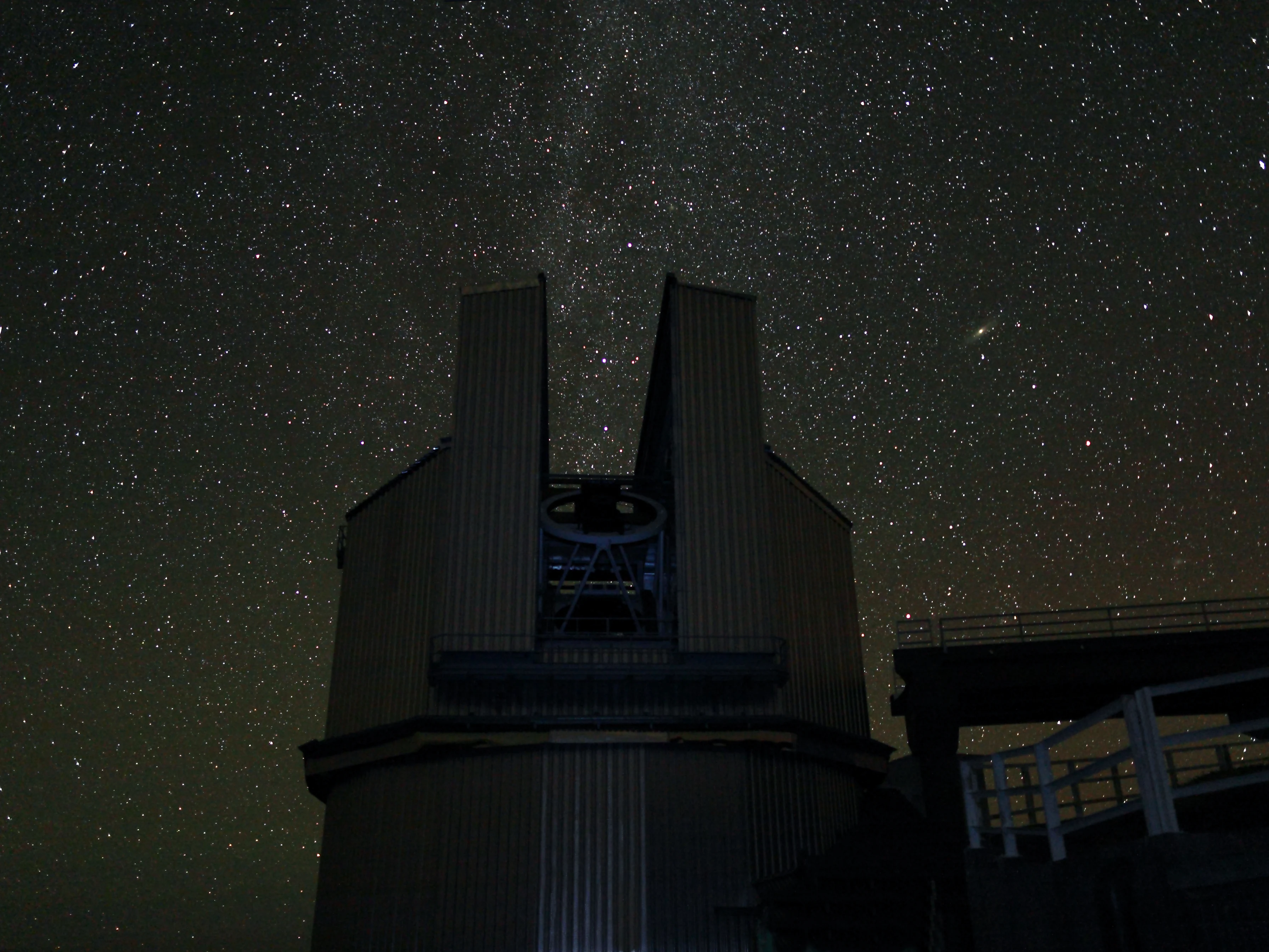
La Palma has something no other island in the world can match: a national law — Ley 31/1988, the Ley del Cielo — that controls every streetlight, bans upward-pointing fixtures, and dims the grid after midnight. The law exists to protect the sky above the Roque de los Muchachos Observatory, where the 10.4 m Gran Telescopio Canarias sits at 2,396 m altitude. The side effect for visitors is an island with some of the darkest measured skies in Europe, over 300 clear nights per year, and 16 purpose-built astronomical viewpoints.
In 2012, the Starlight Foundation designated La Palma as the world’s first Starlight Reserve — a designation that means the island’s sky quality is actively maintained by infrastructure policy and backed by law. If you’re building a shortlist for a summer stargazing trip, here’s my case for putting it at the top.
The Sky Law
Spain passed the Ley del Cielo in 1988, making the Canary Islands the first place in the world to regulate light pollution at a national level. The rules cover La Palma and the north of Tenerife, but La Palma — smaller, less developed, more committed — is where the law hits hardest.
The requirements are specific:
- All streetlights must direct 100% of output downward. Zero upper-light-output ratio. Full-cutoff housings only.
- Ornamental and advertising lighting shuts off at midnight.
- Street lighting dims by 50% between midnight and dawn.
- The law caps maximum light flux on the island. Most of Europe only regulates minimum illumination. La Palma also regulates the ceiling.
Night-sky brightness on La Palma has held stable since 2000, while neighboring Gran Canaria and Tenerife kept getting brighter. For visual observers, that stability translates to conditions where the zodiacal band, the gegenschein, and M33 are naked-eye targets at the high-altitude sites.
I observe from Troodos in Cyprus when I want dark skies. The mountaintops there measure around SQM 21.3-21.4 — the dark end of Bortle 4, touching class 3 on the cleanest nights. That’s good by Mediterranean standards. La Palma operates in a different category, because the darkness isn’t just geography. It’s enforced.
The mirador network
La Palma maintains 16 miradores astronomicos — dedicated astronomical viewpoints with parking, interpretive panels showing the local sky, and minimal ambient light. They’re spread across the island at different altitudes and orientations, so you can pick a site based on what you’re observing.
Four worth knowing:
Llano del Jable (1,200 m, east side). A volcanic plateau that often sits above the mar de nubes, the sea of clouds that blankets La Palma’s lower elevations. When the trade-wind inversion cooperates, you’re above the cloud deck with clear sky in every direction and zero light bleed from the coast. Open, flat terrain with volcanic gravel — easy to set up a telescope or tracker without worrying about soft ground.
Mirador del Time (550 m, west side). Lower altitude, but it faces the open Atlantic with nothing between you and the horizon. The western sky is completely free of light domes, which makes it strong for targets setting after midnight. The panoramic view over the Aridane Valley and the caldera rim from up here is worth the drive even in daylight.
Roque de los Muchachos area (~2,000-2,400 m). The highest ground on the island, right at the observatory complex. Altitude puts you above most atmospheric water vapor, and seeing is regularly sub-arcsecond. Nighttime access near the domes themselves is restricted to protect operations, but the road up to around 2,000 m is open for amateur use. Expect temperatures below 5 C after dark, even in July.
Viewpoints around the Caldera de Taburiente. The national park at the island’s center is ringed by miradores at various elevations. The caldera walls block light from the east coast, creating a natural shield. The trade-off: dense pine forest limits horizon access in some spots, so scout during the day if you’re planning to set up a widefield rig.
Inside the GTC
The Roque de los Muchachos Observatory runs guided daytime tours that take you inside the dome of the Gran Telescopio Canarias — the world’s largest optical-infrared telescope, with a segmented primary of 36 hexagonal mirrors spanning 10.4 m. You also see the MAGIC gamma-ray telescopes and, depending on availability, the Cherenkov Telescope Array prototype.
Tours run mornings only, by reservation. Typical schedule: Thursdays and Sundays through Ad Astra La Palma, Tuesdays and Fridays through La Palma Transfer. Book a month ahead — slots fill fast. Cost: 20 EUR for adults, 15 EUR for children 6-11 and island residents.
One access note for 2026: slope stabilization work on the LP-4 road has closed the eastern approach from Santa Cruz on weekdays. Take the northern route via Garafia instead.
Standing inside the GTC dome drives home what professional observational astronomy looks like at the hardware level. Each of those 36 mirror segments is actively aligned to nanometre precision. The structure weighs around 400 tonnes and rotates on a film of oil thinner than a human hair. You don’t absorb that from a YouTube video.
When to go
La Palma’s sky works year-round, but the best window runs May through October. The trade-wind inversion layer that creates the cloud sea below 1,000 m also traps moisture at low altitude, leaving the mountaintops dry and transparent. July through September give the most reliably clear nights, and from 28.7 N the Milky Way core transits high overhead — Sagittarius clears 45 degrees altitude easily.
Winter brings occasional Atlantic storms, but even then La Palma averages more clear nights per month than most mainland European sites. The colder air can actually improve seeing, so astrophotographers chasing tight star profiles might prefer a January trip.
One date to flag: the August 12, 2026 total solar eclipse. The path of totality crosses northern Spain — Asturias, Galicia, Aragon — about 2,000 km northeast of the Canaries. La Palma will see a partial eclipse around 60-70% coverage, but the island is a natural extension for anyone flying to Spain to chase totality. Spend a few nights under enforced dark skies before or after the eclipse. The Perseids peak the same night, and with a new moon the meteor conditions from La Palma that week will be about as good as they get anywhere in Europe.
Getting there and staying
La Palma’s airport (SPC) handles direct flights from Madrid on Iberia. From the rest of Europe, the most common routing goes through Tenerife North (TFN) or Gran Canaria (LPA), then a 30-minute inter-island flight on Binter Canarias. Jet2 is adding direct UK routes for the 2026 season.
Rent a car on the island. The miradores are scattered across mountain switchbacks, and public transport stops well before dark. Budget guesthouses run 50-80 EUR per night. A handful of “astro-lodges” in the highlands provide telescopes and private observing platforms for 100-150 EUR per night — worth it if you don’t want to haul gear.
Stay on the west side: Los Llanos de Aridane, Tazacorte, or Tijarafe. You’ll be closer to the darkest viewpoints and the observatory road. Santa Cruz de La Palma on the east coast has more restaurants and services but adds 45 minutes of mountain driving to most stargazing sites.
What I’d pack
I observe with a Seestar S50 from my balcony in Nicosia. If I were going to La Palma, I’d leave the smart scope at home. Under genuinely dark skies, visual observing with 10x50 binoculars delivers more than any short-focal-length EAA rig can. The zodiacal light, the gegenschein, the star clouds in Sagittarius — these are naked-eye and binocular targets that you can’t replicate from a city apartment no matter how long you stack.
A red-light headlamp, a warm layer for altitude, and a star-chart app in airplane mode cover the basics. If you’re an astrophotographer, pack a widefield star tracker (Star Adventurer, iOptron SkyGuider) and a fast lens. You’ll get single-exposure Milky Way shots that would need an hour of integration from a Bortle 7 rooftop.
The trip I’m building
La Palma protects its sky by law, and the data shows it works. Legal enforcement, high altitude, oceanic isolation, and a reliable inversion layer give the island conditions that most stargazing destinations can only approximate. The observatory access is a bonus — standing inside the GTC dome connects the dark sky to the science it makes possible.
I haven’t made the trip yet. But I’m planning mine around the August 2026 eclipse window: a few nights on La Palma’s west side for Perseid-season dark skies, then a flight to Asturias for totality on August 12. If you’re building a similar itinerary, book the observatory tour early. The eclipse will bring astronomers from across Europe, and GTC slots fill weeks in advance.