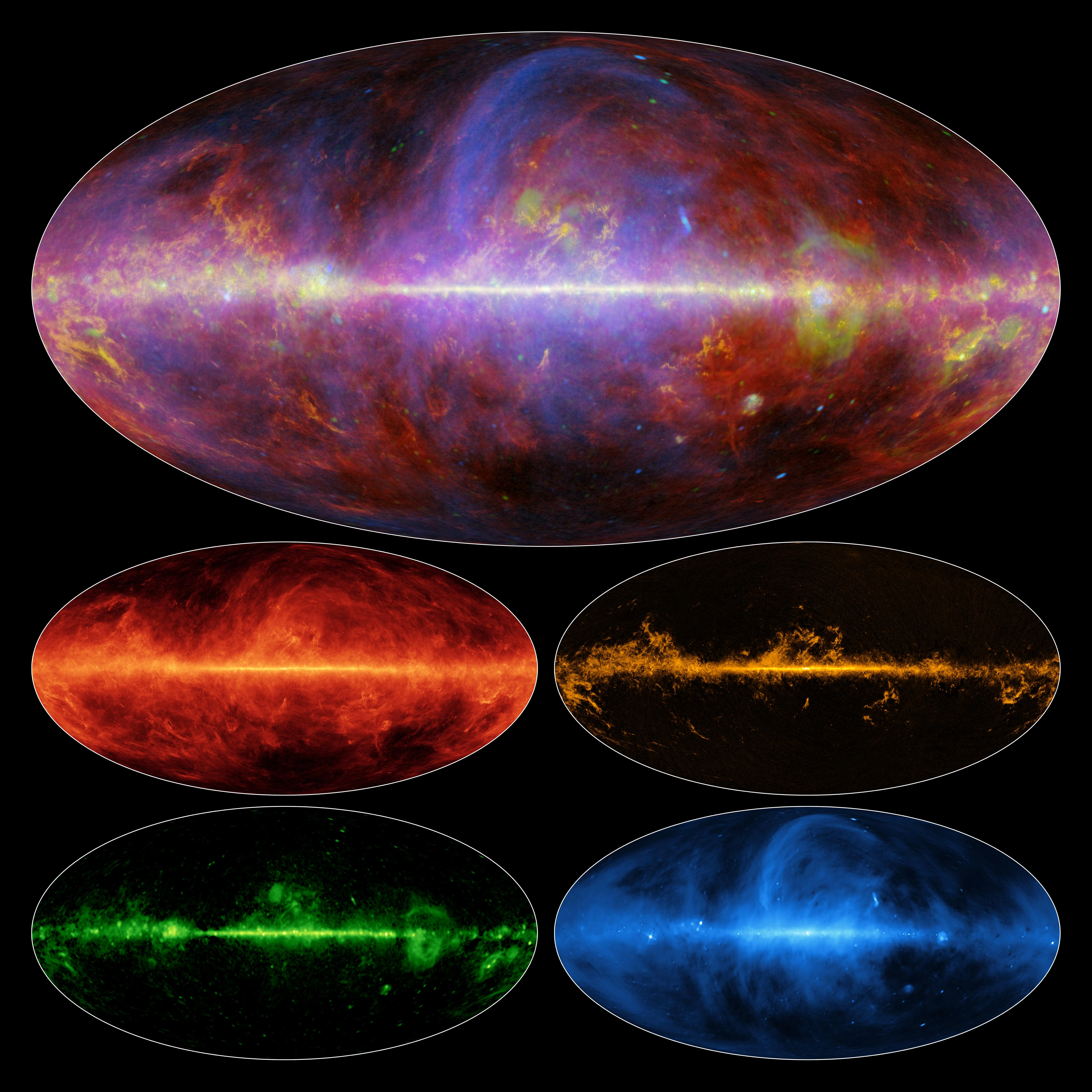
The Milky Way core is above the horizon from the northern hemisphere between roughly May and September. From my latitude in Nicosia (35°N), the galactic center tops out at about 26° above the southern horizon. Low enough that Troodos at 1,700 m is worth the midnight drive, but high enough to image from anywhere with a clear southern view.
If you own a camera and a lens wider than 50 mm, a star tracker is the cheapest single upgrade that turns a noisy 15-second snapshot into a clean, deep wide-field frame. I’ve spent the past few months researching them before committing to one. Here’s what the specs mean and which three models are worth comparing.
What a star tracker does
Earth rotates once every 23 hours 56 minutes. A star tracker is a small motorized platform that turns your camera at the same rate, cancelling the rotation so stars stay sharp during long exposures.
Without one, stars trail after a few seconds. The rough limit: 500 divided by your focal length in millimetres. That gives you about 20 seconds at 24 mm, and about 3.7 seconds at 135 mm.
With a tracker, you can push individual exposures to 2–5 minutes at the same focal length. More photons per frame means less noise, and real nebula structure starts appearing in the data. The Lagoon, the North America Nebula, the Rho Ophiuchi complex: they all show colour and dust lanes that are invisible in short fixed-tripod frames.
Three specs that decide your tracker
Payload capacity
How much weight can the tracker carry while still tracking accurately? Camera body, lens, and sometimes a ball head or small counterweight all add up. A mirrorless body with a 135 mm lens comes in around 1.5–2 kg. A small refractor pushes that to 3–4 kg.
Treat manufacturer-rated payloads as optimistic ceilings. A tracker rated at 5 kg will track more smoothly at 3 kg.
Portability
If you drive to dark sites (a 90-minute round trip to Troodos from Nicosia, for me), weight compounds fast. A sub-500 g tracker head that fits in a jacket pocket is a different proposition from a 1.5 kg mount head that needs a counterweight shaft and a dedicated case.
Tracking accuracy
Measured in periodic error, expressed as arcseconds peak-to-peak. At wide angles (14–35 mm), almost any tracker is accurate enough. Stars are fat in the pixel grid and small gear wobbles disappear. At 200 mm and beyond, periodic error stretches stars into ovals. Budget trackers are fine for wide-field. Telephoto work demands tighter gears and a bigger investment.
Three trackers, three use cases
I’m not ranking these. Each one fits a different photographer.
Move Shoot Move NOMAD
Weight: 430 g. Fits in a coat pocket. Payload: 3.5 kg.
Best at wide-angle Milky Way arches with lenses from 14–50 mm. Setup takes under two minutes: mount it on a tripod, polar-align through the built-in sight hole, bolt on the camera, shoot 90–120 second frames, and stack later in Siril or Sequator.
Past about 85 mm focal length, periodic error shows as trailing in individual frames. Stacking can average it out, but you’re working against the tracker’s mechanical limits at that point.
Good for travel astrophotography, backpacking, and Milky Way landscapes where the foreground matters as much as the sky.
iOptron SkyGuider Pro
Weight: ~1 kg for the mount head. The full kit (counterweight, iPolar electronic polar scope, ball head) adds up to roughly 3 kg. Payload: 5 kg.
Handles the widest focal length range of the three. A 200 mm telephoto or a small 60 mm refractor sits comfortably within the payload limit. With solid polar alignment, 3–5 minute exposures at 135 mm come back sharp. The iPolar module is a small camera that plate-solves to centre the polar axis automatically, removing the squinting-through-a-reticle step.
The full package runs roughly $450–650 depending on configuration, making it the priciest option here.
Good for someone growing from wide-field Milky Way into longer focal length targets like the Lagoon Nebula, the Andromeda Galaxy, or the Veil, without committing to a full equatorial mount.
Sky-Watcher Star Adventurer 2i
Weight: ~1.6 kg for the mount head. Payload: 5 kg.
Similar tracking performance to the SkyGuider Pro, with the same 5 kg payload rating. The 2i adds built-in Wi-Fi for app-controlled exposure sequencing, which is useful for automating dither patterns between frames. It runs on two AA batteries or USB power and includes a built-in illuminated polar scope.
The Wi-Fi companion app can be unreliable on some Android devices. Worth checking recent forum threads before committing if app control is the main draw.
Good for photographers who want automated exposure control from their phone and don’t mind the extra gram count.
Polar alignment outweighs the spec sheet
Every tracker review talks about periodic error and payload. But every “my tracker doesn’t work” forum thread ends at the same place: polar alignment was off.
A tracker motor rotates around one axis. If that axis points at the celestial pole (near Polaris in the northern hemisphere), the motor’s rotation exactly cancels Earth’s. If the axis is off by even a degree, stars drift along a curved arc that no amount of stacking will fix.
How precise you need to be depends on focal length. At 24 mm, you can be a full degree off and still get clean 2-minute frames. At 200 mm, you need to be within a few arcminutes.
Most trackers ship with a polar scope: a small reticle you peer through to place Polaris at the right offset from the true pole (Polaris sits about 0.7° away from the actual north celestial pole, and the reticle accounts for this). For wide-field work, the polar scope is usually enough. The iOptron iPolar and software like SharpCap go further with electronic alignment, which matters when you push past 100 mm.
Two mistakes that come up constantly in forums. First: aligning with the camera already mounted. On some trackers, the camera body blocks the polar scope’s view. Align first, then mount the camera. Second: bumping the alignment while tightening clamps. You get Polaris centred, torque the ball head, and shift the whole assembly half a degree. Tighten gently, recheck, tighten again.
What else goes in the bag
The tracker alone isn’t the full kit.
A tripod that doesn’t flex. Lightweight travel legs that wobble in wind will undo your polar alignment with every gust. You don’t need a heavy video tripod, but anything that shakes when you tap it is a problem.
A ball head for aiming the camera independently of the tracker’s polar axis. Most trackers include a mounting plate, but a separate ball head lets you reframe without disturbing alignment.
An intervalometer or your camera’s built-in interval timer. Pressing the shutter by hand introduces vibration. A wired remote or the timer lets you fire 30–50 exposures unattended while you sit in a camp chair and watch the sky.
And a red-light headlamp. Once your eyes adapt to darkness, a white phone screen at full brightness destroys 20 minutes of rod-cell adaptation. Red LED mode or a dim red headlamp keeps your night vision intact.
When you don’t need a tracker
If you only shoot at 14–24 mm and you’re comfortable stacking, a fixed tripod produces surprisingly good Milky Way images. Stack 30 frames at 15 seconds and ISO 3200 in Sequator or Siril, and the core fills in with colour and dust-lane detail. It won’t match tracked data, but the gap narrows every year as stacking algorithms improve.
If you already own a smart telescope like a Seestar S50, Vaonis Vespera, or DWARF 3, it handles tracking internally. A star tracker is for your camera, not your smart scope.
And if your total budget is under $150, spend it on fuel and a thermos instead. A Bortle 3 sky on a mountain with a fixed tripod will outperform a Bortle 7 suburban backyard with any tracker on this list.
What I’d buy
Milky Way season from Cyprus peaks in July and August, when the core reaches its highest altitude and the nights are warm enough to spend four hours on a mountain without layering up.
I’d go with the SkyGuider Pro. My Seestar already handles deep-sky targets well enough. The tracker would pair with a camera and a 24 mm lens for wide-field Milky Way panoramas from Troodos, and eventually a 135 mm for the Rho Ophiuchi complex when I’m ready to push the tracking precision.
The NOMAD tempts me every time I think about packing for a midnight drive. But the first time I bolt on a telephoto and get trails at 2-minute exposures, I’d regret saving the weight.
If wide-angle landscapes are all you’ll ever shoot, the NOMAD is the right call. It does its job well, it weighs nothing, and it costs less than a good eyepiece. No reason to carry more than you need.