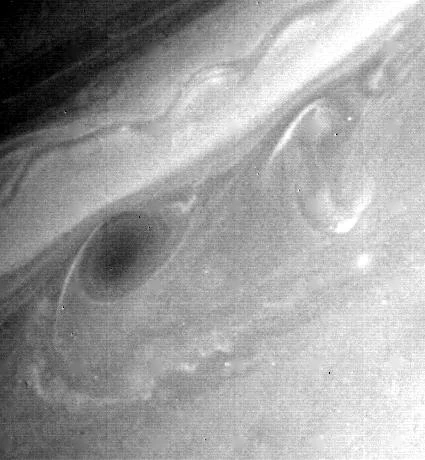
TOI-199b sits about 330 light-years from Earth, orbits a Sun-like star every 105 days, and holds an equilibrium temperature of roughly 352 K (79°C). That’s warm by terrestrial standards but downright mild for an exoplanet, where “hot Jupiter” atmospheres regularly top 1,500 K. A team led by Aaron Bello-Arufe at Penn State pointed JWST at a single transit of this world and pulled methane out of its atmosphere, making TOI-199b the first temperate giant exoplanet whose atmospheric composition has been directly measured.
The paper, published in The Astronomical Journal this month, adds more than another molecule to the exoplanet catalogue: it cracks open a temperature regime that’s been almost completely out of reach.
Why temperate giants were out of reach
Exoplanet atmospheric science has been stuck at two extremes. On one side: hot Jupiters, massive close-in worlds baking at 1,000–3,000 K, whose swollen atmospheres produce deep spectral features that JWST and Hubble can read in a single transit. On the other: small rocky planets in habitable zones, tantalizing but with atmospheres so thin (if they exist at all) that even JWST struggles to pull signal out of the noise.
Between those extremes sits a large population of warm and temperate gas giants with orbital periods of weeks to months, equilibrium temperatures in the 300–600 K range, and hydrogen-dominated envelopes that should show clear spectral signatures. In practice, most of these planets either orbit stars too faint for transmission spectroscopy, or transit too infrequently for TESS’s short observing windows to catch.
TOI-199b is one of the few that didn’t slip through. TESS flagged it. A follow-up campaign that included observations from Antarctica nailed down the mass at 0.17 ± 0.02 Jupiter masses and the radius at 0.810 ± 0.005 Jupiter radii. Those numbers put it squarely in Saturn territory: a low-density gas giant with a hydrogen-helium envelope and, most likely, a heavy-element core.
What JWST actually measured
Bello-Arufe’s team used JWST’s NIRSpec instrument in its G395M mode, covering wavelengths from about 2.9 to 5.2 μm. As the planet crossed its host star’s disc, some starlight filtered through the upper atmosphere. Different molecules absorb at different wavelengths, leaving a fingerprint in the transmitted spectrum. This technique, transmission spectroscopy, is how most exoplanet atmospheric detections work. But it demands a cooperative target: bright host star, deep transit, and enough atmospheric scale height to produce a detectable signal.
TOI-199b delivered. The strongest absorption feature was methane (CH₄) at around 3.3 μm, statistically significant from just one transit. The team also found tentative signs of ammonia (NH₃) and carbon dioxide (CO₂), though both need additional transits to confirm.
Methane at 352 K makes chemical sense. In a hydrogen-dominated atmosphere at these temperatures, thermochemical equilibrium predicts that carbon should sit mostly as CH₄ rather than CO or CO₂. Atmospheric models have said this for years. TOI-199b is the first planet in the right temperature window with enough signal to actually test the prediction, and the prediction held.
A benchmark for a new class of worlds
TOI-199b fills a gap that existing methane detections don’t cover. Titan has methane. Saturn has methane. JWST already detected it in the hot Jupiter WASP-80b at a much higher temperature. None of those cases tell us what happens in the 300–400 K regime, where the atmospheric chemistry is calmer and closer to what we see in our own solar system’s gas giants.
Hot Jupiters are extreme environments. Their day-night temperature contrasts can exceed 1,000 K. Photochemistry tears molecules apart. Clouds of iron and silicate droplets form and rain down the night side. TOI-199b, by contrast, has a temperature near the boiling point of water. Not habitable, not dramatic, but scientifically useful precisely because the physics is gentle enough for equilibrium models to apply cleanly.
And most of the giant planets that upcoming surveys will discover (Roman, Ariel, PLATO) will have these moderate temperatures. TOI-199b gives the field a benchmark: a measured spectrum to compare against atmospheric models before those surveys go live. If the models work here, we can trust them further out. If they break, we learn something about how gas-giant atmospheres actually work when they aren’t being irradiated into oblivion.
Not our Saturn
At 0.17 Jupiter masses and 0.81 Jupiter radii, TOI-199b sits in the Saturn mass class but runs much hotter: 352 K versus Saturn’s 134 K. The difference comes down to distance. TOI-199b orbits at roughly Venus’s separation from a star similar to the Sun, receiving about 2.5 times Earth’s irradiation.
You can think of TOI-199b as what Saturn might look like if you moved it 9 AU inward. Not hot enough to inflate dramatically like the hot Jupiters, but warm enough to push the atmospheric chemistry into a methane-dominated regime that mirrors Titan more than it mirrors the scorching WASP worlds.
The comparison breaks down at the edges. Saturn has rings, a strong magnetic field, and 146 known moons. None of that shows up in a transmission spectrum. But the bulk composition overlap is real, and it’s why the team describes TOI-199b as an “exo-Saturn” rather than coining something more exotic.
A second planet in the system?
A detail from the discovery paper (Hobson et al. 2023) that often gets buried: TOI-199b shows transit timing variations (TTVs). Each transit doesn’t arrive exactly when a Keplerian orbit predicts. It drifts by small but measurable amounts, pointing to gravitational tugging from an unseen companion planet.
No definitive mass or period for the companion has been published yet. But the TTV signal is clear enough that follow-up radial-velocity and JWST observations are likely in the queue. If confirmed, the TOI-199 system becomes a temperate Saturn with a neighboring planet, orbiting a Sun-like star. That’s a rich target for comparative atmospheric studies, especially if the companion turns out to be smaller and rocky.
What I’d watch for next
From my balcony in Nicosia, I can’t point the Seestar at TOI-199b. It’s 330 light-years away, and the host star isn’t on any amateur target list. But the result connects to something I think about when imaging Saturn on a clear night and wondering what another Saturn’s atmosphere actually looks like from the inside. Now we have a partial answer: methane, probably ammonia, and a sky that equilibrium chemistry can roughly predict.
What I’d want from the next round of JWST observations: water vapor, the depth and structure of any cloud deck, and confirmation (or rejection) of that ammonia hint. Each additional transit sharpens the transmission spectrum, and with enough precision the team can probe the atmosphere at different altitudes, building a vertical profile of TOI-199b’s upper layers.
ESA’s Ariel mission (scheduled for 2029) is built to survey exoplanet atmospheres at scale, but it’ll lean on benchmark targets like TOI-199b to calibrate its pipeline. JWST does the deep, single-target work now. Ariel does the population statistics later. TOI-199b sits right at the handoff point between the two.
The paper
Bello-Arufe, A. et al. (2026). “Methane on the temperate exo-Saturn TOI-199b.” The Astronomical Journal. arXiv:2511.15835 | AJ (IOPscience)
The discovery paper: Hobson, M. J. et al. (2023). “TOI-199 b: A well-characterized 100 day transiting warm giant planet with TTVs seen from Antarctica.” The Astronomical Journal, 166, 201. arXiv:2309.14915