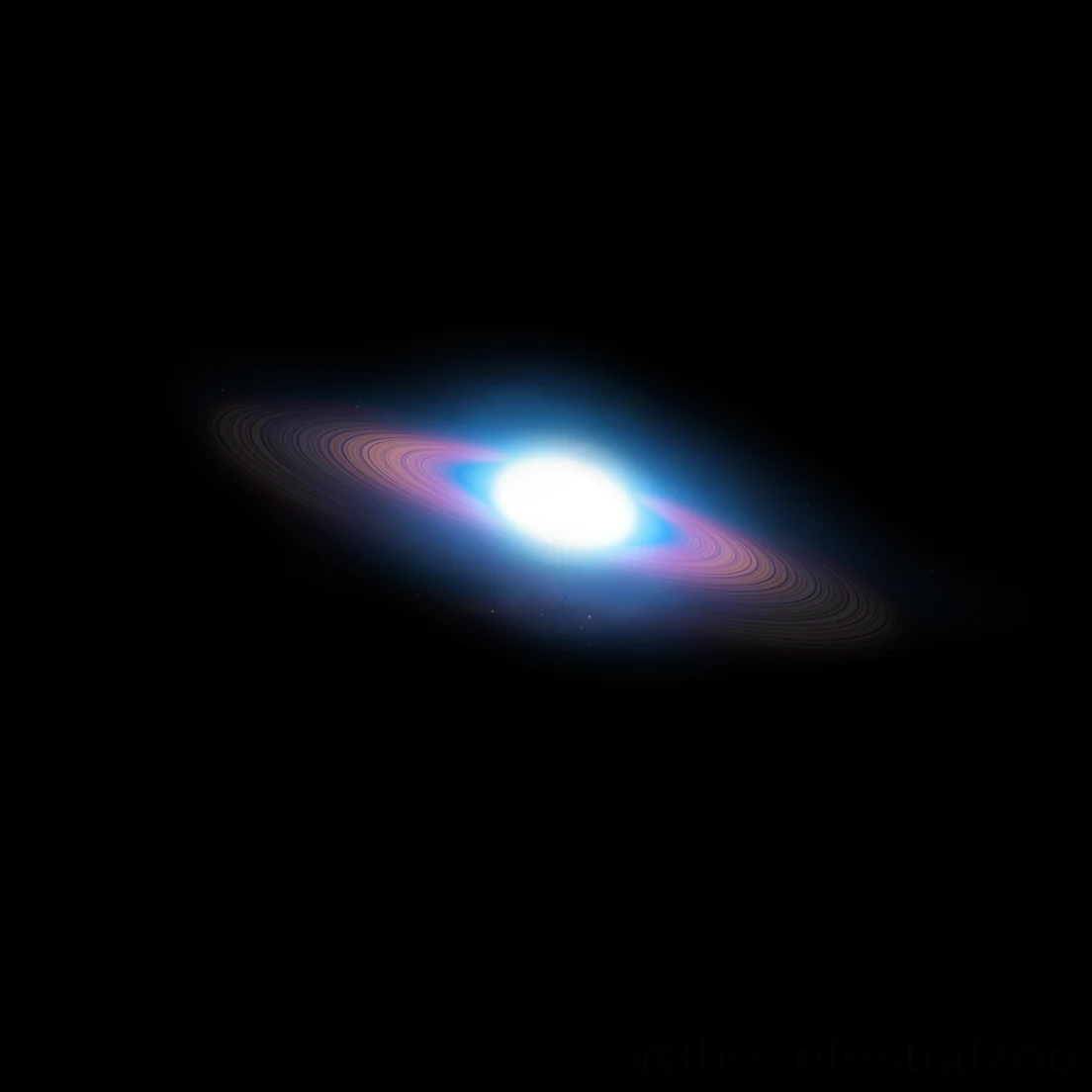
If you step outside tonight around 22:00 local time and face east, you’ll see a bright blue-white star roughly a third of the way up from the horizon. That’s Vega — the fifth-brightest star in the entire sky, magnitude +0.03, and your entry point to the largest asterism of the summer.
Vega belongs to a pattern called the Summer Triangle: three stars in three separate constellations that together frame one of the richest stretches of sky visible from northern latitudes. You don’t need a telescope. You don’t need an app, though one helps. All you need is a clear evening and a rough sense of east.
What the Summer Triangle actually is
It’s an asterism, not a constellation. The International Astronomical Union doesn’t recognize it as a formal grouping — it’s a visual shortcut, like the Big Dipper inside Ursa Major. The three vertices are:
- Vega (α Lyrae) — magnitude +0.03, 25 light-years away. The brightest of the three and the first to appear after sunset. Vega sits in the small constellation Lyra, which looks like a compact parallelogram hanging below it.
- Deneb (α Cygni) — magnitude +1.25, roughly 2,600 light-years away. Deneb is the tail of Cygnus the Swan, and despite being over a hundred times farther than Vega, it’s still clearly visible to the naked eye because it’s a blue-white supergiant pumping out around 200,000 times the Sun’s luminosity.
- Altair (α Aquilae) — magnitude +0.76, 16.7 light-years away. Altair marks the head of Aquila the Eagle. It’s one of the closest bright stars to Earth, and it rotates so fast (a full spin every ~9 hours) that it’s visibly oblate — squashed at the poles by about 14%.
The distance contrast between these three stars is the kind of thing that makes the sky feel three-dimensional once you know about it. Vega and Altair are close neighbours, cosmically speaking. Deneb is in a different league entirely — a lighthouse that only looks comparable because it’s absurdly luminous.
How to find it, step by step
Step 1: Face east after dark. In mid-June from mid-northern latitudes (35–55°N), the Triangle clears the eastern horizon around 21:30–22:00 local time. The farther north you are, the earlier it appears and the higher it climbs.
Step 2: Find Vega. It’s the brightest star in the eastern sky and unmistakably blue-white. If you’re unsure, hold your fist at arm’s length — Vega should be roughly two to three fists above the eastern horizon by 22:00 in mid-June. From my balcony in Nicosia (35°N), it clears the apartment blocks to my east by about 21:45 in early June.
Step 3: Look down and to the right for Altair. Altair sits about 35° from Vega — roughly the span of your outstretched hand from thumb to pinky, held at arm’s length. It’s slightly less bright than Vega and has a faint pair of flanking stars (Tarazed and Alshain) that make it easy to confirm.
Step 4: Look down and to the left of Vega for Deneb. Deneb completes the triangle about 24° from Vega. It’s dimmer than the other two — but still first-magnitude, so it stands out clearly from the background stars.
Once you’ve connected the three, you’re looking at a triangle that spans roughly 30° × 25° — large enough to cover most of your field of view if you hold both hands at arm’s length.
What’s inside the triangle
This is where the Summer Triangle pays off. The Milky Way runs directly through it, from Deneb down past Altair. On a dark night away from city lights, you’ll see the band of the galaxy passing through the triangle like a river of faint light. From a Bortle 4–5 site (the kind of sky you’d get in the Troodos mountains, for instance), the Milky Way is obvious. From a Bortle 7 city balcony, you won’t see it — but the three stars themselves still punch through the light pollution without trouble.
A few objects worth looking for with binoculars or a small scope, if you have them:
- Albireo (β Cygni) — the head of Cygnus, sitting near the middle of the triangle. A famous double star: one gold, one blue. Even a pair of 10×50 binoculars splits the pair. It’s one of the prettiest colour contrasts in the sky.
- The Coathanger (Brocchi’s Cluster, Cr 399) — a line of stars that genuinely looks like a coat hanger, hanging upside down. Visible in binoculars about a third of the way from Altair toward Vega.
- The Ring Nebula (M57) — between the two bottom stars of Lyra’s parallelogram. You’ll need at least a 4-inch telescope to see the tiny grey doughnut, but it’s satisfying to find.
- The North America Nebula (NGC 7000) — near Deneb. Invisible in a telescope (it’s too big), but it shows up in widefield astrophotos. If you have a Seestar or any smart telescope, try a 60-second stack pointed a couple of degrees east of Deneb.
None of these are required viewing for your first night. The triangle itself is the point — it gives you a fixed frame of reference in the sky, and once you can find it without thinking, you can start using it to navigate to other parts of the summer sky the same way the Big Dipper anchors the spring.
When to look this month
June is the start of Summer Triangle season in the Northern Hemisphere. Here’s the rough timing from mid-northern latitudes:
- Early June: the triangle rises in the east around 22:00 local time and doesn’t reach its highest point until after 02:00.
- Late June: it rises about two hours earlier, so by midnight it’s already high in the southeast.
- Best window: 23:00 to 02:00 in mid-June, when the triangle is high enough that atmospheric haze and light domes near the horizon aren’t a problem.
Tonight (June 9) the waning crescent moon doesn’t rise until the pre-dawn hours, so the evening sky is dark — good timing. And if you step out right after sunset and face west first, you’ll catch Venus and Jupiter sitting within about half a degree of each other, low above the horizon. Watch them set, then turn around. The Summer Triangle will be waiting.
The next new moon is June 14. If you can get to a dark site that weekend — a beach, a mountain, a campsite away from town — that’s your best shot at seeing the Milky Way running through the triangle for the first time this summer.
Phone apps that help
If you’re not confident identifying stars yet, point your phone at the sky with any of these:
- Stellarium Mobile (free tier is enough) — overlay star names and constellation lines on the live camera view.
- SkySafari — tap any star for magnitude, distance, and spectral type. The free version covers everything you need for naked-eye work.
- Sky Tonight — similar augmented-reality overlay, clean interface.
One thing I’d suggest: use the app to confirm your identification, then put the phone away. Screens kill your dark adaptation (the topic of a previous post), and the point of learning asterisms is to not need the app next time.
Why bother learning asterisms at all
Stellarium can label every star in the sky. A go-to mount can point your telescope at any catalogue number. But knowing the Summer Triangle by sight does something an app can’t — it makes the sky feel like a place you’ve been before.
I started observing from a Bortle 7 balcony where I could see maybe 30 stars on a good night. Learning to find Vega, then the triangle, then Albireo inside it, gave me a mental map that made the sky navigable instead of random. A year later, when I drove up to Troodos and saw the Milky Way pour through that same triangle, the frame was already in place. The dark sky filled in details I already had a structure for.
That’s the practical case for asterisms: they’re the grid you hang everything else on. The Summer Triangle is the best place to start because it’s big, bright, and overhead all summer.
Tonight’s a good night. Step outside and look east.