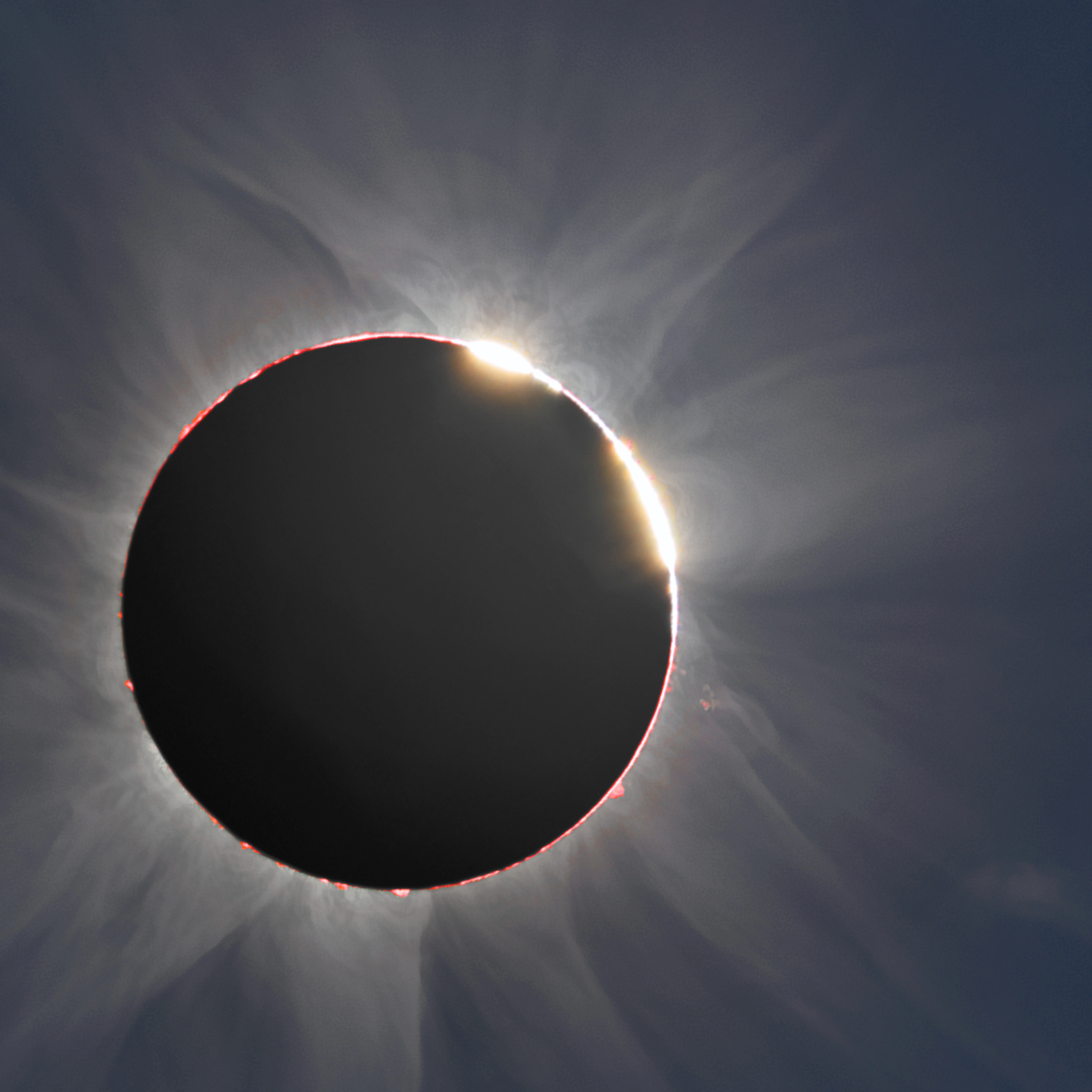
The path of totality on August 12 sweeps across northern Spain from Galicia to the Balearic Islands. Every region inside the path delivers totality — but the Sun sits between 2° and 11° above the western horizon when it happens, and that changes everything about where you should stand.
At 10° altitude the Sun is about one fist-width above the horizon at arm’s length. At 5° it’s half a fist. At 2° you’d lose it behind a two-storey building from 100 m away. One badly placed apartment block, one hilltop in the wrong direction, one row of pines — and you miss totality entirely.
I’ve been watching accommodation prices along the path since March. Here’s the region-by-region breakdown I’d want if I were booking a flight right now, with 48 days left.
The low-sun problem
Most total eclipses happen with the Sun between 30° and 70° altitude. This one doesn’t work that way. Totality in Spain happens between 20:26 and 20:32 CEST, roughly an hour before sunset. The Sun sits in the west-northwest at about 295° azimuth.
That means site selection is the single most important decision you’ll make. Coastal locations facing west-northwest are safest because the ocean gives you a horizon at 0°. Inland, you need elevated ground or flat terrain with nothing in the way at that compass bearing. Mountains, buildings, even distant tree lines can block a Sun that low.
Before you book anything, download PhotoPills or The Photographer’s Ephemeris and simulate the Sun’s position from your planned viewing spot at 20:28 local time on August 12. If you can’t see the Sun in the simulation, you won’t see the eclipse.
Galicia: where the shadow makes landfall
The umbral shadow hits Europe near Cabo Ortegal in A Coruña province. Northern Galicia gets among the longest totality durations in Spain — up to 1 min 50 sec near the centreline. The Tower of Hercules in A Coruña gives an Atlantic horizon with a Roman lighthouse framing the shot. Cape Finisterre works too: open ocean to the west-northwest, no obstructions.
Sun altitude at totality: ~10–11°. That’s the highest on the Spanish path, because Galicia is furthest west and totality arrives earliest.
The catch is weather. Galicia is Spain’s wettest region. Even in August, marine fog and low stratus drift in along the coast in the evening — right when you need clear skies at the horizon. Average cloud cover for mid-August runs 40–50% along the coast.
Getting there: Santiago de Compostela (SCQ) and A Coruña (LCG) airports both have European connections. Accommodation is the cheapest on the path — up to 60% less than Mallorca for equivalent hotels.
Asturias: the centreline sweet spot
The centreline of the eclipse path runs almost exactly through Gijón, which means the longest possible totality duration for the region — about 1 min 50 sec. Oviedo is close behind. The western coast around Luarca and Valdés offers west-facing beaches with clean sightlines over the Cantabrian Sea.
Sun altitude at totality: ~10° from the coast.
Asturias shares some of Galicia’s marine weather, but the evening hours tend to clear more reliably in August. Average cloud cover drops to about 30–40%. Several municipalities along the path — including Oviedo and Gijón — are already planning designated eclipse viewing zones with scientific experts on-site.
Getting there: Asturias airport (OVD) near Avilés connects to Madrid, Barcelona, London, and a handful of other European cities. Bilbao (BIO) is 3 hours east by car with more international routes. Oviedo also sits on the rail network — direct trains from Madrid take about 4.5 hours.
Accommodation in Oviedo and the coastal towns has roughly doubled for the week of August 10–14 since I started tracking in March. It’s still bookable, but it won’t be by mid-July.
Castile and León: the weather bet
León and Burgos sit on the meseta — the high plateau of central Spain, sheltered from Atlantic moisture by the Cantabrian Mountains. August cloud cover here drops to 15–25%. The air is dry, the sky is reliably clear, and the flat terrain means fewer horizon obstructions.
León gets roughly 1 min 45 sec of totality. Burgos catches about the same. Both are slightly south of the centreline but well inside the path.
Sun altitude at totality: ~8–9°. Lower than the coast because you’re further east along the path and the eclipse is progressing toward sunset.
If clear skies matter more than an extra 5 seconds of totality — and they should — the meseta is the rational choice. After totality, León’s dark outskirts also set up nicely for Perseids under the new-moon sky.
Getting there: fly into Madrid (MAD), rent a car, and drive north — 3.5 hours on the A-6. Or take the Madrid–León high-speed train, which runs in under 2 hours. León’s own airport (LEN) has limited domestic routes.
Aragón: clear skies, lower Sun
Zaragoza sits inside the path with about 1 min 25 sec of totality. The Ebro valley is one of Spain’s driest corridors — August cloud cover runs 15–20%. The flat irrigated plains around Zaragoza work well for horizon clearance, but you’ll want the western edge of the metro area to avoid urban clutter in your sightline.
Sun altitude at totality: ~7°. Getting low enough that atmospheric extinction starts affecting the view — the corona will appear dimmer and redder than at higher-Sun locations.
Getting there: Zaragoza airport (ZAZ) has limited routes. Barcelona (BCN) is 3 hours by car or 1.5 hours by AVE high-speed train. Madrid is about 3 hours by train.
Valencia: the Mediterranean sunset
Valencia city catches roughly 1 minute of totality, but the Sun is only about 5° above the horizon. You’re watching a sunset eclipse over the Mediterranean. The aesthetic could be memorable — the eclipsed Sun skimming the water, the 360° horizon glow blending into a real sunset.
At 5° altitude, the light travels through roughly 10 air masses of atmosphere. The corona appears dimmer, redder, and more vulnerable to thin haze or distant clouds that you can’t predict from overhead forecasts. If you’re already in Valencia, pick a western-facing elevated viewpoint — the cliffs south of the city, or elevated parkland with a clear west-northwest line. Don’t count on the city centre; buildings will block a 5° Sun from most streets.
Cloud cover: ~20% in August. The weather isn’t the problem here. The altitude is.
Mallorca: the premium gamble
Palma de Mallorca sits well inside the path with about 1 min 36 sec of totality, arriving at roughly 20:31 CEST. But the Sun is barely 2° above the western horizon. At that altitude you’re looking through roughly 12 air masses of atmosphere, and a thin cloud bank, a haze layer, or a distant storm cell on the horizon means you see nothing.
Mallorca’s appeal is the setting: totality over the Mediterranean from a resort island in peak summer. The western coast around Port de Sóller and Deià has the cleanest ocean horizon. August cloud cover is about 20%.
But at 2°, the relevant question isn’t “will there be clouds overhead?” It’s “will there be anything between me and the horizon 300 km to the west?” That’s harder to forecast than the local weather.
Accommodation prices reflect the hype. Hotel rooms in Valldemossa that cost €138 a night the previous week are listed at €518 for eclipse night. Some coastal properties have tripled. Sky & Telescope has chartered a tour group at the Jumeirah Port Sóller, a five-star resort.
High risk, high reward, high price.
Where I’d go
I can’t go — Cyprus is outside even the partial-eclipse zone. But if I were booking a ticket right now, I’d buy a cheap Ryanair fare to León or Oviedo without thinking twice.
León is the rational pick: best weather odds on the entire Spanish path, solid totality duration, flat terrain for horizon clearance, and dark skies for Perseids afterward. Oviedo and Gijón are more exciting — the coast, the centreline duration, the planned festivals — but with higher cloud risk.
I’d skip Mallorca unless I could absorb €2,000+ per night and I genuinely didn’t mind the chance that the Sun drops into haze before totality. The media gravitates toward the Mallorca angle because it’s scenic and familiar, but the combination of a 2° altitude and tripled hotel bills is a bad bet for anyone who actually cares about seeing the corona.
Whatever you choose, book this week. The path crosses Spain’s peak tourist season. Hotels inside totality are already at 80–90% occupancy for August 10–14. Airfares to Asturias have roughly doubled since January.
And scout your exact spot in advance. No guide can tell you whether the parking garage next to your hotel blocks the Sun at 295° azimuth and 10° altitude. That’s a problem only you can solve, on the ground, with a compass app, before August 12.