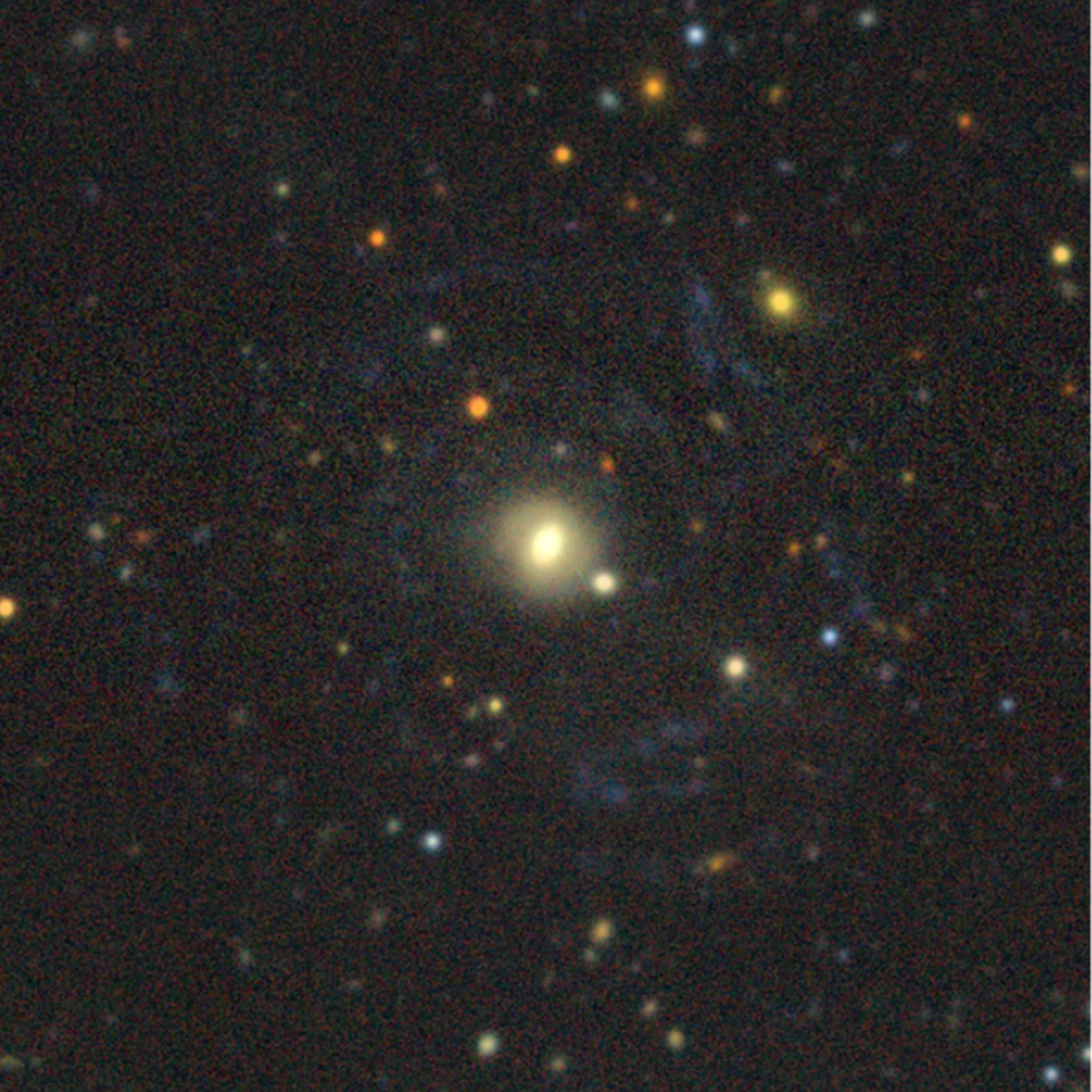
Here’s the number that made me put my coffee down. A model trained on Euclid galaxy images matched a fully supervised network at estimating galaxy redshifts and stellar masses — using 1% of the labeled examples. Ninety-nine percent of the labels thrown away, same accuracy.
That result is from the Euclid Quick Data Release paper by Siudek et al., published in Astronomy & Astrophysics on 30 June 2026. It’s one of three papers from the last two years that convinced me astronomy has quietly acquired what the machine-learning world calls foundation models: a single large model pretrained once on a mountain of unlabeled data, then adapted cheaply to many different tasks.
I spent years as an ML engineer before I started spending my nights pointing a Seestar S50 off my balcony in Nicosia, so let me walk through what’s actually happening here, and then what it does and doesn’t mean for the rest of us.
The labels are the bottleneck
Almost every ML result I’ve written about on this blog was supervised: you show the model thousands of labeled examples, and it learns to reproduce the labels. RAVEN found 118 exoplanets in TESS data because someone had already labeled thousands of confirmed transits and false positives for it to learn from. That works beautifully, right up until you run out of labels.
And in astronomy, you run out fast. Euclid will image on the order of a billion galaxies. To know a galaxy’s exact redshift (how much cosmic expansion has stretched its light, which tells you its distance and how far back in time you’re seeing it), you normally need a spectrum: spread the light into its colours, find the shifted emission lines, read off the number. Spectroscopy is slow and expensive. We have full spectra for a few million galaxies, not a billion. The same shortage applies to morphology labels, stellar masses, ages: the interesting properties are exactly the ones that are costly to measure.
So the honest situation is a tiny island of labeled objects in an ocean of unlabeled images. Supervised learning only uses the island.
The foundation-model trick is to learn from the ocean first. You train the model on a task that needs no human labels at all. This is self-supervised learning. The classic recipe: hide part of the data and make the model predict the missing part. Do that across hundreds of millions of galaxies and the model is forced to learn what galaxies actually look like: spiral arms, colour gradients, how brightness and shape and redshift hang together. It compresses each object into an embedding: a compact vector of numbers (often a few hundred to a couple of thousand) that captures its structure. Similar galaxies land near each other in that vector space.
Only then do you bring in your small pile of labels, and just train a lightweight model on top of the embeddings. The heavy lifting is already done. That’s why 1% of the labels can be enough.
If that sounds like how large language models work (pretrain on raw text, then adapt to specific jobs), that’s not a coincidence. The same recipe crossed over into astronomy. The three papers below are the ones worth knowing.
AstroCLIP: an image and a spectrum are the same galaxy
The one that opened the door, for me, was AstroCLIP (Parker, Lanusse and colleagues, 2023, revised 2024). It borrows the idea behind OpenAI’s CLIP, which learned to line up photos with their text captions. Here the two “languages” are both astronomical: a galaxy’s image from the DESI Legacy Imaging Survey and its spectrum from DESI. The model trains two encoders, one for images and one for spectra, and pulls the two representations of the same galaxy together in a shared space while pushing different galaxies apart. No human labels required; the pairing itself is the supervision.
Once trained, the embeddings turned out to be useful well beyond the pairing task. On estimating physical properties (stellar mass, age, metallicity, star-formation rate), AstroCLIP beat a supervised baseline by 19% in R², the fraction of variance the model explains. On photometric redshift, estimating redshift from imaging alone, it matched a ResNet18 trained specifically for that job, and roughly doubled the performance of a single-image self-supervised model. A model that was never trained to measure redshift, doing redshift as a side effect of understanding galaxies.
AstroPT and the 1% result
That brings me back to the paper that started this post. Siudek et al. took a model called AstroPT and turned it loose on the first Euclid Quick Data Release: about 300,000 optical and infrared galaxy images. AstroPT is small by modern standards, 90 million parameters, and it works the way GPT works on text: it chops each image into a sequence of patches and learns to predict the next patch. Pure self-supervision, one galaxy at a time.
Then they tested the embeddings on the tasks that matter: morphology classification, redshift estimation, similarity search, outlier detection. The headline is the one I led with. Fine-tuning those embeddings for photometric redshift and stellar mass beat a fully supervised network even when only 1% of the labels were available. When they folded in each galaxy’s spectral energy distribution (its brightness across Euclid’s filters) through a simple token-chaining trick, the photo-z estimates got better still, and the model started flagging unusual objects like ringed and interacting galaxies in its outlier search.
I want to be careful about what this is and isn’t. It’s a controlled comparison on Euclid Q1, not a claim that the model has “solved” redshifts. But the direction is unmistakable: label efficiency is the whole game when your survey has a billion galaxies and spectra for a rounding error’s worth of them.
AION-1: one model, five surveys
The third paper is the most ambitious. AION-1 (Parker, Lanusse and a large team, accepted at NeurIPS 2025) is what happens when you stop building one model per survey and try to build one model for the sky. It’s omnimodal: it ingests imaging, spectra, and scalar measurements together, from five different surveys (the DESI Legacy Survey, Hyper Suprime-Cam, SDSS, DESI and Gaia): more than 200 million observations of stars, galaxies and quasars.
The architecture is a two-stage design: first turn each type of data into tokens with a modality-specific tokenizer, then run a transformer that does masked prediction across the mixed token stream, the same masking idea scaled up. The models run from 300 million to 3.1 billion parameters. And crucially, once trained, the encoder is frozen — you don’t retrain it. A frozen AION-1 handles galaxy and stellar property estimation, morphology classification, similarity search, image segmentation, and even spectral super-resolution, each with only a small task-specific head bolted on.
A generalist that reads five surveys at once and adapts to new jobs without forgetting the old ones is a different kind of tool than the one-task classifiers most of astronomy has been building.
What this actually changes, and what it doesn’t
I’ll be blunt about the limits, because I’ve been burned by ML optimism before.
These models don’t understand physics. They learn correlations in survey data, which means they inherit that data’s blind spots. I wrote about exactly this failure mode in transfer learning for cosmology: a model that’s brilliant on the distribution it was trained on can mislabel something genuinely new as something familiar. Point a galaxy foundation model at an object unlike anything in Legacy Survey or Euclid and its confident embedding may be confidently wrong. The anomaly-detection results are encouraging precisely because they’re the model admitting “I haven’t seen this before,” which is the behaviour you want, and the hardest to guarantee.
There’s also the interpretability gap. When a supervised transit-finder flags a planet, you can point at the light curve. When a frozen encoder’s 1,024-number embedding predicts a redshift, explaining why is much harder. For catalog science that feeds cosmology, that opacity has to be tested, not trusted.
For those of us observing from a balcony, none of this touches the eyepiece directly. Your Seestar frames are not going into AION-1’s training set. But the downstream products reach us anyway: cleaner photometric-redshift catalogs, better cross-matching between surveys, and (the part I care about most) automated systems that surface the weird 0.01% of objects for humans to look at. That’s the same pipeline logic behind the ML brokers sorting Rubin Observatory’s alert stream: when the data volume is inhuman, the first pass has to be a model, and a model that already knows what “normal” looks like across five surveys is a better first pass than one trained from scratch on each night’s data.
What changed in the last two years is the default. The reflex used to be: new task, new labeled dataset, new network. The reflex now is: take a pretrained model, add a small head, spend your scarce labels on the last 1%. For a field that has always had far more sky than it has people to annotate it, that’s the shift that matters. The papers to watch are the ones measuring how few labels they can get away with.