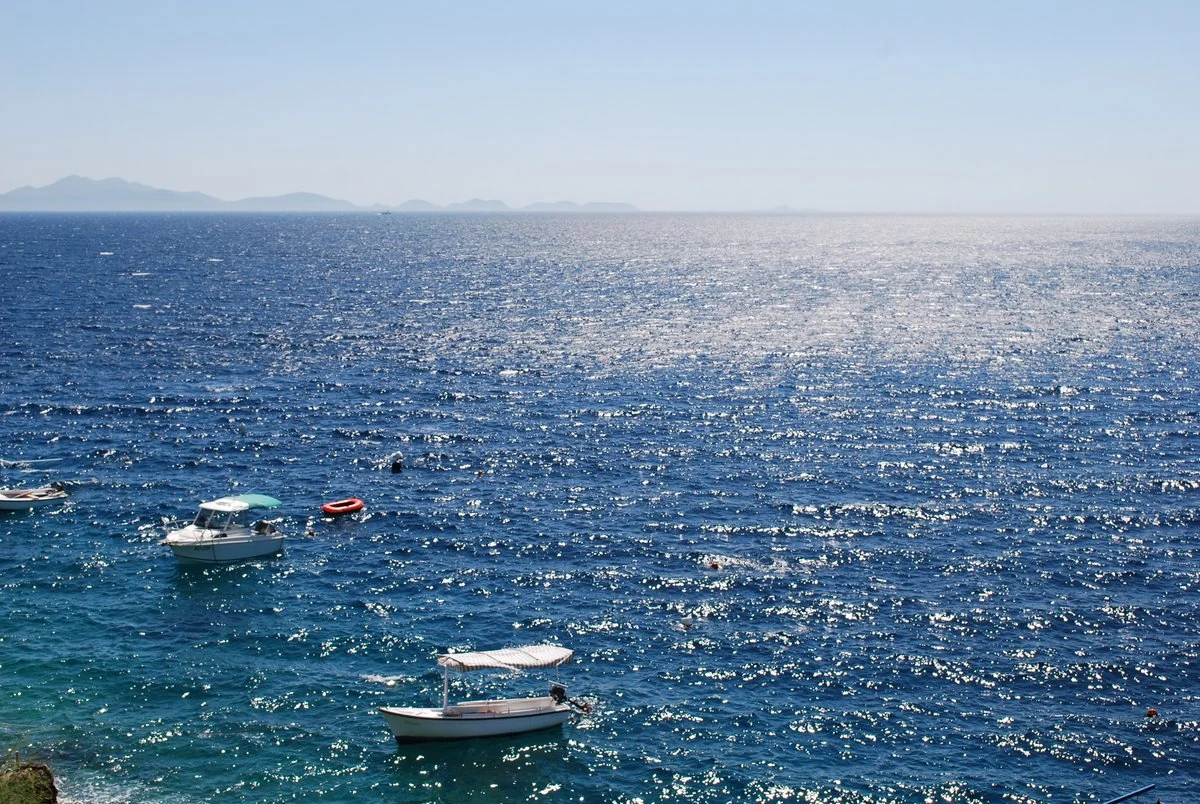
Lastovo is the most distant inhabited island from the Croatian mainland — about 14 km of open sea south of Korčula, and a good deal further from any coastal city glow. Roughly 800 people live there, spread across a municipality of 46 islands and islets. In 2008 the island swapped out every public streetlight for low-wattage, full-cutoff lamps that throw nothing upward, years before Croatia had a law requiring it. The result is one of the darkest inhabited places left in the Mediterranean, and a live candidate for International Dark Sky Park status.
I haven’t observed from Lastovo. I’m writing this from the other end of the Mediterranean, and it’s near the top of my own trip list. This is the guide I put together while working out whether the two ferries and the long haul are worth it. Short version: if you already own binoculars and you’re in the eastern Adriatic in summer, yes.
Why the sky is dark here
Most “dark sky” island claims come down to two things: distance from mainland light domes, and what the locals do with their own lighting. Lastovo scores on both.
Distance first. The Lastovo Islands Nature Park, Croatia’s youngest nature park, established in 2006, covers about 196 km², of which only around 53 km² is land; the rest is sea. There’s no large town on the island, no airport, no bridge, and nothing bright between you and the southern horizon except water. From the interior, the nearest serious skyglow sources are the Croatian coast well to the north and the Italian coast far to the west, both softened by tens of kilometres of sea air.
The lighting is the part that makes Lastovo unusual rather than just remote. According to the park, the island replaced its public lighting in 2008 with full-cutoff fixtures — low-wattage amber lamps that emit essentially no light above the horizontal. Plenty of villages talk about doing this; Lastovo actually did it, and did it before national regulation arrived. That’s why the island keeps turning up in Croatian dark-sky conservation coverage.
One thing to be precise about: Lastovo is not a certified International Dark Sky Park yet. The nature park describes itself as a candidate for the DarkSky International designation. Croatia already has certified places, among them Petrova gora-Biljeg and Vrani kamen (you can check the current list on DarkSky’s Croatia page). Lastovo is working toward joining them; the sky quality is already there, and it’s the paperwork and monitoring that take time. I’m spelling that out because the “darkest sky in Europe” line that gets pinned on the island in tourism write-ups is a claim nobody has quantified, and this audience notices.
What you’ll actually see
Lastovo sits at about 42.8°N. That’s roughly 8° further north than Cyprus, where I usually observe, and the difference shows up in the summer sky: the galactic centre in Sagittarius culminates only around 18° above the southern horizon here, versus about 26° from 35°N. The core is lower and you’re looking through more atmosphere to reach it.
The trade is worth it, because the sky above it is genuinely dark. On a moonless night, the summer Milky Way runs from Sagittarius low in the south, up through the Summer Triangle overhead, and down into Cassiopeia: a continuous band with visible structure rather than the washed-out smudge you get from a Bortle 6 suburb. The Great Rift, the dark dust lanes splitting the Cygnus star clouds, should be an easy naked-eye object. If you’ve never picked out the galactic bulge with your own eyes, this is the kind of place to try it. I wrote a naked-eye guide to finding it that works well from a site this dark.
Bring binoculars. A 10×50 pair is enough to turn the Sagittarius and Scutum star clouds into a field of individual suns and to pull in the brighter Messier objects: M8 (the Lagoon Nebula), M22, and the Scutum star cloud around M11. You don’t need a telescope to have a good night here, and you don’t need to book anything to lie on your back and watch the Perseids.
When to go
In practice, moon phase matters more than month. A full moon wrecks any dark site, Lastovo included; a new moon on a clear night is the whole point of coming.
That said, the practical window is roughly May to September. That’s when the ferries run most often, the nights are warm enough to observe comfortably, and the Milky Way core is up in the evening rather than before dawn. Two dates worth planning around in the second half of 2026:
- Perseids, night of August 12–13. The peak coincides with a new moon this year, so the sky stays dark all night. The Perseids hit the atmosphere at about 59 km/s and this is the richest, most reliable shower of the northern summer.
- Geminids, December 13–14. The year’s densest shower, radiant high, but Lastovo in December means cold, wind, and a thinned-out ferry timetable. It’s a committed trip, not a casual one.
Summer has one catch worth naming: humidity. The Adriatic in July and August can throw up haze and high thin cloud that softens the sky, and the warm sea keeps nights muggy. It’s not the bone-dry stability you get from a high desert or a mountain like Troodos. You’re trading altitude and dryness for genuine darkness at sea level, close to a swimmable coast. For most visitors that’s a fair trade.
Getting there
This is the part that decides whether Lastovo fits your trip, because it’s not a quick hop. Everything runs through Ubli, the ferry port on the island’s southwest end.
From Split, Jadrolinija runs the main connections. The car ferry sails from Split via Vela Luka (on Korčula) to Ubli and takes roughly four and a half hours; the passenger-only catamaran is quicker, around three and a half, routing via Hvar and Vela Luka. Foot-passenger fares are cheap, single figures in euros. If you want a car on the island, the Split car ferry is your only route, so book vehicle space ahead in July and August.
From Dubrovnik, a seasonal catamaran runs south down the islands, calling at Mljet and Korčula before reaching Ubli, during the summer season (roughly April to the end of October in 2026). It’s foot-passengers only; no cars. Handy if you’re basing yourself in the south and travelling light.
Two practical notes. First, timetables shift between high and low season and sell out on peak summer dates, so check the operator directly rather than trusting a cached schedule. Second, Ubli is not where you’ll sleep or observe. The main village, Lastovo town, sits inland, and the best dark-sky spots are scattered across the interior and the higher ground. Which brings up the real logistics question: a car helps a lot. The island has a bus, but it’s built around ferry arrivals, not midnight stargazing runs.
Where to observe, and the guided option
The obvious high point is Hum, at 417 m the island’s highest peak, with a clear horizon in most directions. It’s also where the nature park runs its public astronomy sessions.
Those sessions are the easiest way in if you don’t want to organise your own night. The park runs a guided programme it calls “The Starry Sky of Lastovo,” typically two to three times a week in season, from Hum or another suitable spot. A guide walks you through the constellations with a laser pointer and sets up a telescope on a few targets. There’s no fixed public timetable posted far ahead. The park announces dates on its Facebook and Instagram, so message ahead or check once you’re on the island. If you’re travelling with someone who’s new to observing, this is a gentler introduction than handing them binoculars and pointing south.
If you’d rather go it alone, any open, high patch away from the villages works. What you want is a clear southern horizon over the sea for the low galactic core, and enough distance from the few lit windows in town. The southern and western coasts, where the land falls away to open water, give you that horizon for free.
For lodging, Lastovo runs small: apartments and rooms in Lastovo town, Pasadur, and near Ubli, plus a handful of restored stone houses. There’s no resort strip, which is the point. Book through the usual platforms; Booking.com and the like list most of the island’s private accommodation. Expect a quiet, low-key stay rather than a hotel with an astronomy package.
Who should go, and who shouldn’t
Lastovo rewards a specific kind of traveller: someone who wants a genuinely dark sky bundled with a slow, near-empty island, and who doesn’t mind spending the better part of a day on ferries to reach it. If that’s you, and you time it for a new moon, you’ll get Milky Way views that most European visitors never see from sea level.
Skip it if you want a facility. There’s no research observatory open to the public, no visitor centre with a dome, no scheduled nightly show. The park’s guided sessions are good but informal and weather-dependent. If you want an island with a certified dark-sky park, an operating observatory, and organised programmes, Kefalonia’s Mount Aenos in Greece or La Palma in the Canaries fit better. And if you just want the darkest possible sky without leaving my part of the Mediterranean, Troodos in Cyprus is higher, drier, and a shorter drive for anyone already on the island.
But Lastovo has something those don’t: it’s an inhabited island that decided, back in 2008, to stop lighting up the sky — and then kept the sky worth protecting. For a dark-sky trip in the eastern Adriatic, that’s the one I’d book.