On July 31, the NSF–DOE Vera C. Rubin Observatory released its first science data taken with the LSST Camera: a deep image of the COSMOS field holding more than half a million galaxies and over 50,000 stars in a single frame. That’s the headline. The part that took me a minute to work out, as someone who spent years pulling training data out of pipelines like this one, is what a person outside the collaboration can actually touch. Some of it you can explore tonight from your couch. Most of the catalog is locked for two years.
I’ll take both in turn.
What actually got released
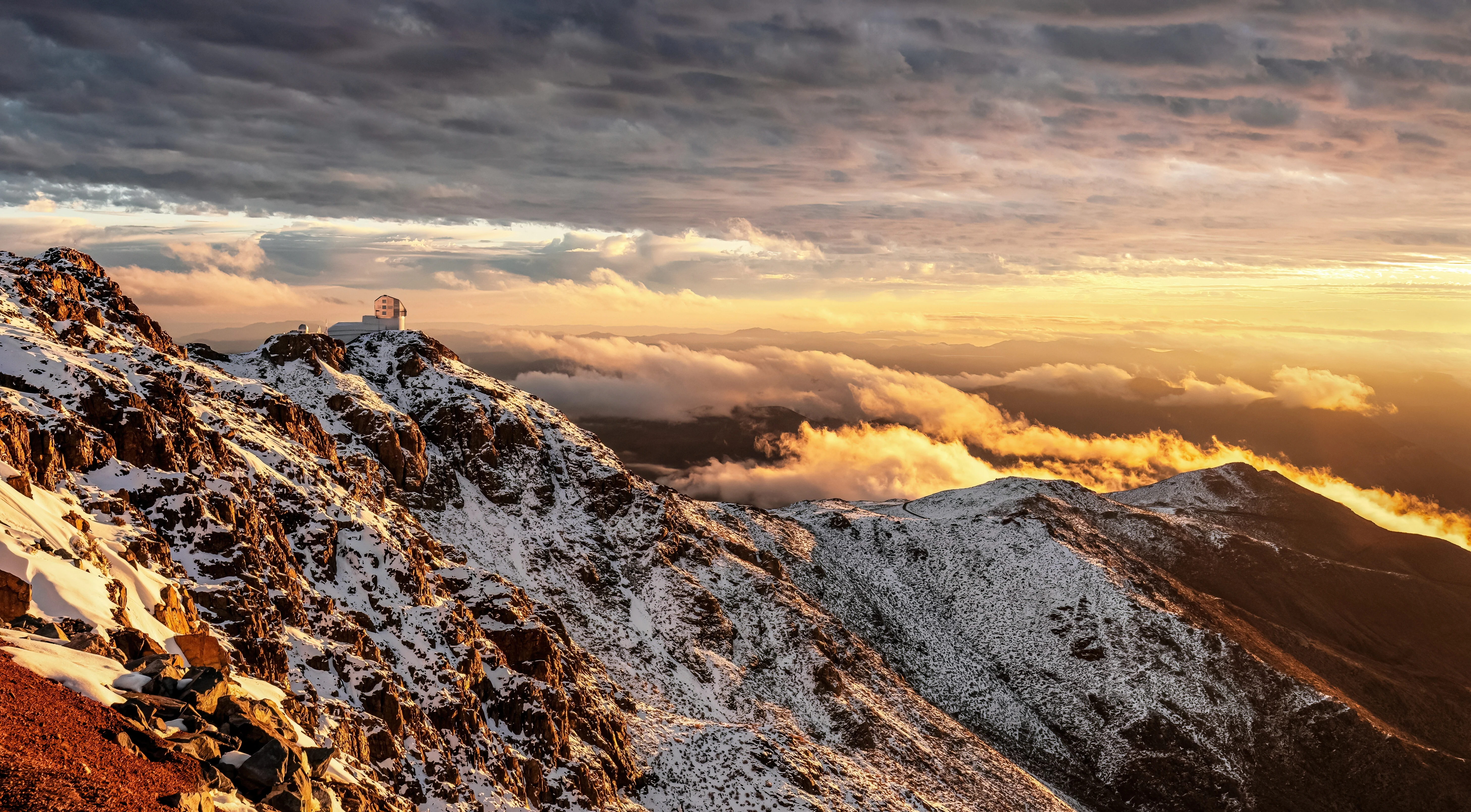
The release is called Early Data Preview 2 (EDP2), and it’s the first data drawn from Rubin’s real survey camera rather than from commissioning hardware. Rubin sits on Cerro Pachón in Chile: an 8.4-metre Simonyi Survey Telescope feeding a 3.2-gigapixel camera, the largest digital camera ever built. Since the end of June it’s been running the Legacy Survey of Space and Time (LSST), a ten-year program to photograph the entire southern sky over and over.
EDP2 is built from science-validation observations taken between April 2025 and January 2026. It covers roughly 3,000 square degrees (about a sixth of the sky Rubin can see) as a deep co-added image, meaning many exposures of the same ground stacked into one deeper frame.
The showpiece is the COSMOS field, a patch in the constellation Sextans near the celestial equator. If that name rings a bell, it should: it’s the same well-studied region JWST mapped in the infrared with its COSMOS-Web survey. Astronomers keep pointing different instruments at the same square of sky precisely so they can stack wavelengths: Hubble, JWST, and now Rubin’s optical camera all looking at overlapping galaxies. Rubin’s deep stack of that field is what holds the half-million-plus galaxies.
Two quotes from the release, for the record. Bob Blum, Rubin’s director at NSF NOIRLab, called the COSMOS image “just the beginning for Rubin in this region.” Phil Marshall, deputy director at SLAC, said “the COSMOS field is a very important one for LSST science.” Both are true, and both are also the kind of thing you say at the start of a decade-long project when the interesting results haven’t happened yet.
The catch: two years behind glass
Rubin’s data products — the catalogs, the co-added images, the measured positions and brightnesses of every one of those galaxies — are not open to everyone. Right now they’re restricted to scientists in the United States, in Chile, and at institutions that hold formal data-rights agreements. Everything becomes public after a two-year proprietary period.
I don’t love this, but I understand it. The people who spent a decade and a lot of money building Rubin get first crack at the science, which is how large survey projects have always worked. It does mean that “Rubin released its first data” and “you can download Rubin’s first data” are two different sentences. If you’re a hobbyist in Cyprus or anywhere else without a data-rights login, the catalog is behind glass until 2028-ish.
There’s a second phase of EDP2 coming in the October–December window that adds processed single-visit images and difference images — the frame-to-frame subtractions that reveal anything that moved or changed brightness. Same access rules apply.
What you can touch right now
The point for the rest of us comes down to two things, and they’re better than they sound.
The first is the Rubin SkyViewer, a free web app that’s open to anyone. It loads the actual released imagery (the COSMOS field is in there now) and lets you pan and zoom across the full 3.2-gigapixel view, or take a guided tour. There’s even a sonification mode that turns the colour and brightness of galaxies into sound as you drift across the frame. It’s a toy in the best sense: I lost twenty minutes to it before I’d finished my coffee. You’re not getting the measured catalog, but you’re looking at the same pixels the scientists are.
The second is the part I care about most, and it’s the reason Rubin matters for practical observing rather than just for browsing pretty images: the alert stream. Every night Rubin compares each new exposure against a reference template and flags anything that changed: a new point of light, a star that brightened, an asteroid that moved. Those detections go out as a public alert stream in near real time, on the order of a minute after the exposure, with no proprietary period. The images are locked; the “something changed here” alerts are not.
That firehose is enormous, millions of alerts a night, which is why you don’t drink from it directly. Community brokers filter and classify it. I wrote about the nine ML brokers that sort the Rubin stream earlier this year; several of them (ALeRCE, Fink, Lasair, ANTARES) have public web interfaces where you can watch classified transients roll in: new supernova candidates, variable stars, near-Earth asteroids, without any special access. For an amateur who chases transients, that’s the real gift: not the deep galaxy catalog, but a public, machine-sorted feed telling you what in the sky is doing something interesting tonight.
The workflow I’ve settled into is simple: a broker page open in one tab, filtered to bright transients in galaxies I can reach with the Seestar. When something crosses a magnitude threshold I care about, say a supernova in a nearby galaxy, I grab the coordinates and check whether it’s up from Nicosia that night. Rubin does the finding; I do the pointing. Having a professional survey feed a balcony observer’s target list, for free, on the night the light arrives, is new for the hobby.
Rubin also runs a separate Orbitviewer app for its solar-system discoveries, a 3D view of asteroid and minor-planet detections. Also free, also worth a look if small moving objects are your thing.
What ten years of this looks like
One number reframes the whole project. Over the survey, Rubin will revisit each patch of the southern sky roughly 800 times. Every deep-sky object you’ve ever imaged from a dark site will be photographed, on average, hundreds of times across a decade — and the differences between those visits are where the science lives. Stack them and you go deeper than any single exposure. Subtract them and you catch everything that moved or flickered.
For the professional community that means a real-time census of the changing sky: supernovae caught early, asteroids tracked, the Milky Way’s variable stars monitored en masse. For amateurs it means the alert stream keeps getting richer, and in two years the deep catalogs open up for anyone who wants to learn to query them. I’d bet the citizen-science projects built on Rubin data (the Zooniverse-style “help classify this” efforts) end up being where most hobbyists actually engage with it.
Where I’ve landed
The COSMOS image is a real milestone: first LSST Camera science data, the survey properly under way, and a fun public tool to explore it. Temper the excitement in one place: the catalog itself isn’t yours to download yet, and won’t be for two years. But the two things that are open, the SkyViewer and the public alert stream, are the parts most of us would actually use anyway.
From Cyprus in August, the COSMOS field sits low and lost in twilight. Sextans is a spring constellation, not one I can point a telescope at right now. So I’m doing what the release intends for people like me: browsing the pixels on screen, and keeping a broker tab open to see what Rubin flags moving through the southern sky tonight. Come 2028, I’ll be pulling the catalog like everyone else.