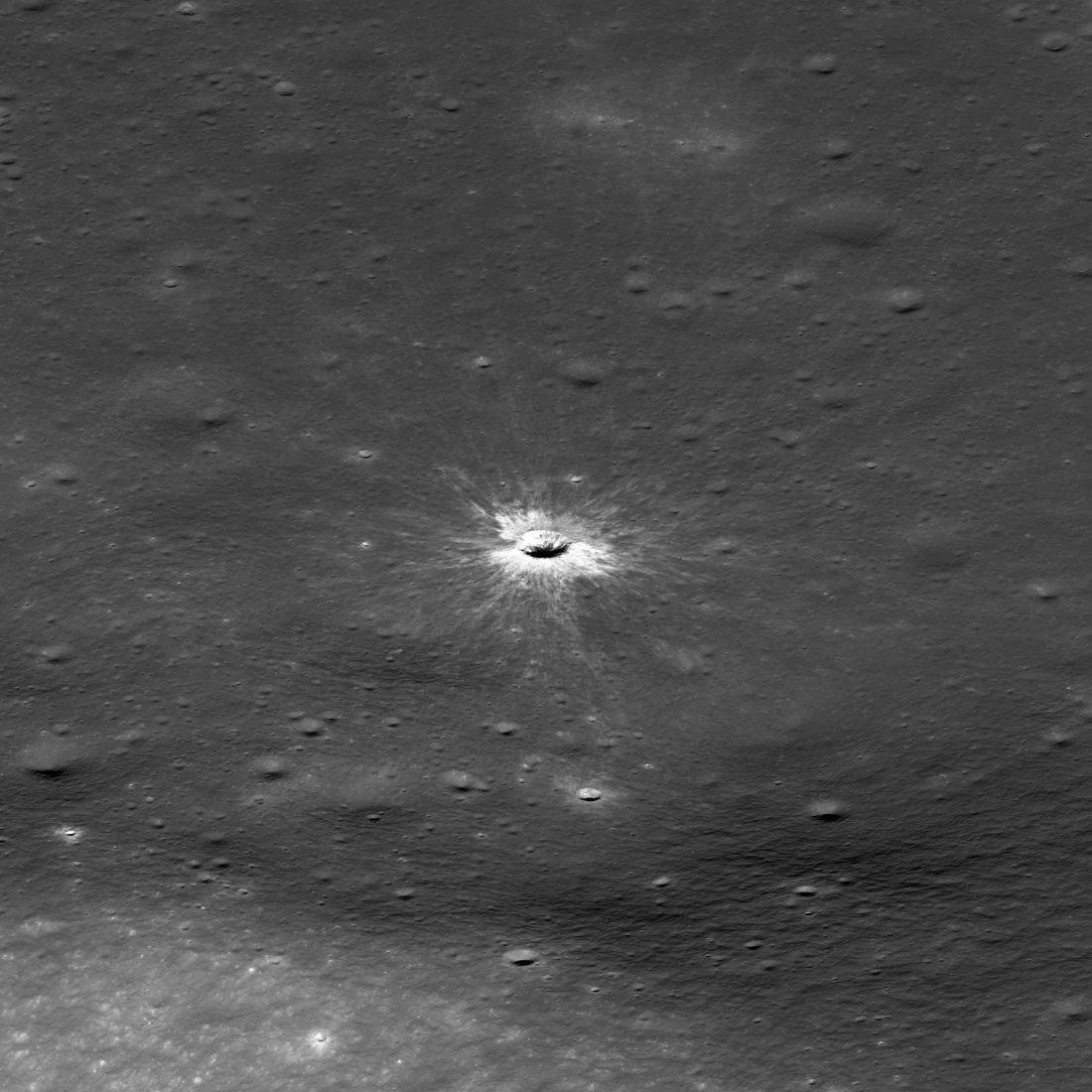
Oblique Lunar Reconnaissance Orbiter view of McGetchin crater, a fresh 222-metre crater on grey lunar plains surrounded by a bright starburst of ejecta rays
Space news

McGetchin crater: the Moon took a 15-kiloton hit in 2024 and nobody saw the flash

Sometime between 11 April and 22 May 2024, something the size of a three-to-six-storey building slammed into the eastern side of the Moon’s near side and blew out a crater 222 m across and 43 m deep. NASA’s Lunar Reconnaissance Orbiter photographed the aftermath within weeks, but nobody noticed until 2025, and the results only went public this month. The crater, now named McGetchin, is the largest fresh impact crater ever documented anywhere in the Solar System. It released roughly 15 kilotons of TNT-equivalent energy, and no telescope on Earth recorded the flash. ...
September 27, 2026 · 10 min · Andreas Ioannou
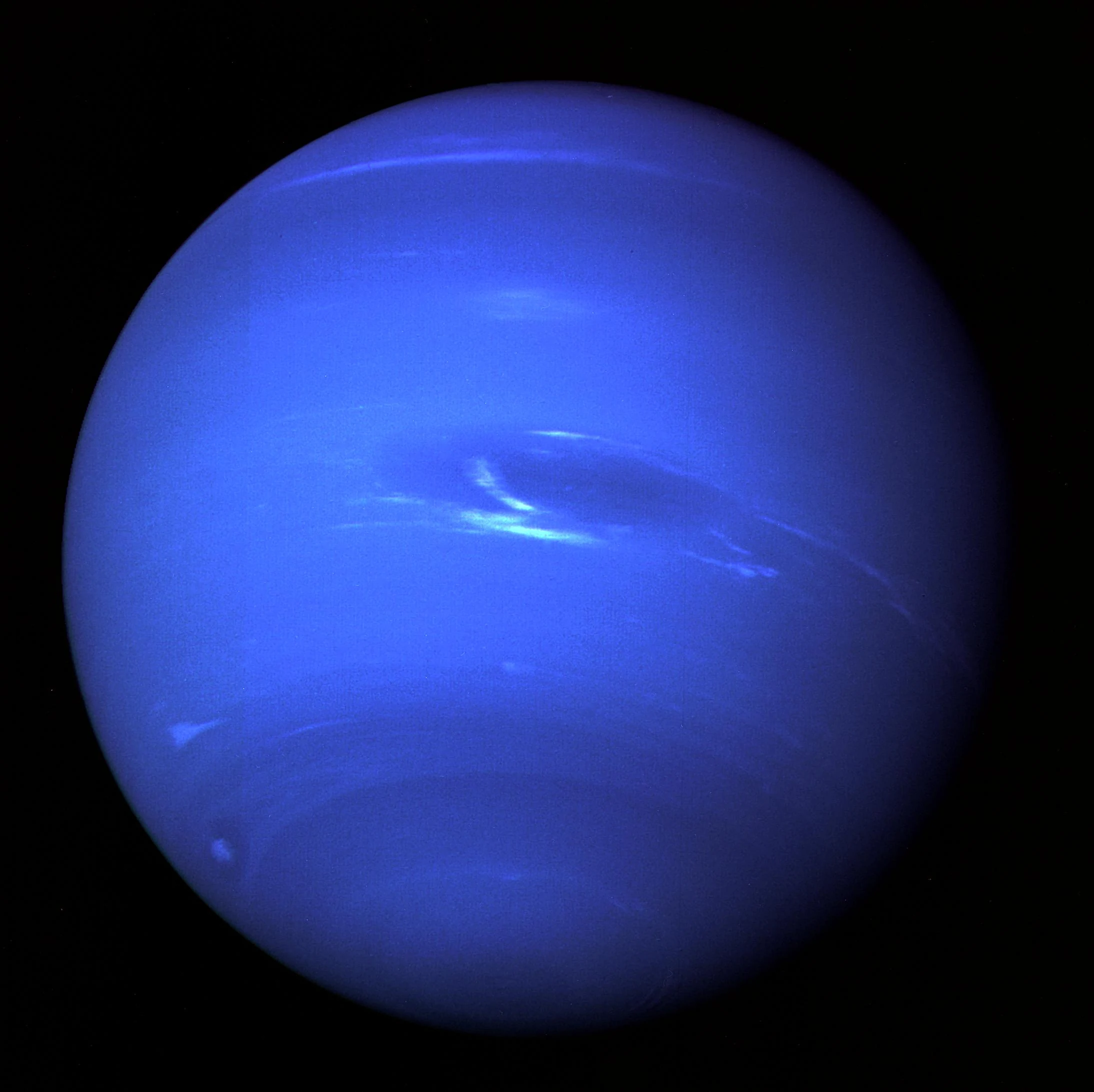
Neptune imaged by NASA's Voyager 2 in 1989 — a deep-blue disc marked by the dark oval of the Great Dark Spot and streaks of white, high-altitude methane-ice cloud.
Celestial event

Neptune at opposition, September 26: how to find the most distant planet

Neptune reaches opposition in the small hours of September 26 (around 00–01 UT), which makes this the best week of the year to track down the solar system’s most distant planet. Opposition just means the planet sits opposite the Sun in our sky: it rises at sunset, climbs highest near local midnight, and stays up until dawn. It’s also as close and as bright as Neptune gets in 2026 — magnitude 7.8, about 28.9 AU away. That brightness still isn’t enough for your eyes alone. Magnitude 7.8 is roughly three times fainter than the dimmest star you can catch with the naked eye under a good sky, so this is a binocular-and-telescope target. What you’re hunting is a single blue-grey point among the faint stars of Pisces, and the whole game is telling it apart from them. ...

September 25, 2026 · 6 min · Andreas Ioannou
The domed astronomical observatory of the Aosta Valley (OAVdA) at Lignan in the Saint-Barthélemy valley, Italian Alps.
Astrotourism

Stargazing in the Aosta Valley: Italy's first Starlight-certified dark sky

Europe’s darkest skies usually come with a catch: the certified ones are a long way from anywhere. La Palma means an Atlantic island and a ridge road you mostly can’t drive after dark. Namibia is a different continent. But there’s one properly dark, formally certified European sky that sits a 40-minute drive off a motorway, in a country I hadn’t covered here until now: a side valley in the Italian Alps called Saint-Barthélemy, above the town of Nus in the Aosta Valley. ...

September 23, 2026 · 8 min · Andreas Ioannou
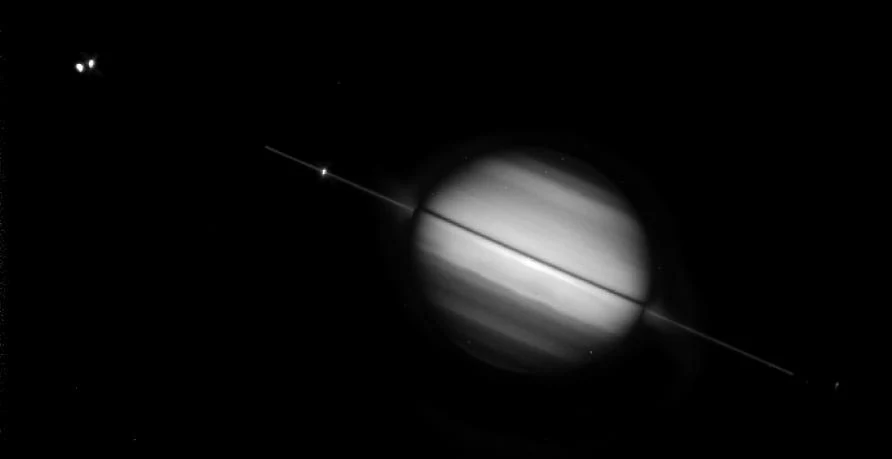
Saturn imaged by the Hubble Space Telescope with its rings turned nearly edge-on, appearing as a thin bright line across the planet's disc, with two of its moons as bright points at upper left.
Gear

How much telescope do you need to see Saturn's rings?

Saturn reaches opposition on October 4, 2026, which is the best night of the year to point anything at it. Around that date the planet sits opposite the Sun in our sky: closest to Earth for the year, brightest for the year at about magnitude 0.3 (apparent), and above the horizon all night. The question I get every autumn is how much telescope you need to actually see the rings. The answer depends entirely on what you mean by “see.” ...

September 21, 2026 · 7 min · Andreas Ioannou
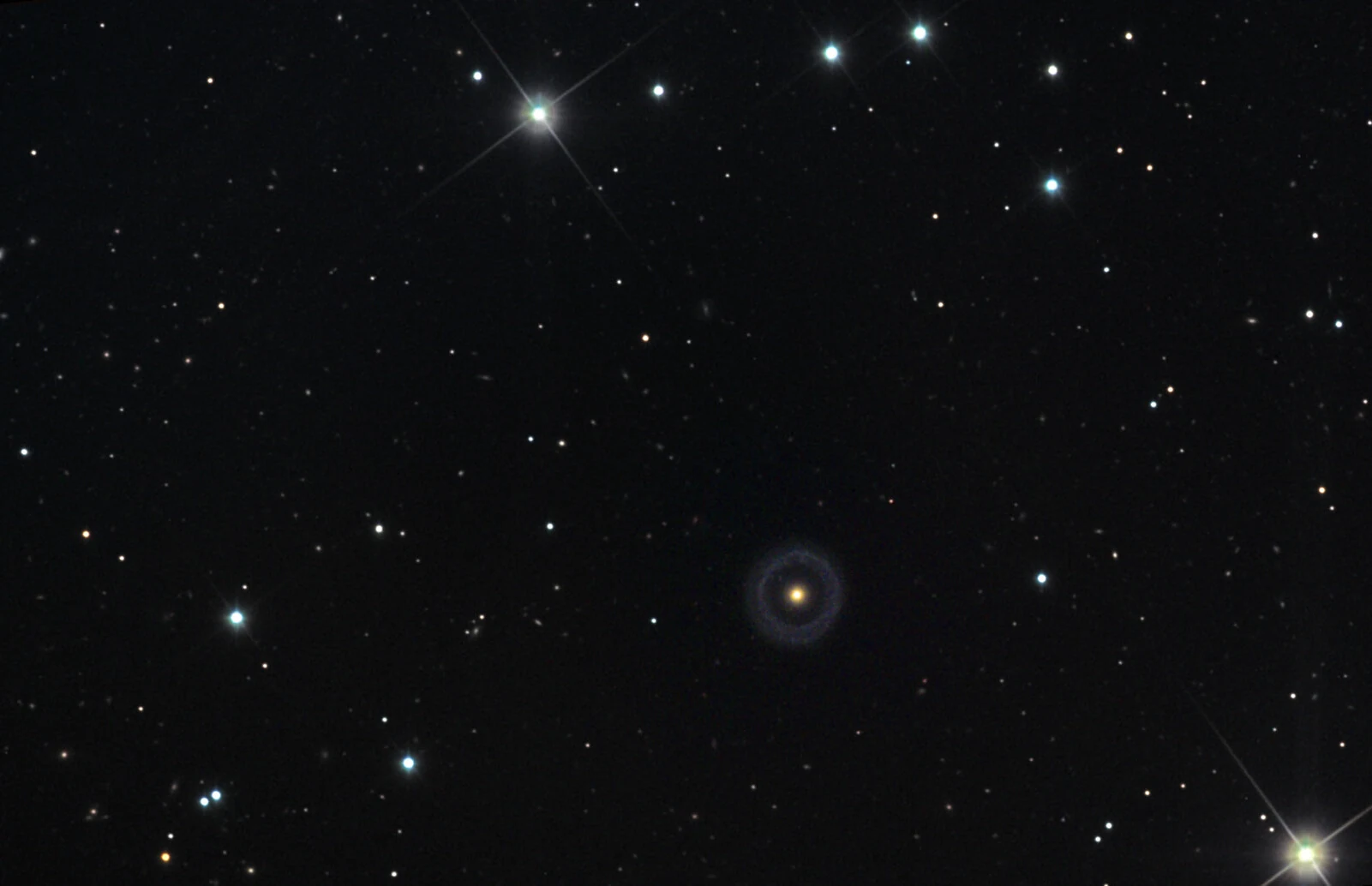
Hoag's Object, a ring galaxy: a bright yellow-white core encircled by a detached blue ring of young stars, with a smaller ring galaxy visible through the gap.
AI × astronomy

How machine learning finds the weird one in four million galaxies

The Dark Energy Camera Legacy Survey imaged about 1.6 billion sources. Even after aggressive quality cuts, that leaves nearly four million galaxies, far more than any team will ever eyeball. The discoveries hiding in a catalog that size are usually not the objects someone built a detector for. They’re the ones nobody thought to name: a galaxy bent into a ring, a gravitational lens that slipped past the catalogs, a pair caught mid-collision. A small family of tools now goes looking for exactly those, and the trick behind all of them is the same. Let one person teach an algorithm what “interesting” means, then let the machine apply that taste to millions of images. ...

September 19, 2026 · 7 min · Andreas Ioannou
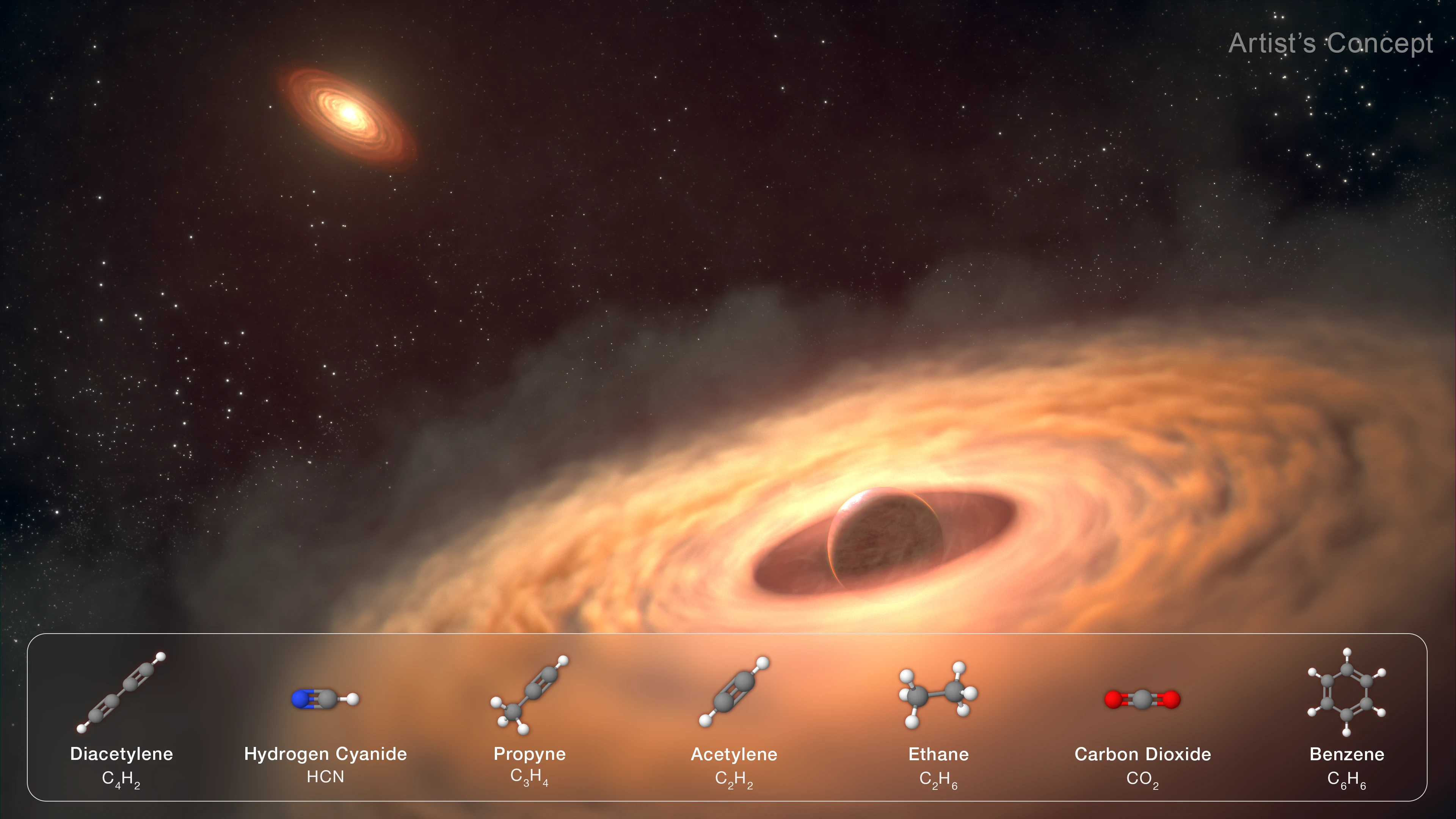
Artist's illustration of a young red exoplanet wrapped in a glowing disc of dust and gas where moons could form, with its host star and a second dusty disc in the background.
Space science

JWST found no moons around LP 890-9 c — the most sensitive exomoon search yet

We have more than 6,000 confirmed exoplanets and not one confirmed moon around any of them. A preprint that went up on 2026-09-04 didn’t change that count. Columbia’s David Kipping pointed JWST at a temperate super-Earth about 100 light-years away, stacked twelve transits, and came up empty. No moon. What makes the paper worth reading is the empty part. It’s the most sensitive exomoon search anyone has run, and a clean non-detection is exactly the result the field needed to prove its main tool still works. ...

September 17, 2026 · 7 min · Andreas Ioannou
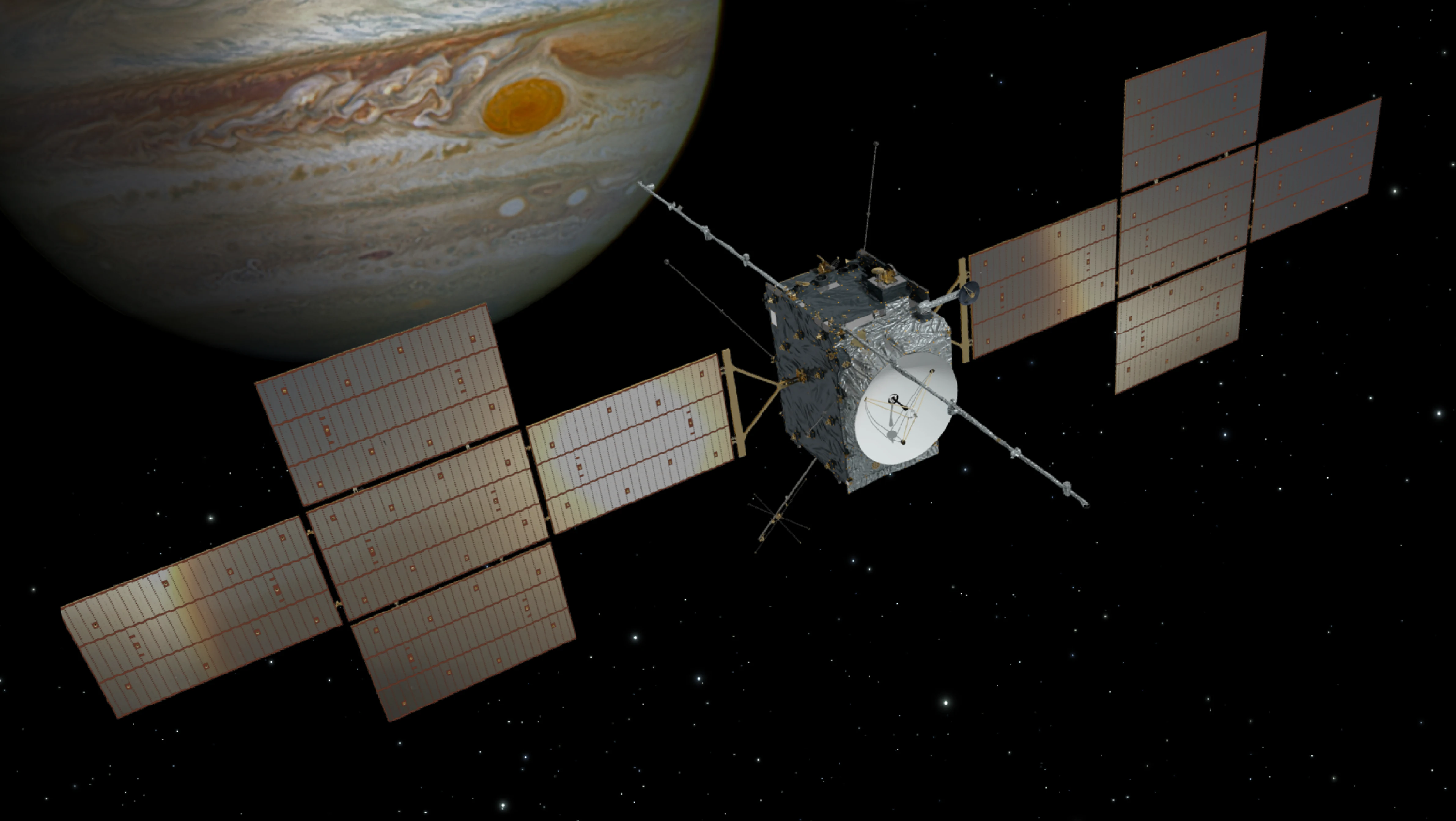
Artist's illustration of ESA's JUICE spacecraft, its cross-shaped solar arrays extended, in front of Jupiter and the Great Red Spot
Space news

JUICE flies past Earth on September 29 — a fuel-free speed boost on the long road to Jupiter

At the end of this month a Jupiter-bound spacecraft is going to thread past Earth to steal a tank of speed it can’t buy any other way. On 29 September 2026, ESA’s JUICE — the Jupiter Icy Moons Explorer — makes its second solo flyby of our planet, a gravity assist that borrows a sliver of Earth’s own motion around the Sun and hands it to the spacecraft for free. No engine burn does the heavy lifting here. Geometry does. ...

September 16, 2026 · 7 min · Andreas Ioannou
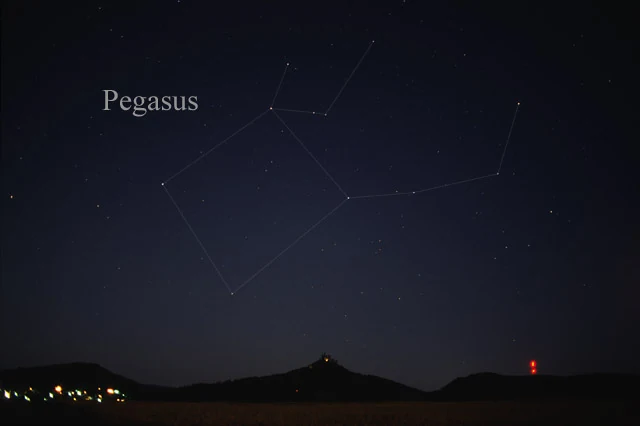
The constellation Pegasus over a dark horizon at night, its four Great Square stars and the horse's neck joined by faint drawn lines and labelled 'Pegasus', with a hilltop silhouette and distant town lights below
Beginner stargazing

How to find the Great Square of Pegasus, the autumn sky's biggest signpost

Go outside after dark this week and look east. There’s a big, slightly lopsided square of four stars climbing over the rooftops, and you need nothing to find it but your eyes. That’s the Great Square of Pegasus, and for the next two months it’s the easiest landmark in the sky. Learn it once and it becomes your key to the whole autumn sky: it points the way to the Andromeda galaxy, it doubles as a ruler and a dark-sky meter, and it marks the season turning over. ...

September 13, 2026 · 6 min · Andreas Ioannou
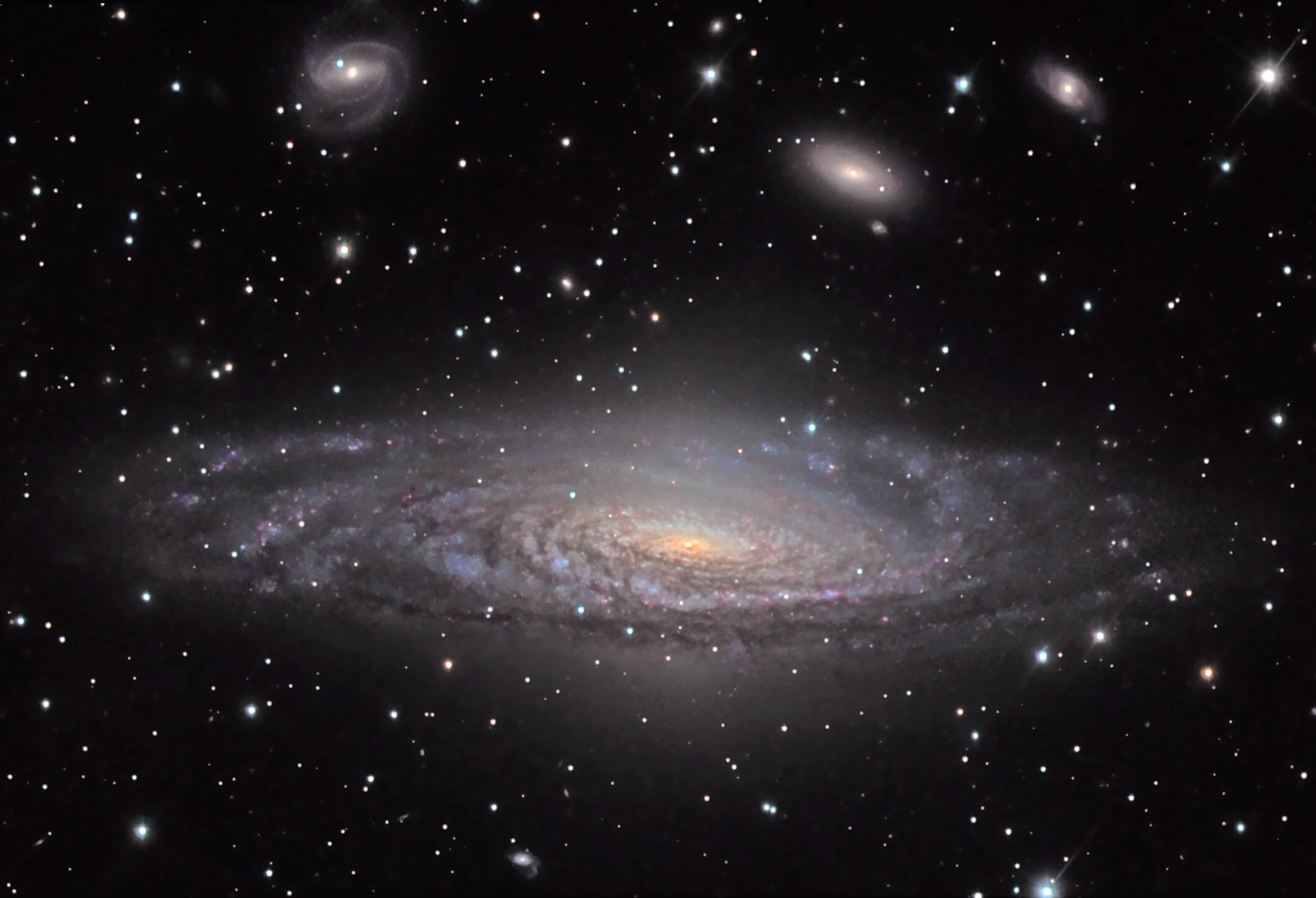
The tilted spiral galaxy NGC 7331 with a golden central bulge, blue-white spiral arms and dark dust lanes, three smaller background galaxies scattered across the star field above it
Celestial event

SN 2026aaiv: a Type Ia supernova is brightening in NGC 7331, and how to see it

A white dwarf in the galaxy NGC 7331 tore itself apart in a thermonuclear explosion, and the light is only now reaching us, bright enough to catch in a backyard telescope. SN 2026aaiv is a Type Ia supernova in a spiral galaxy in Pegasus, about 44 million light-years away, and it’s still brightening. The ATLAS survey flagged it on September 1; by September 11 it had climbed to roughly magnitude 13.8, and observers expect a peak near 11th to 12th magnitude within a week or two. Pegasus rides almost overhead from 35°N around midnight this month, so from Cyprus the timing and the geometry both line up. If you own a telescope or a smart scope, the next couple of weeks are the window. ...

September 12, 2026 · 8 min · Andreas Ioannou
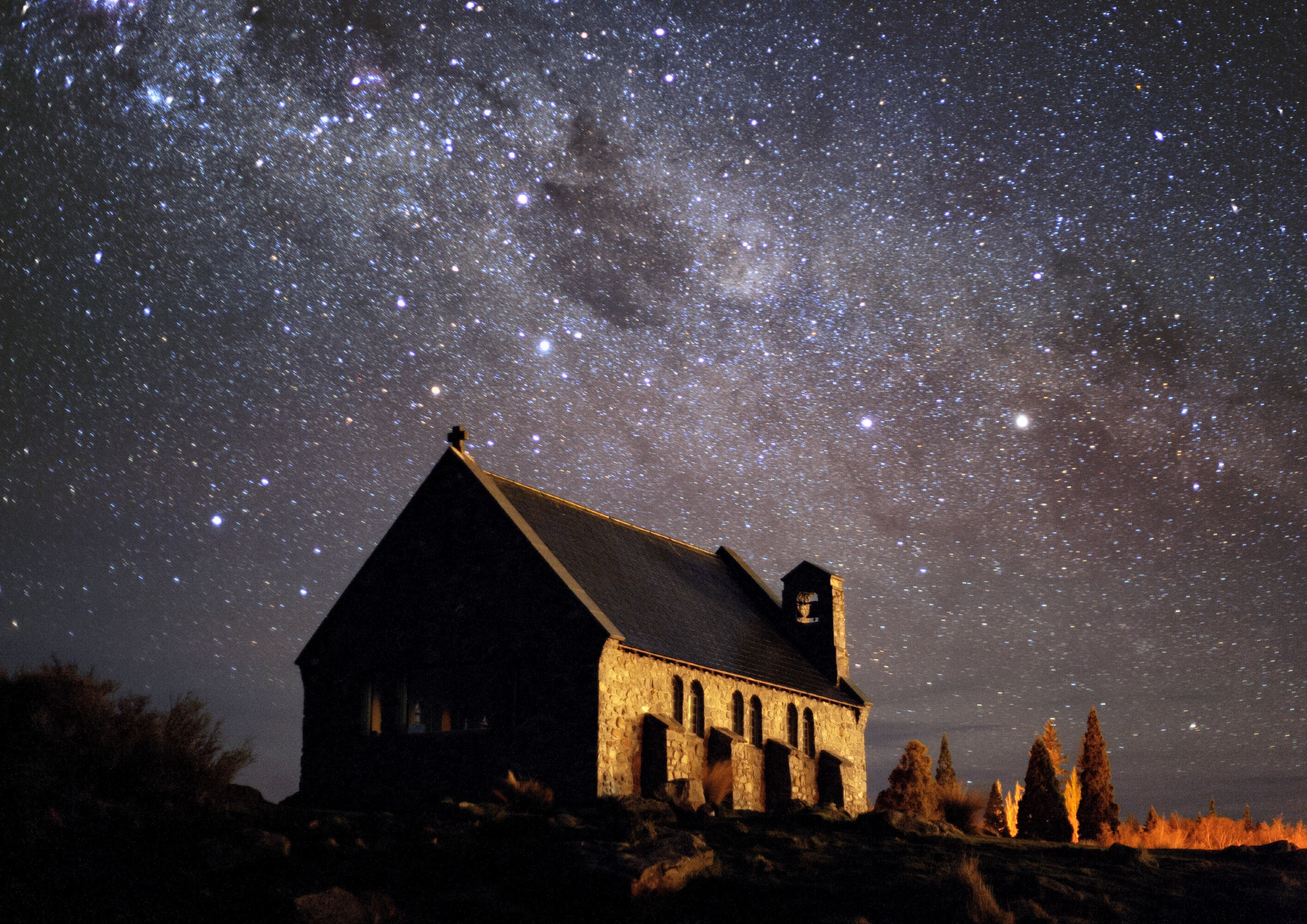
The stone Church of the Good Shepherd on the shore of Lake Tekapo, silhouetted under the Milky Way and Southern Cross in New Zealand's Aoraki Mackenzie Dark Sky Reserve.
Astrotourism

Aoraki Mackenzie: stargazing in New Zealand's gold-tier dark sky reserve

From my balcony in Nicosia, at 35° north, there’s a whole half of the galaxy I’ll never see. The Southern Cross never clears my horizon. The two Magellanic Clouds, the nearest galaxies bright enough to catch with the naked eye, sit permanently below it. To see them I have to get on a plane and fly south, and the most organised place on Earth to do that is a high, dry basin on New Zealand’s South Island: the Aoraki Mackenzie International Dark Sky Reserve. ...

September 10, 2026 · 7 min · Andreas Ioannou