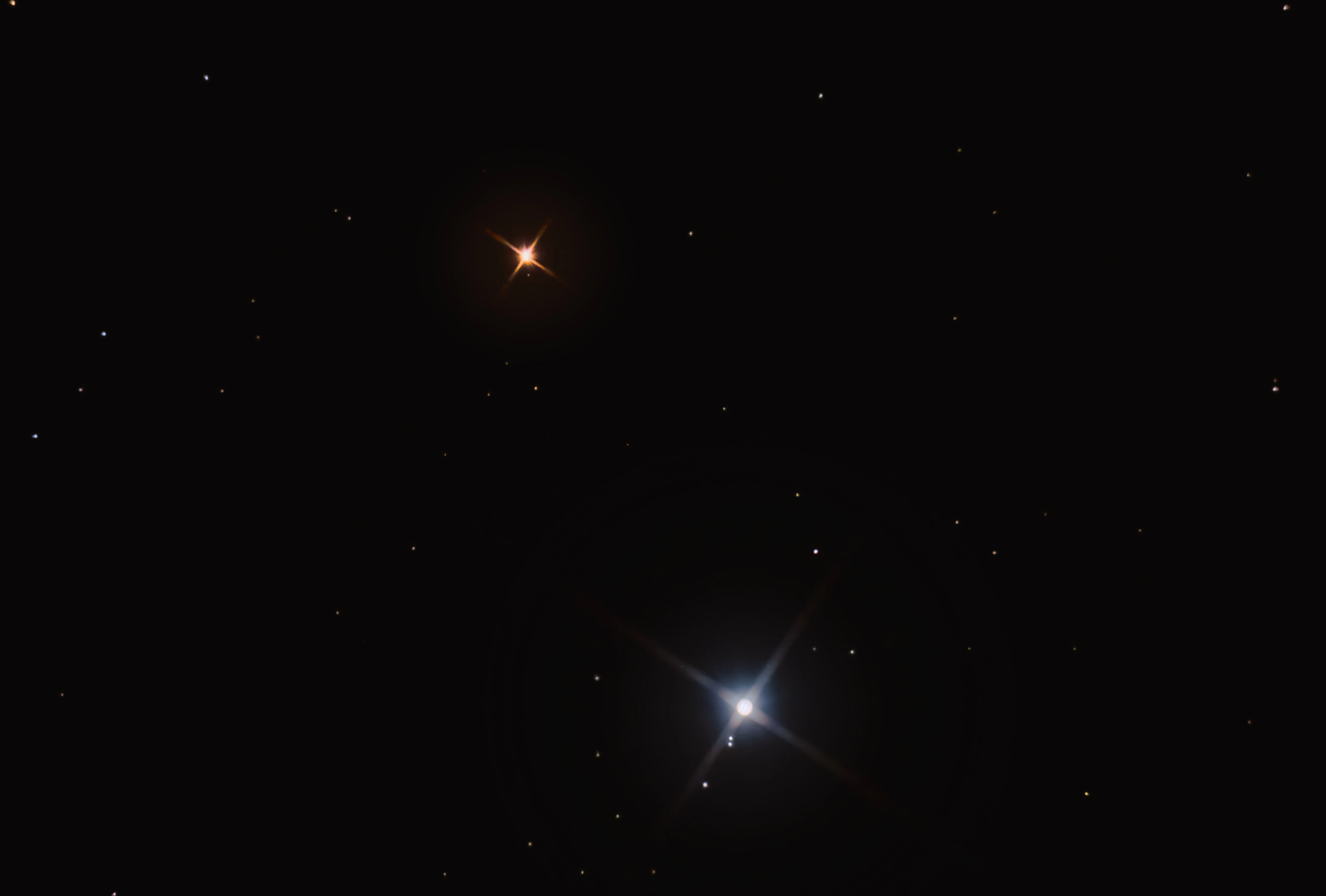
Telescope photograph of Mars and Jupiter close together on a black star field: Mars is a small orange point near the top, Jupiter a brighter blue-white point lower down with tiny dots of its moons beside it, both with four-pointed diffraction spikes.
Celestial event

Mars is closing on Jupiter: watch the gap shrink to 1.2° by November 16

Two bright planets are up before dawn right now, and the gap between them shrinks every morning for the next month. This morning Mars and Jupiter are 12.7° apart, a bit more than a fist held at arm’s length. By the morning of November 16 that gap is down to 1.19°, a little over two full-Moon widths. Closest approach is around 02:00 UT on the 16th, which is 04:00 in Cyprus, with both planets riding high in the south-east. You don’t need any equipment for this one. Pick a morning each week, note how far apart the two points are, and watch Mars catch up. Binoculars add Jupiter’s moons. Around the 16th, a small telescope at its lowest power can just about hold both planets in a single field. ...
October 14, 2026 · 9 min · Andreas Ioannou
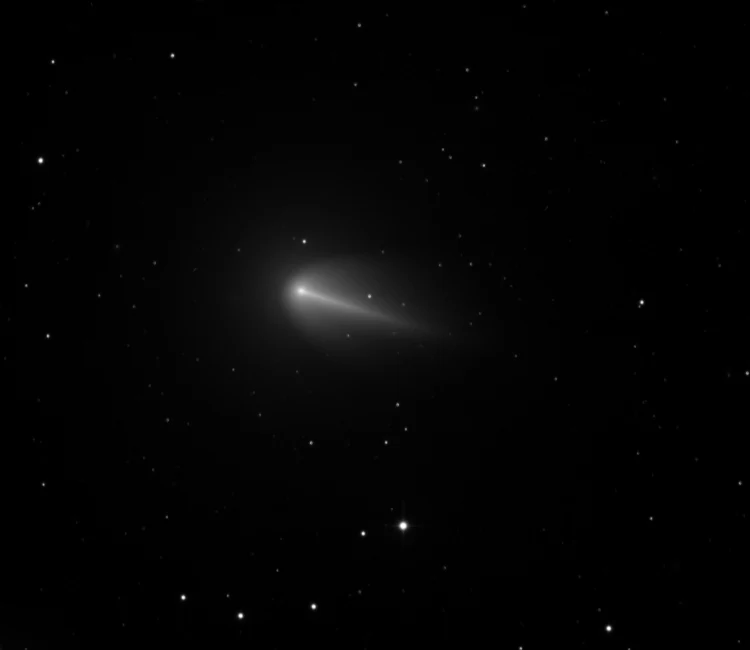
Telescopic image of comet 220P/McNaught showing a bright teardrop-shaped coma and a short tail against a field of stars
Celestial event

Comet 220P/McNaught: a twice-erupting binocular comet in the pre-dawn sky

There’s a comet in the pre-dawn sky right now that most people will never hear about, because it isn’t the kind that makes the news. Comet 220P/McNaught is a small periodic visitor that has done something unusual twice this summer: it blew up. Two separate outbursts, in late May and again on August 5, dragged a 17th-magnitude speck up into binocular range. In mid-August it was sitting around 6th to 7th magnitude, low in the constellation Cetus before sunrise: a binocular object under a dark sky, and already fading. If you want it, this is the week to try. ...

August 19, 2026 · 7 min · Andreas Ioannou
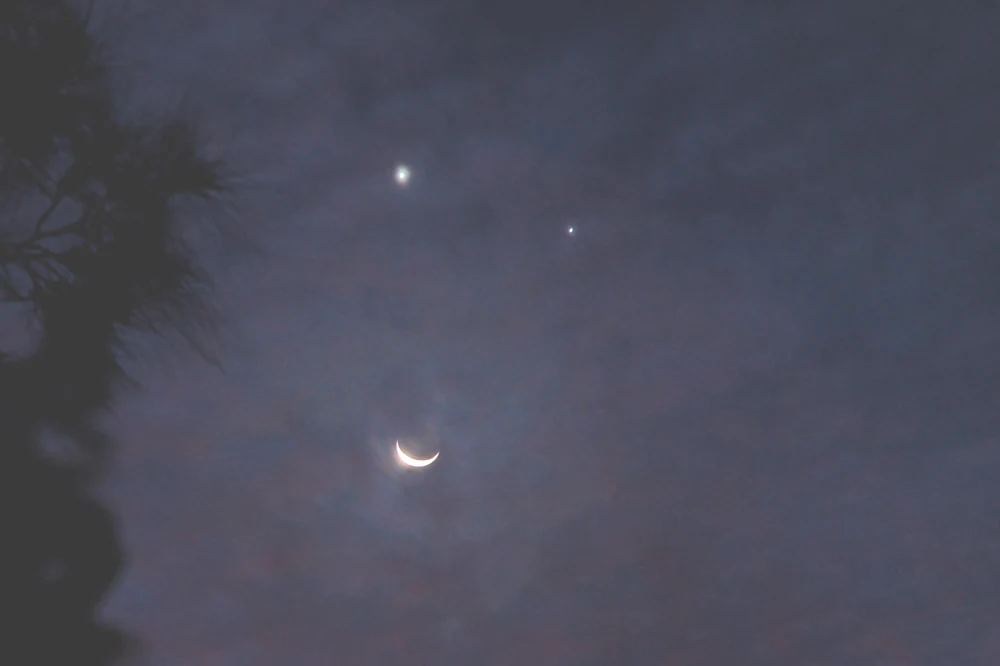
Venus, Moon, and Jupiter in conjunction above the horizon
Celestial event

Venus–Jupiter conjunction on June 9: both planets fit in one binocular view

On the evening of June 9, Venus and Jupiter close to within roughly 1.5° of each other, about three full-moon widths, low in the western twilight. Venus, near magnitude −4, is the brighter of the two. Jupiter sits at about magnitude −2, dimmer but impossible to miss. Both planets fit comfortably inside a standard binocular field of view, and you don’t need anything more than your eyes to enjoy the pairing. The show runs for the better part of a week on either side of the closest approach, so one cloudy night won’t ruin it. ...

June 2, 2026 · 7 min · Andreas Ioannou
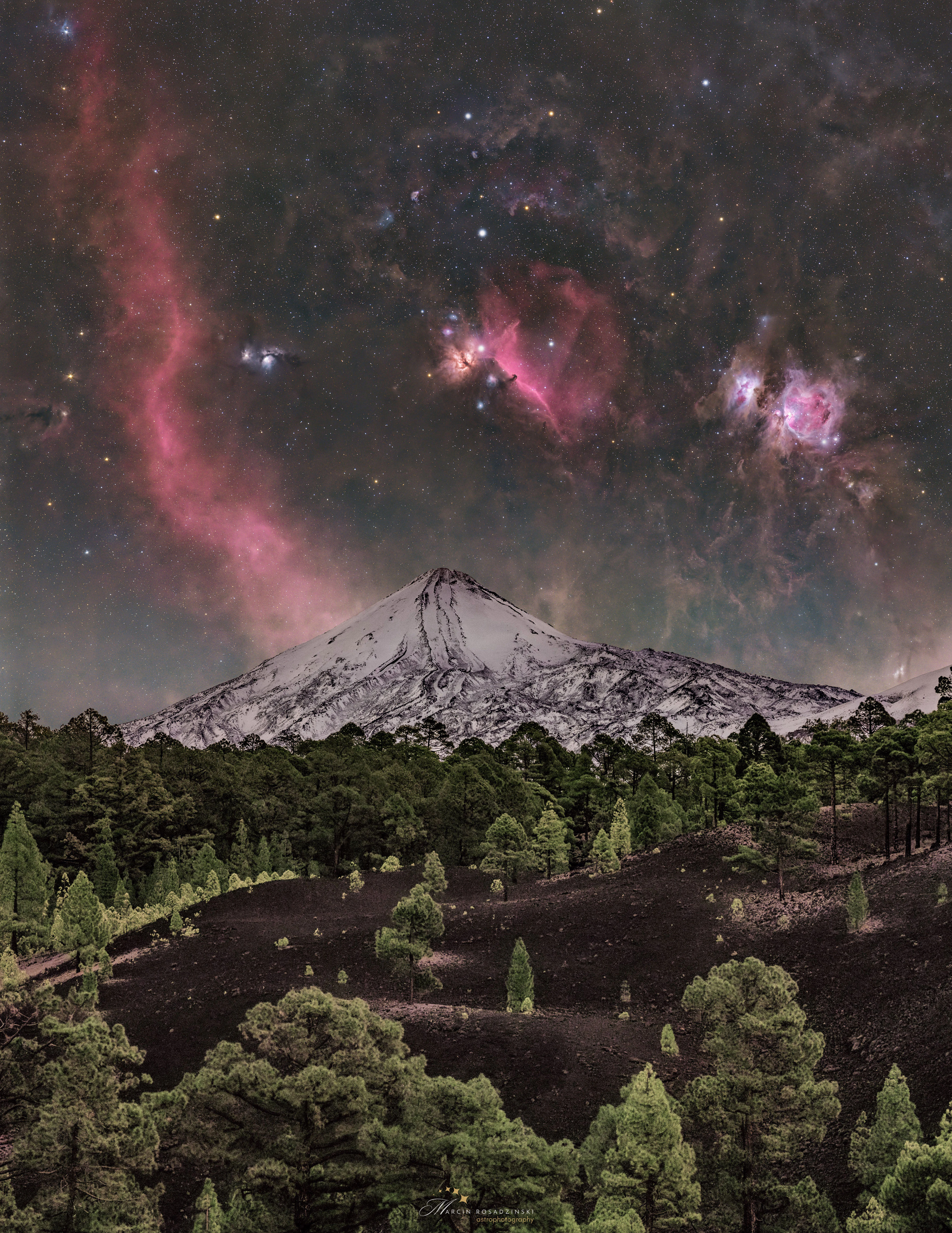
Orion over Mount Teide
Gear

Binoculars or a first telescope? What I actually tell beginners in 2026

If you have €120–€180 and you’ve never owned an astronomy instrument, buy a pair of 10×50 binoculars. Don’t buy a telescope. I’ve watched too many friends spend €200 on a wobbly 70mm department-store refractor, see Saturn as a tiny pixel-blur once, and shelve the thing for good. There’s exactly one case where that advice flips, and I’ll get to it. But the default answer, for the person walking into this hobby with no gear and no specific target in mind, is binoculars. ...

May 5, 2026 · 9 min · Andreas Ioannou