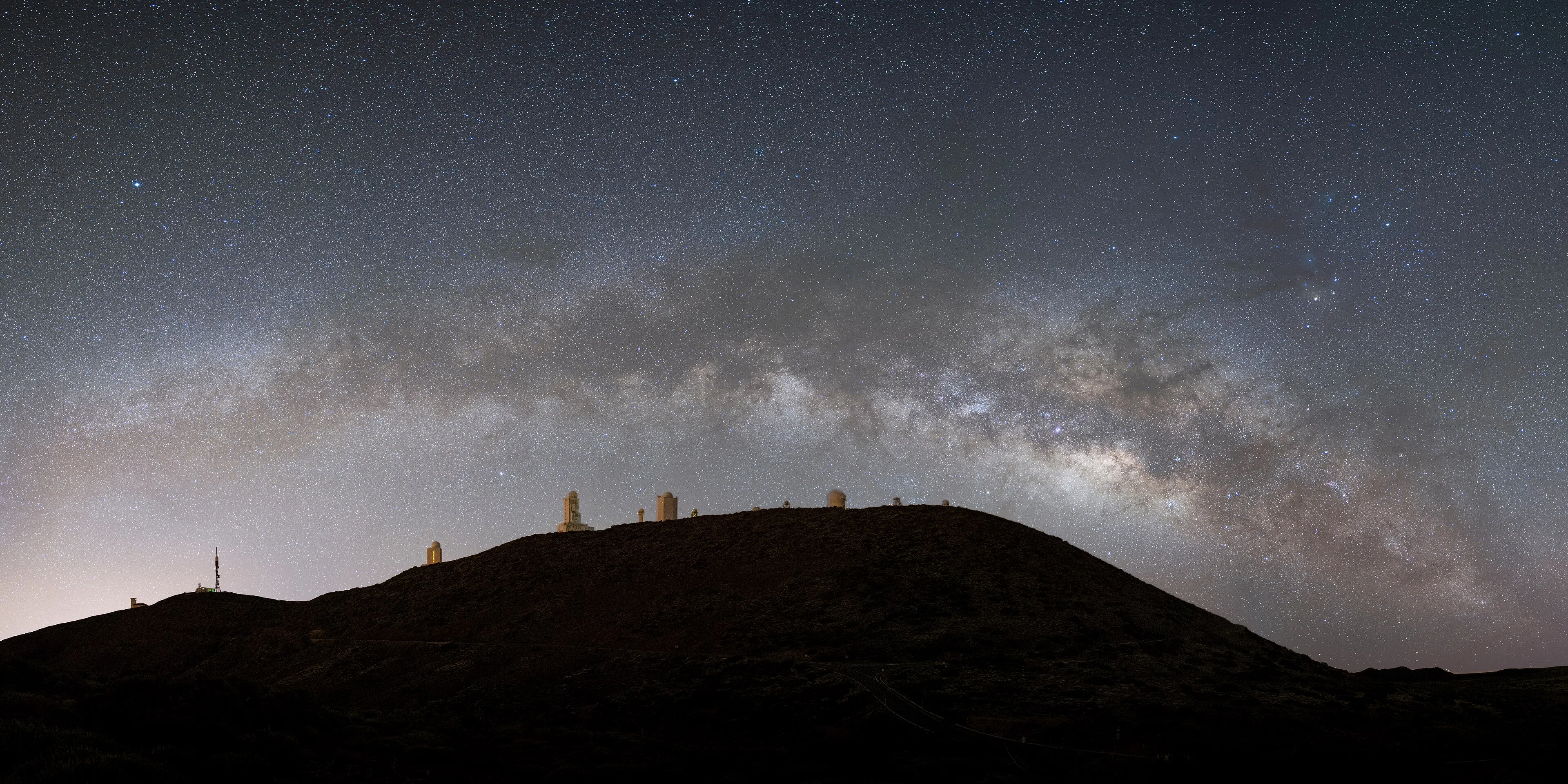
The Milky Way arching over the telescope domes of the Teide Observatory on the Izaña ridge in Tenerife, with Scorpius and Antares on the right and a faint glow of coastal light on the left horizon.
Astrotourism

Stargazing on Teide: how dark Tenerife's sky really is, and where to stand

Tenerife is the easiest high-altitude sky in Europe to get to: two international airports and a paved road up to the Teide cable car’s base station at 2,356 m. The catch is in the photometry. The professional observatory on the Izaña ridge measures its moonless zenith at 21.20 magnitudes per square arcsecond, half a magnitude brighter than La Palma’s Roque de los Muchachos, about 144 km to the west-northwest. Below I go through where that extra light comes from, which caldera viewpoints to use, what the guided tours cost, and what a winter trip to 28° north shows you that Cyprus can’t. ...
October 10, 2026 · 10 min · Andreas Ioannou
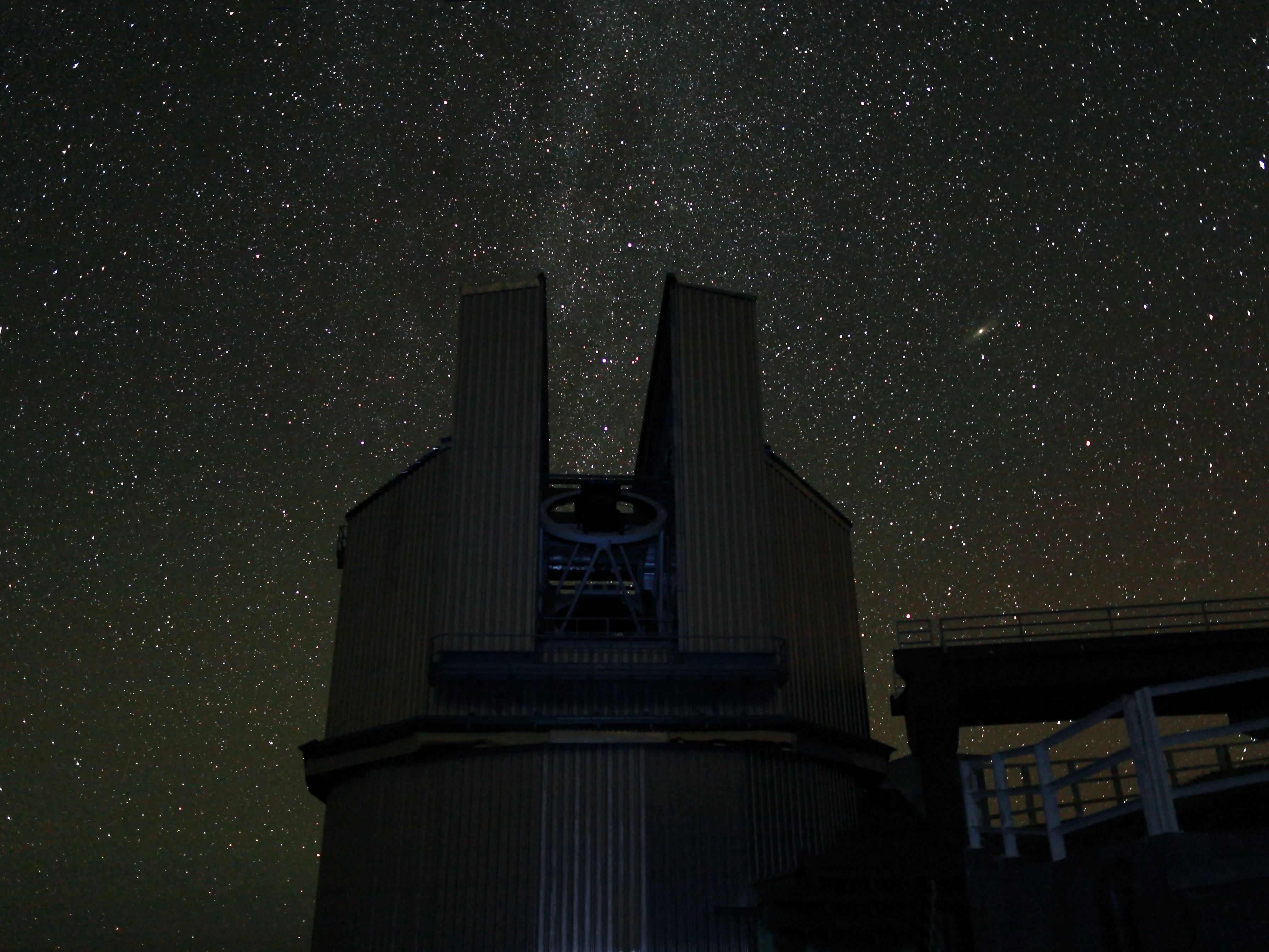
The Telescopio Nazionale Galileo at Roque de los Muchachos Observatory on La Palma, with the Andromeda galaxy visible in the night sky
Astrotourism

La Palma: the island that wrote dark skies into law

La Palma has something no other island in the world can match: a national law — Ley 31/1988, the Ley del Cielo — that controls every streetlight, bans upward-pointing fixtures, and dims the grid after midnight. The law exists to protect the sky above the Roque de los Muchachos Observatory, where the 10.4 m Gran Telescopio Canarias sits at 2,396 m altitude. The side effect for visitors is an island with some of the darkest measured skies in Europe, over 300 clear nights per year, and 16 purpose-built astronomical viewpoints. ...

May 24, 2026 · 7 min · Andreas Ioannou