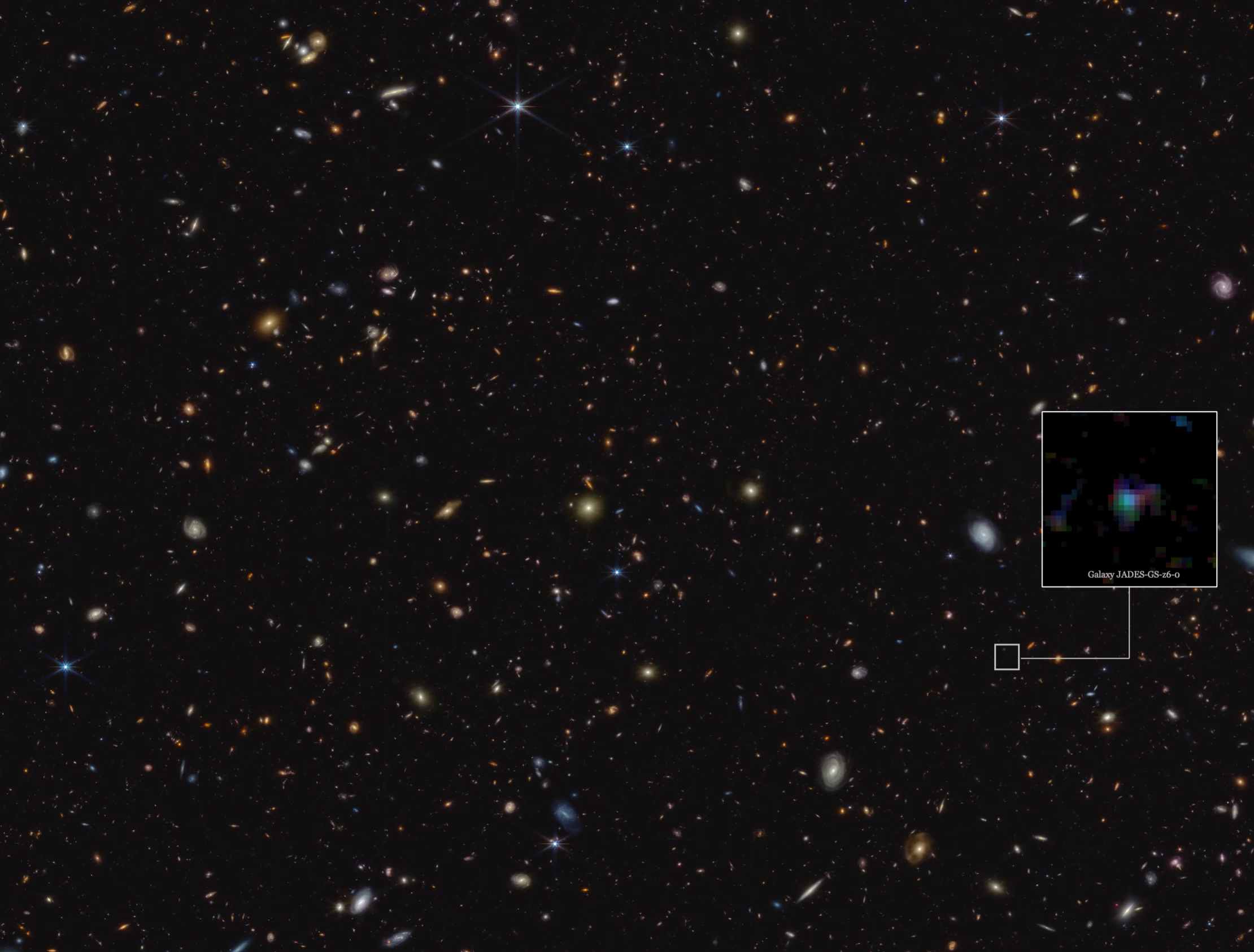
A JWST NIRCam deep field crowded with hundreds of faint galaxies, with a small cutout highlighting the distant galaxy JADES-GS-z6 as a blurry blue-and-red smudge.
Space science

The first massive galaxies may weigh four times what we thought — hidden in faint dwarf stars

When you weigh a galaxy, you’re really weighing its light. Point a telescope at an elliptical galaxy a few billion light-years away and you record a smear of photons, and most of that light comes from a small number of bright, heavy stars. The faint red dwarfs, the ones that make up the overwhelming majority of any galaxy’s star count, are individually invisible at that distance. You never see them one by one. You infer how many there are, and you do that by assuming a galaxy far away is built from the same mix of stars as the ones nearby. ...
August 23, 2026 · 7 min · Andreas Ioannou
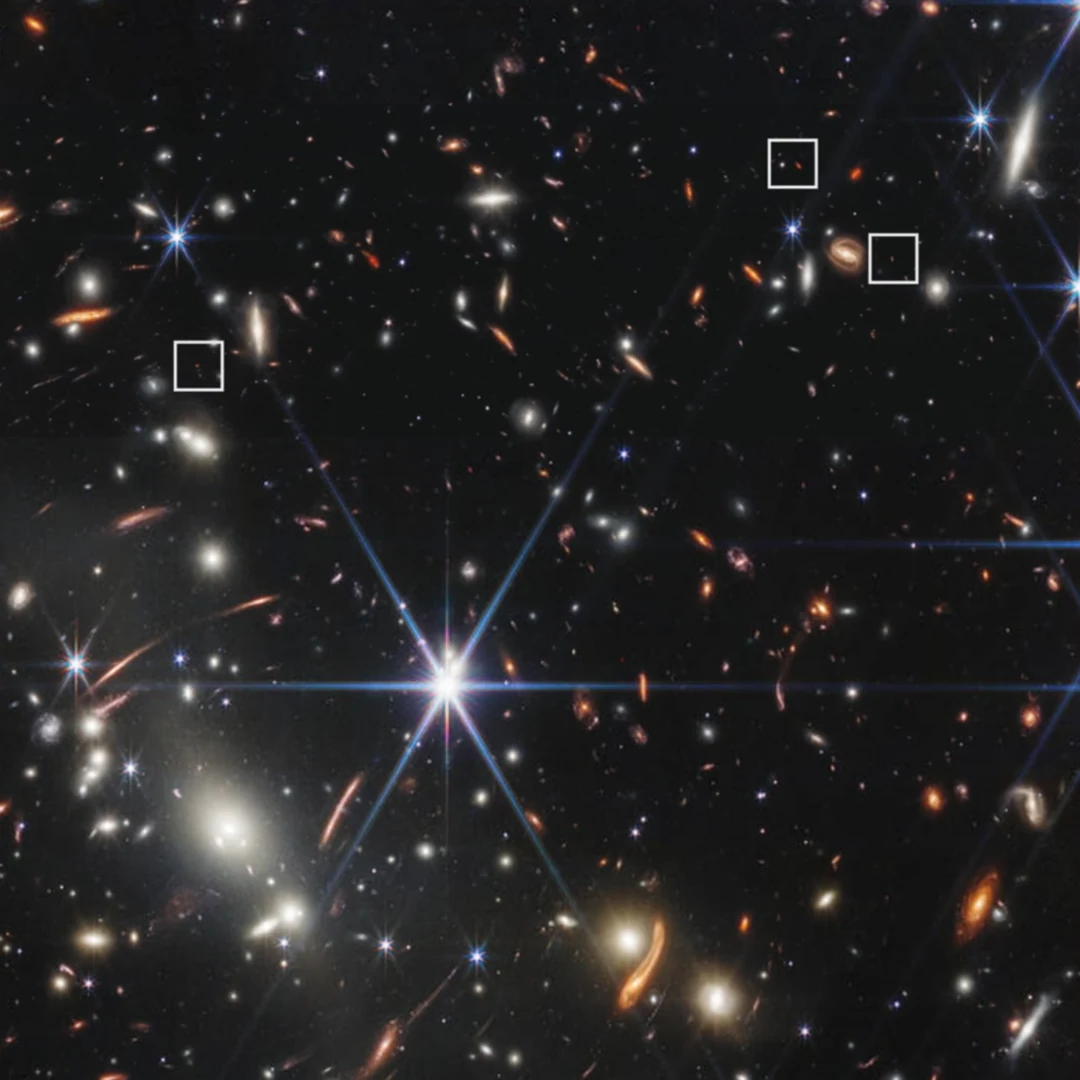
Webb deep field image of galaxy cluster SMACS 0723 showing thousands of orange and white galaxies with three highlighted early-universe objects
Space science

JWST's 'little red dots' aren't galaxies. They're black holes wrapped in gas.

Since 2022, the James Webb Space Telescope has been turning up compact red objects in the deep universe that nobody predicted. More than 300 of these “little red dots” have been catalogued so far, all crammed into a narrow epoch between about 600 million and 1.6 billion years after the Big Bang. For four years, they’ve driven a sharp debate: are they impossibly massive galaxies, overgrown black holes, or something we haven’t modelled yet? A paper published on June 10 in The Astrophysical Journal by Vasily Kokorev and colleagues at the University of Texas at Austin delivers the strongest answer so far. The object they studied, GLIMPSE-17775, is a supermassive black hole cocooned in dense, hot gas — and the data suggest most little red dots are, too. ...

June 23, 2026 · 8 min · Andreas Ioannou