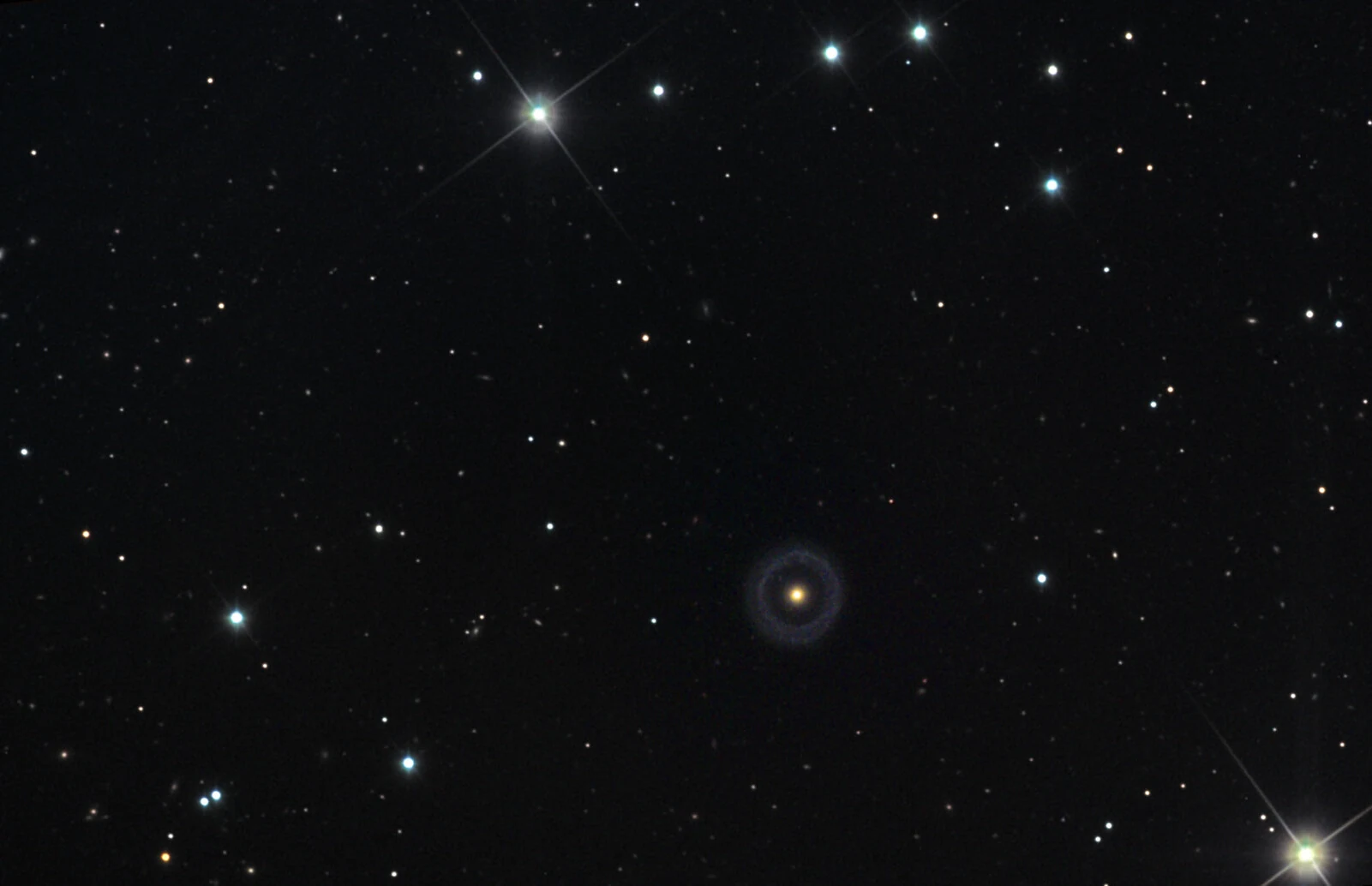
Hoag's Object, a ring galaxy: a bright yellow-white core encircled by a detached blue ring of young stars, with a smaller ring galaxy visible through the gap.
AI × astronomy

How machine learning finds the weird one in four million galaxies

The Dark Energy Camera Legacy Survey imaged about 1.6 billion sources. Even after aggressive quality cuts, that leaves nearly four million galaxies, far more than any team will ever eyeball. The discoveries hiding in a catalog that size are usually not the objects someone built a detector for. They’re the ones nobody thought to name: a galaxy bent into a ring, a gravitational lens that slipped past the catalogs, a pair caught mid-collision. A small family of tools now goes looking for exactly those, and the trick behind all of them is the same. Let one person teach an algorithm what “interesting” means, then let the machine apply that taste to millions of images. ...
September 19, 2026 · 7 min · Andreas Ioannou
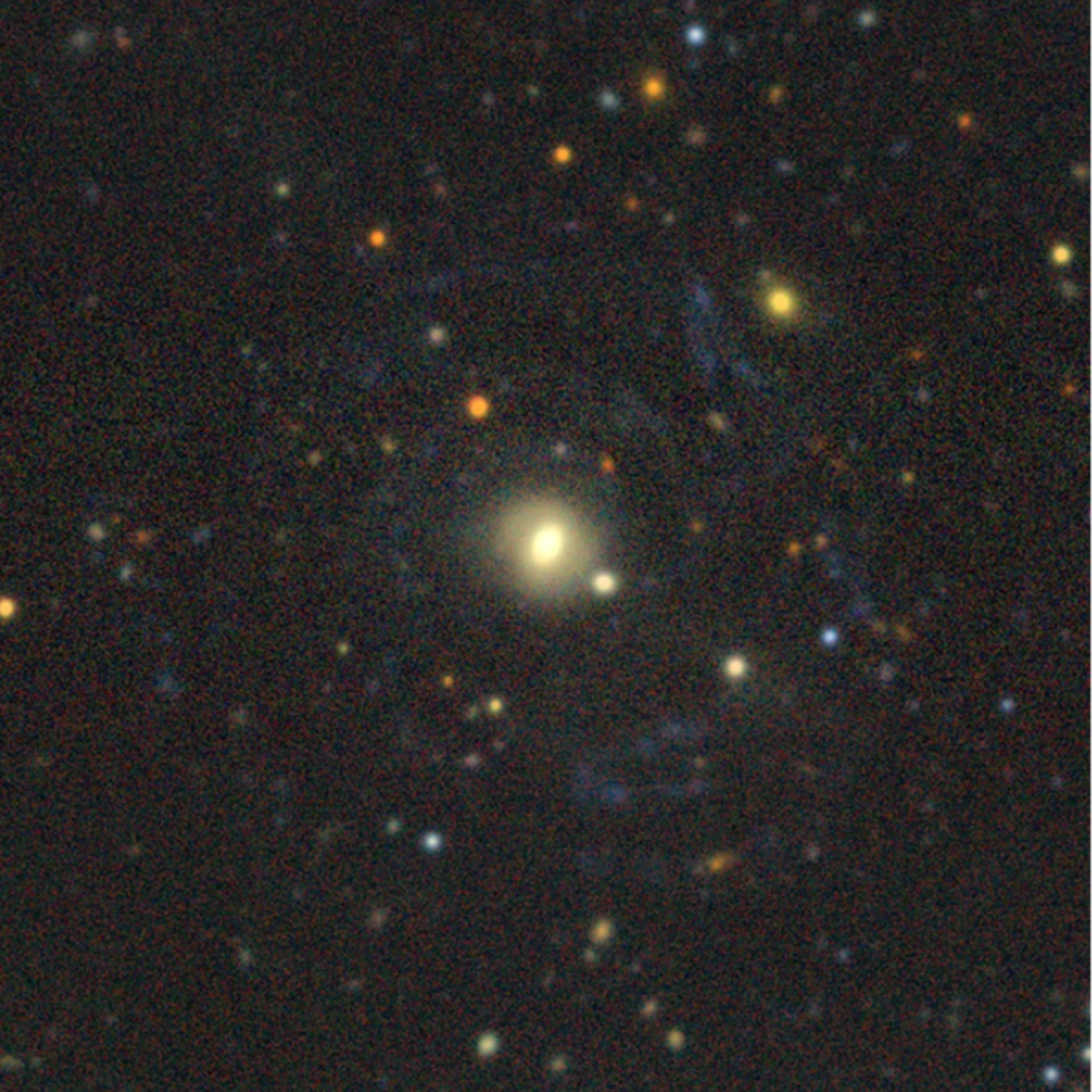
The faint giant low-surface-brightness galaxy Malin 1, a sprawling pale spiral against a field of smaller galaxies, imaged in colour by the DESI Legacy Imaging Survey, one of the sky surveys used to train astronomical foundation models.
AI × astronomy

Foundation models came to astronomy — and one matched a supervised network with 1% of the labels

Here’s the number that made me put my coffee down. A model trained on Euclid galaxy images matched a fully supervised network at estimating galaxy redshifts and stellar masses — using 1% of the labeled examples. Ninety-nine percent of the labels thrown away, same accuracy. That result is from the Euclid Quick Data Release paper by Siudek et al., published in Astronomy & Astrophysics on 30 June 2026. It’s one of three papers from the last two years that convinced me astronomy has quietly acquired what the machine-learning world calls foundation models: a single large model pretrained once on a mountain of unlabeled data, then adapted cheaply to many different tasks. ...

July 12, 2026 · 8 min · Andreas Ioannou