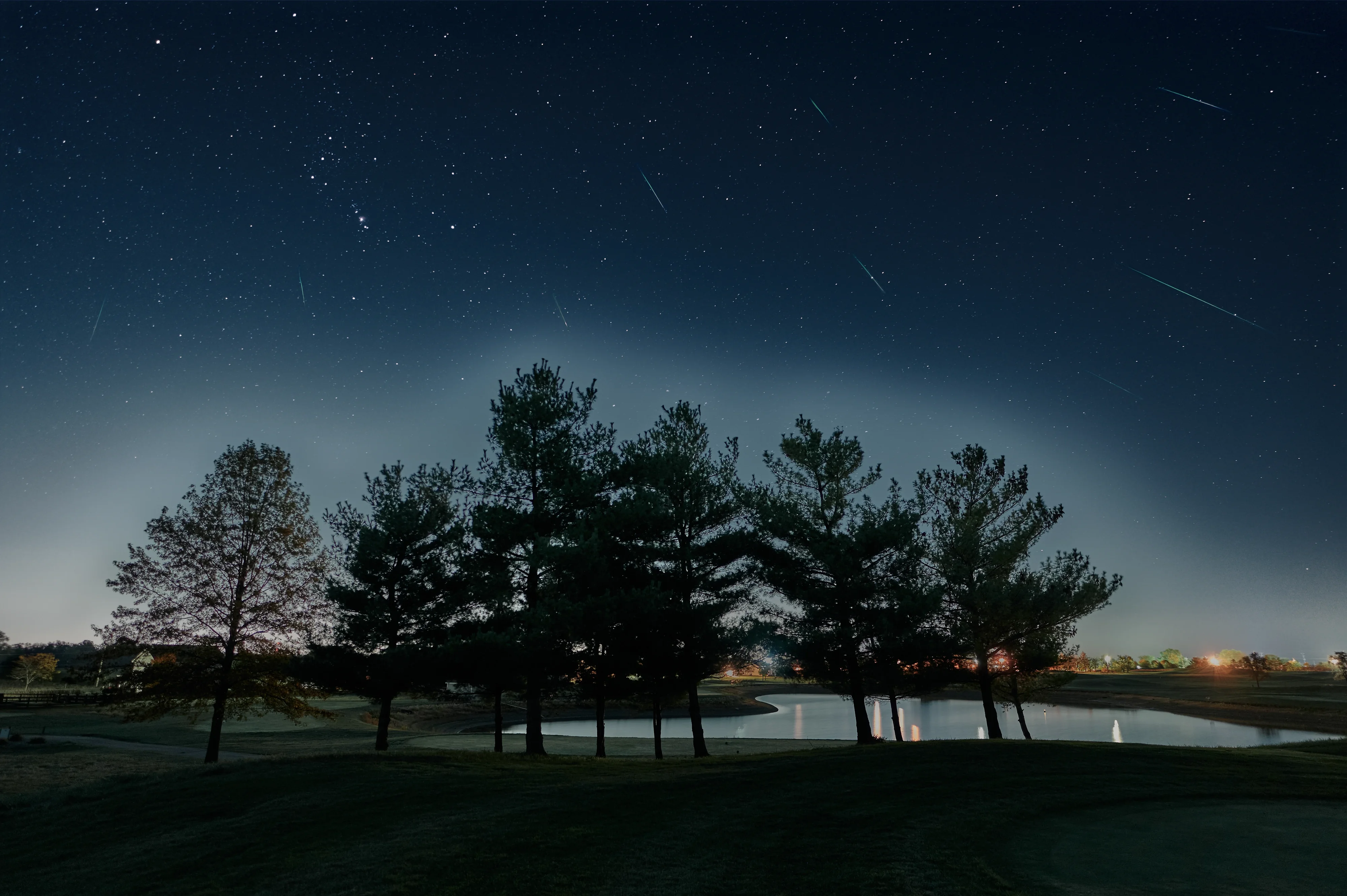
Composite night photograph of the Orionid meteor shower: about a dozen thin meteor streaks cross a dark blue starry sky above a row of silhouetted pine trees and a pond, with the constellation Orion visible at upper left.
Celestial event

Orionids 2026: wait out the gibbous Moon, then watch Halley's meteors until dawn

The Orionid meteor shower peaks on the night of October 21–22, 2026, and this year the Moon decides when you go out. A waxing gibbous Moon, about 80% lit, hangs over the evening sky and doesn’t set until 02:55 local time in Cyprus (23:55 UT) on the peak morning. After that you get roughly two and a half hours of properly dark sky before dawn starts at 05:34. Those happen to be the hours when the Orionid radiant is highest anyway. Set an alarm for 03:00, look south, and expect around 10–12 meteors an hour from a dark site, fewer from a town. No equipment needed. ...
October 16, 2026 · 9 min · Andreas Ioannou
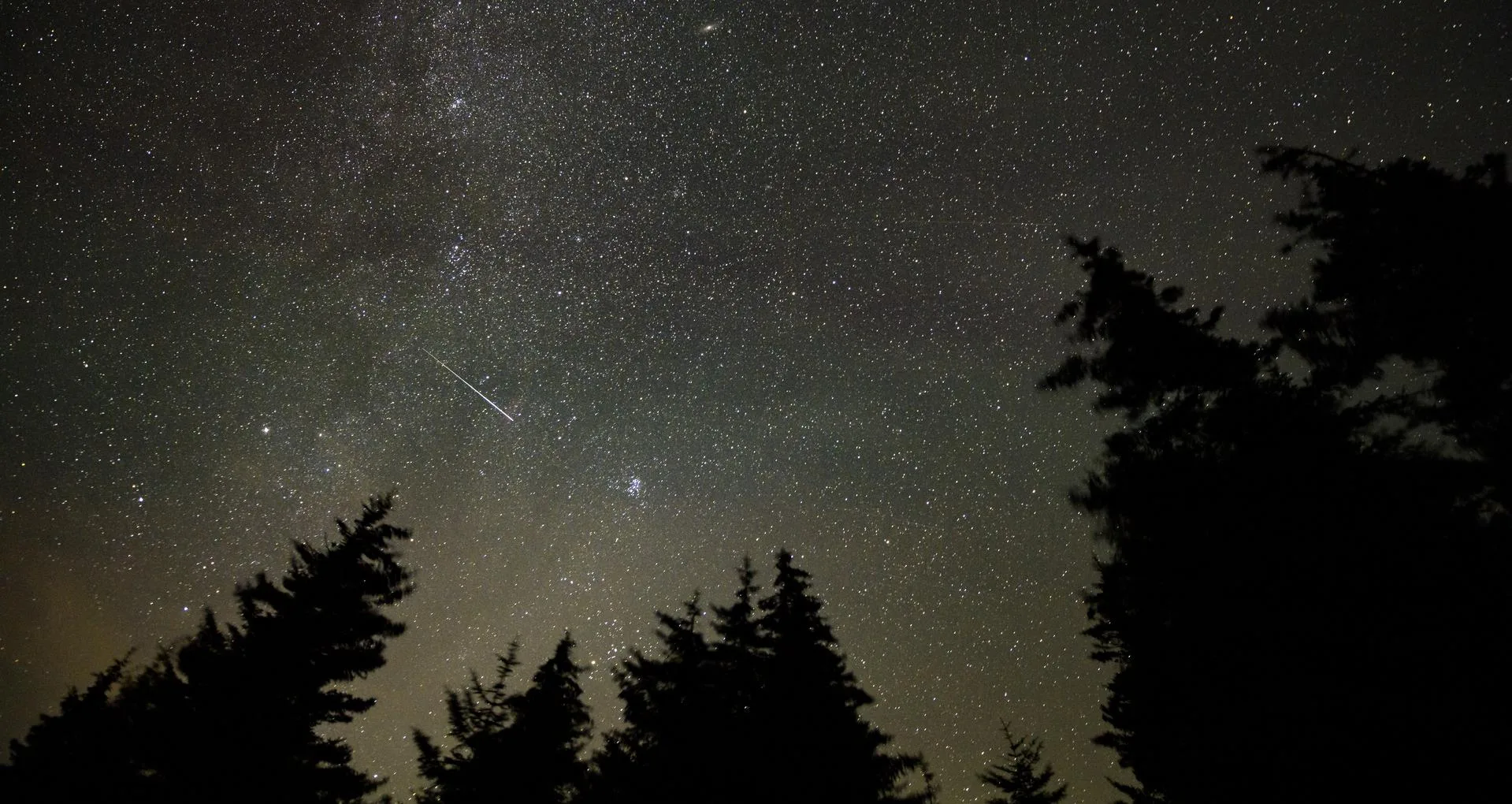
A bright meteor streaks across the Milky Way during the Perseid meteor shower, photographed in a 30-second exposure from Spruce Knob, West Virginia
Celestial event

Eta Aquariids 2026: what to expect from tonight's peak with an 84% moon

The Eta Aquariids peaked at 03:51 UTC on May 5, but this shower has a broad maximum — activity tonight and tomorrow morning (May 6–7) will be nearly as strong as peak night. The problem isn’t timing. It’s the moon: an 84%-illuminated waning gibbous will sit above the horizon during the entire pre-dawn window when the radiant is highest. That cuts your visible count roughly in half compared to a moonless year. ...

May 6, 2026 · 6 min · Andreas Ioannou