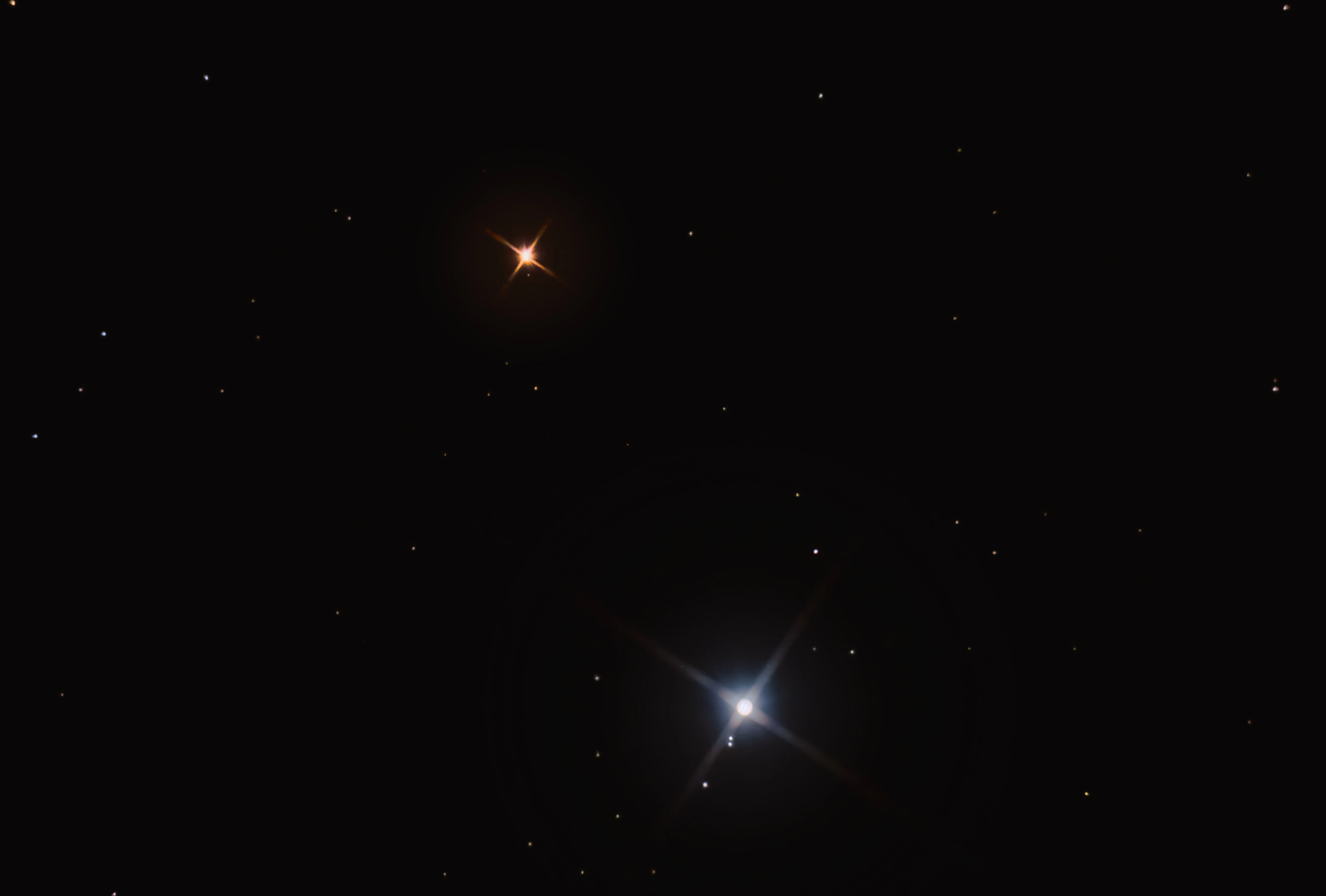
Telescope photograph of Mars and Jupiter close together on a black star field: Mars is a small orange point near the top, Jupiter a brighter blue-white point lower down with tiny dots of its moons beside it, both with four-pointed diffraction spikes.
Celestial event

Mars is closing on Jupiter: watch the gap shrink to 1.2° by November 16

Two bright planets are up before dawn right now, and the gap between them shrinks every morning for the next month. This morning Mars and Jupiter are 12.7° apart, a bit more than a fist held at arm’s length. By the morning of November 16 that gap is down to 1.19°, a little over two full-Moon widths. Closest approach is around 02:00 UT on the 16th, which is 04:00 in Cyprus, with both planets riding high in the south-east. You don’t need any equipment for this one. Pick a morning each week, note how far apart the two points are, and watch Mars catch up. Binoculars add Jupiter’s moons. Around the 16th, a small telescope at its lowest power can just about hold both planets in a single field. ...
October 14, 2026 · 9 min · Andreas Ioannou
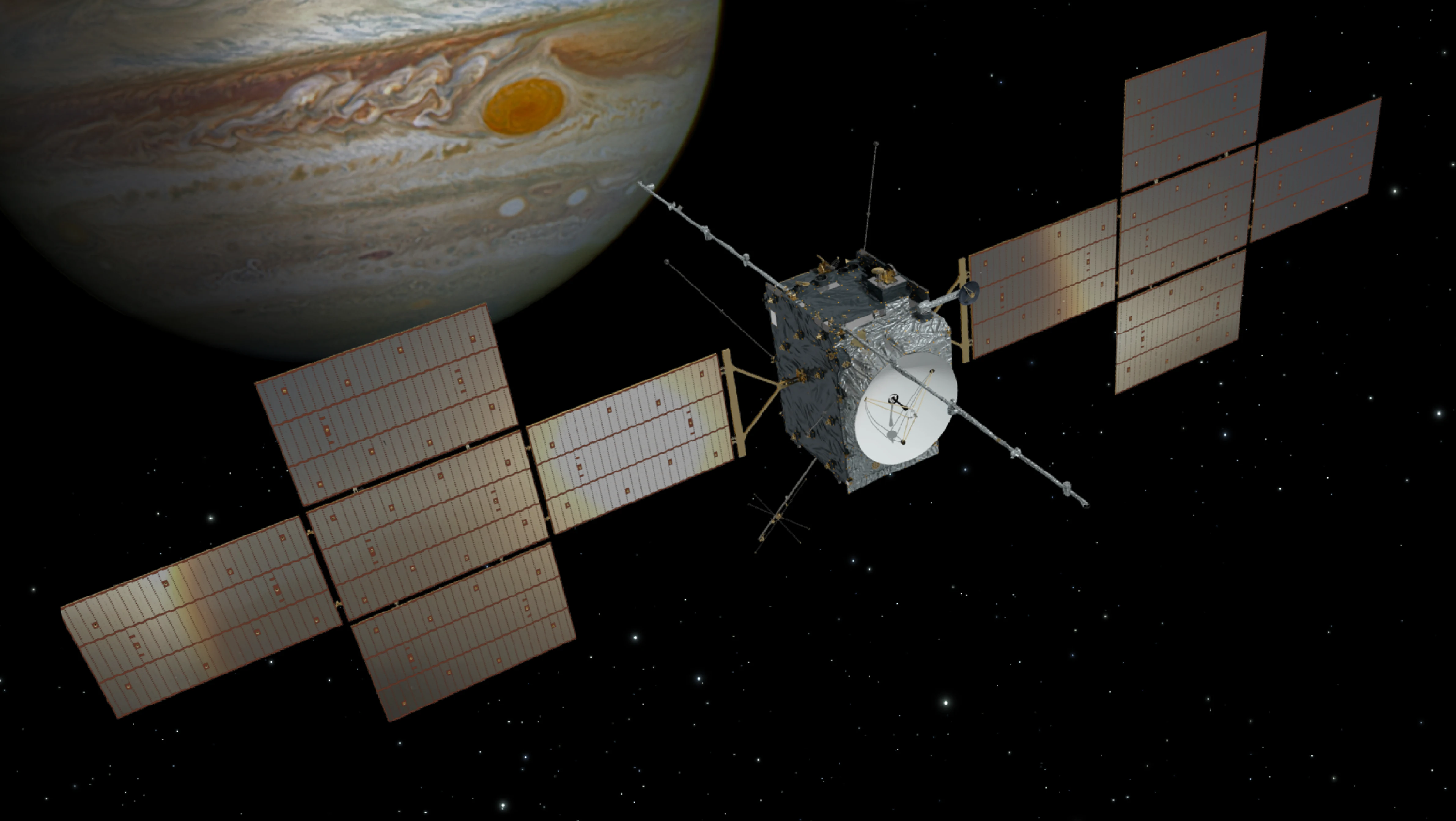
Artist's illustration of ESA's JUICE spacecraft, its cross-shaped solar arrays extended, in front of Jupiter and the Great Red Spot
Space news

JUICE flies past Earth on September 29 — a fuel-free speed boost on the long road to Jupiter

At the end of this month a Jupiter-bound spacecraft is going to thread past Earth to steal a tank of speed it can’t buy any other way. On 29 September 2026, ESA’s JUICE — the Jupiter Icy Moons Explorer — makes its second solo flyby of our planet, a gravity assist that borrows a sliver of Earth’s own motion around the Sun and hands it to the spacecraft for free. No engine burn does the heavy lifting here. Geometry does. ...

September 16, 2026 · 7 min · Andreas Ioannou
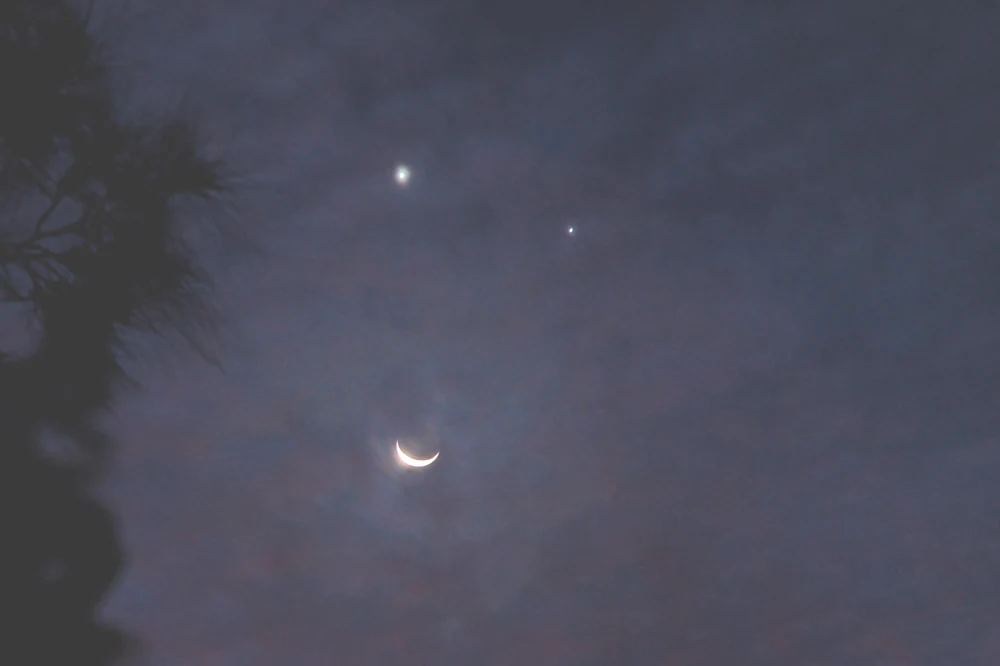
Venus, Moon, and Jupiter in conjunction above the horizon
Celestial event

Venus–Jupiter conjunction on June 9: both planets fit in one binocular view

On the evening of June 9, Venus and Jupiter close to within roughly 1.5° of each other, about three full-moon widths, low in the western twilight. Venus, near magnitude −4, is the brighter of the two. Jupiter sits at about magnitude −2, dimmer but impossible to miss. Both planets fit comfortably inside a standard binocular field of view, and you don’t need anything more than your eyes to enjoy the pairing. The show runs for the better part of a week on either side of the closest approach, so one cloudy night won’t ruin it. ...

June 2, 2026 · 7 min · Andreas Ioannou
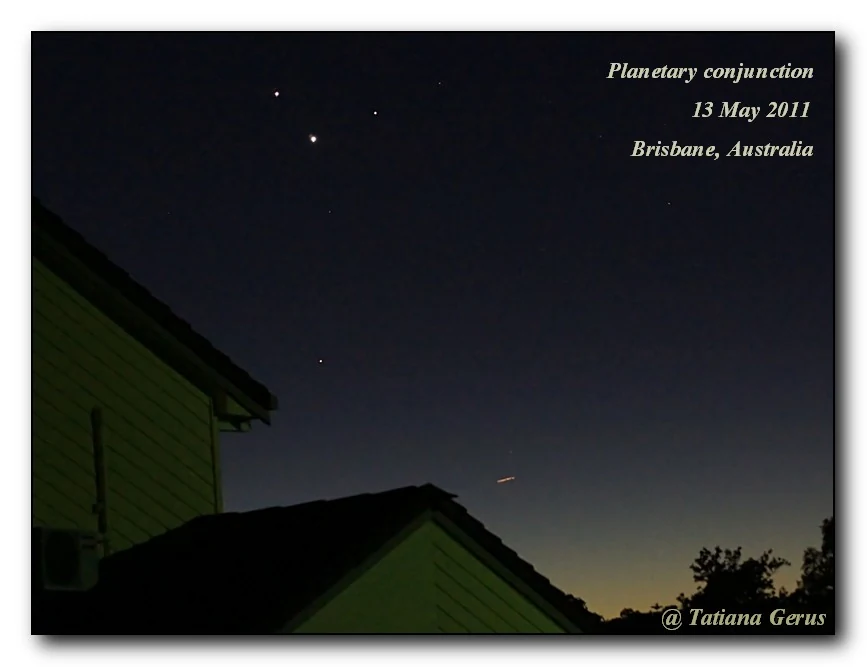
Four planets aligned above the horizon in the predawn sky, photographed from Brisbane, Australia
Beginner stargazing

Five planets you can see without a telescope this June

All five naked-eye planets are out this June, split between the evening and morning sky. The headline act: Venus and Jupiter converge to within 1°38’ of each other on June 9, the two brightest objects in the night sky after the Moon, close enough to cover both with your thumb at arm’s length. You don’t need a telescope, a dark sky, or any experience. Here’s where and when to look. ...

May 28, 2026 · 6 min · Andreas Ioannou