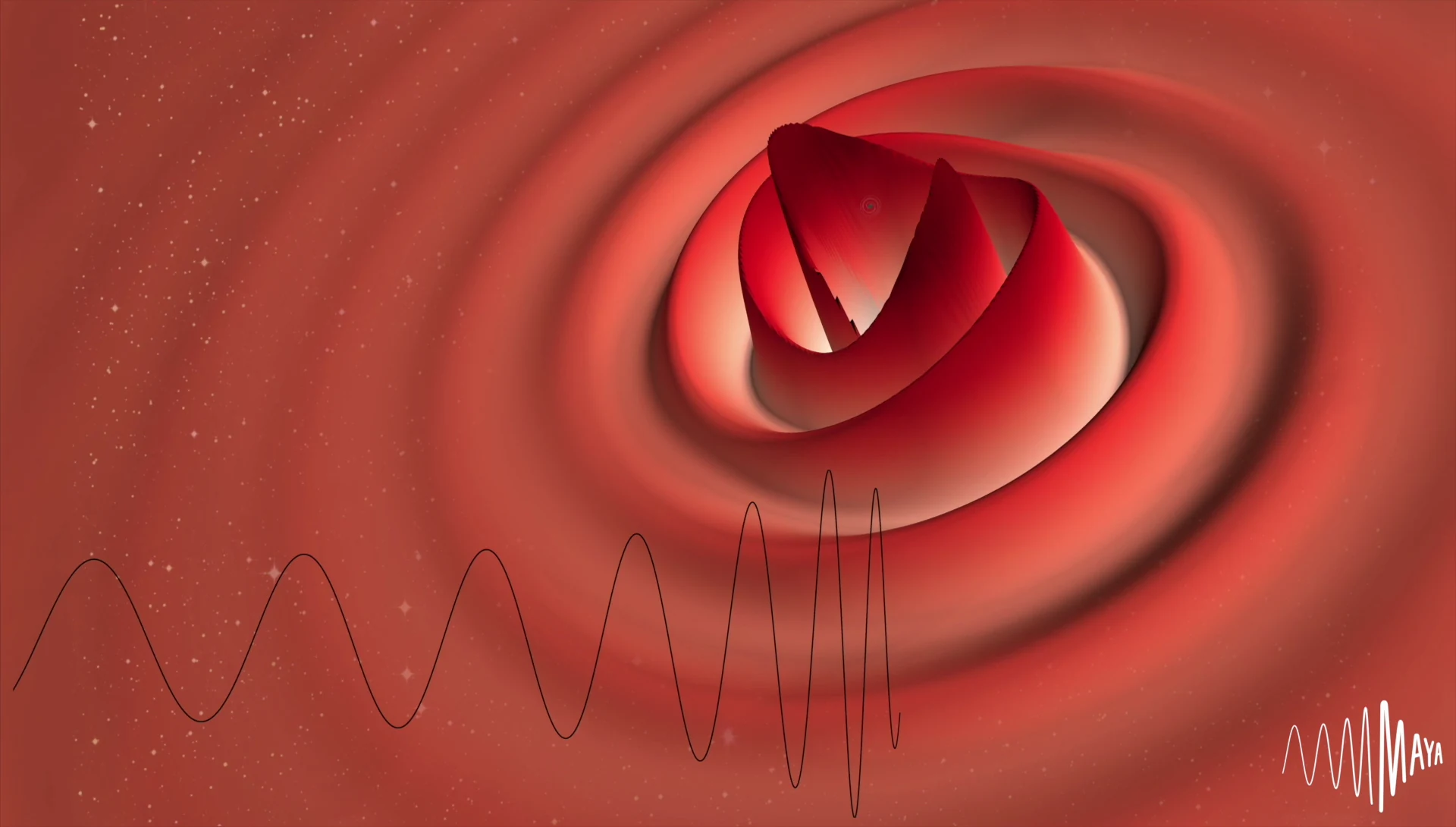
A decade ago LIGO caught one black hole collision. The catalog now holds 390.
On 14 September 2015, two detectors in Louisiana and Washington State registered a rising chirp that lasted about a fifth of a second: two black holes of roughly 36 and 29 solar masses spiralling together 1.3 billion light-years away, their final orbits stretching and squeezing the ground by less than the width of a proton. That single event, GW150914, opened gravitational-wave astronomy and won a Nobel Prize. On 26 May 2026, the LIGO–Virgo–KAGRA (LVK) collaboration released GWTC-5.0, the fifth edition of its Gravitational-Wave Transient Catalog. The running total of detected events since 2015 now stands at 390. A pile that size changes what the field can do. Gravitational-wave detection has crossed from hunting individual events into doing population statistics: this is a black-hole census now, and the population is starting to talk back. ...