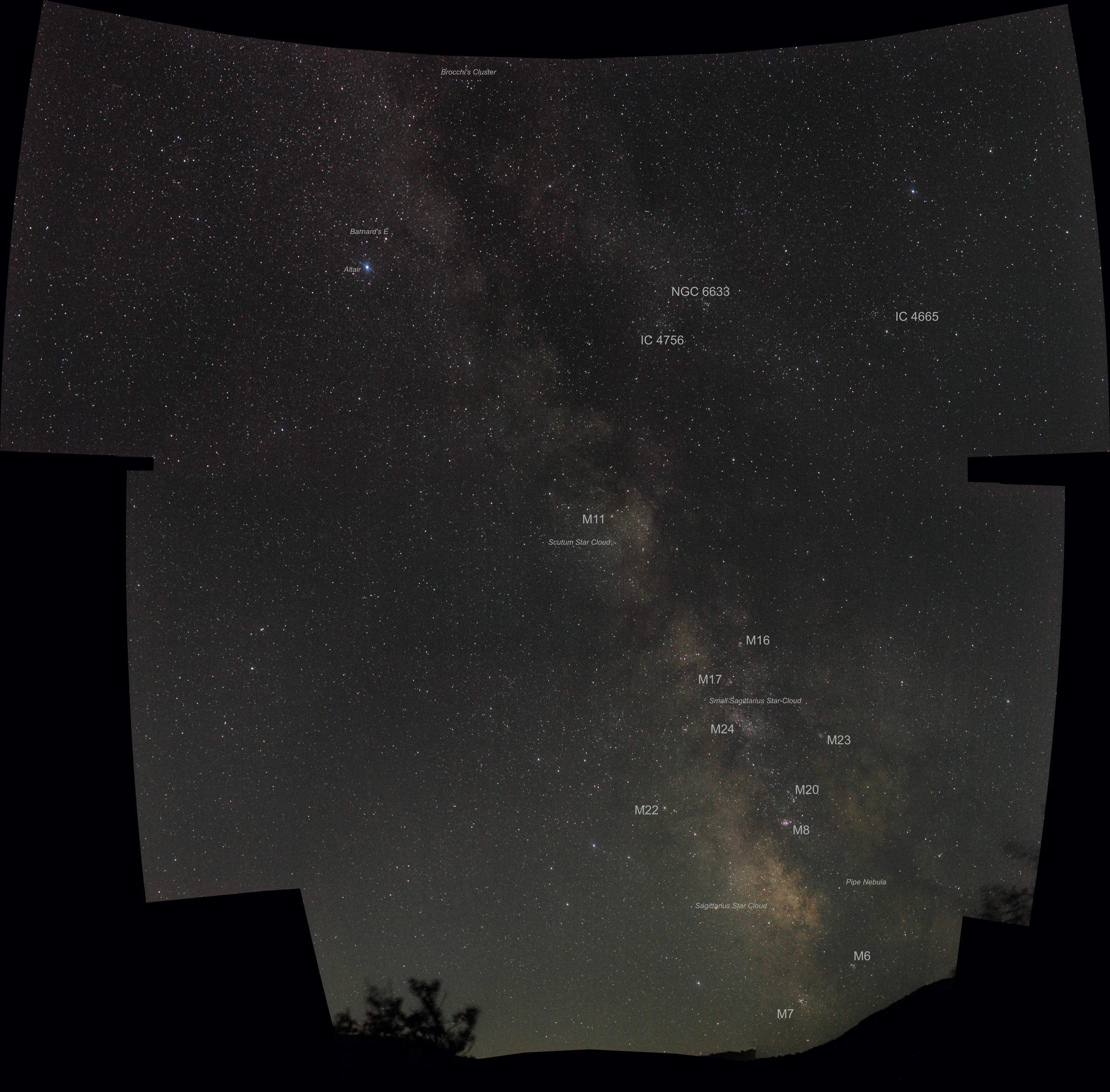
Wide-field photo of the summer Milky Way stretching from Vulpecula down to Scorpius, its bright star clouds crowding toward the galactic center low in the sky
Beginner stargazing

How to find the center of the galaxy with your own eyes this July

On a dark night this month you can stand in a field, face south, and look almost exactly toward the supermassive black hole at the center of our galaxy. No telescope. No binoculars, though they help. Just your eyes, a clear southern horizon, and enough patience to let them adjust. The direction sits low in the sky between two constellations that are up all July: Scorpius and Sagittarius. You won’t see the black hole itself (its light is buried behind thousands of light-years of dust), but you can point your face down the barrel toward it and see the thickest, brightest star clouds of the whole Milky Way piled up in that direction. From my usual dark spot in the Troodos mountains, that stretch of sky is the best thing summer offers. Here’s how to find it. ...
July 5, 2026 · 8 min · Andreas Ioannou
Milky Way Untangled
Beginner stargazing

How to photograph the Milky Way with just your phone

Your phone’s camera sensor is larger, faster, and smarter than anything a dedicated DSLR could offer ten years ago. If you can get yourself under a reasonably dark sky — Bortle 4 or darker — a 2024-or-newer flagship phone will record the Milky Way in a single exposure. No telescope, no star tracker, no laptop in a field at 2 AM. Just the phone, something to prop it against, and about 30 seconds of patience. ...

June 21, 2026 · 7 min · Andreas Ioannou
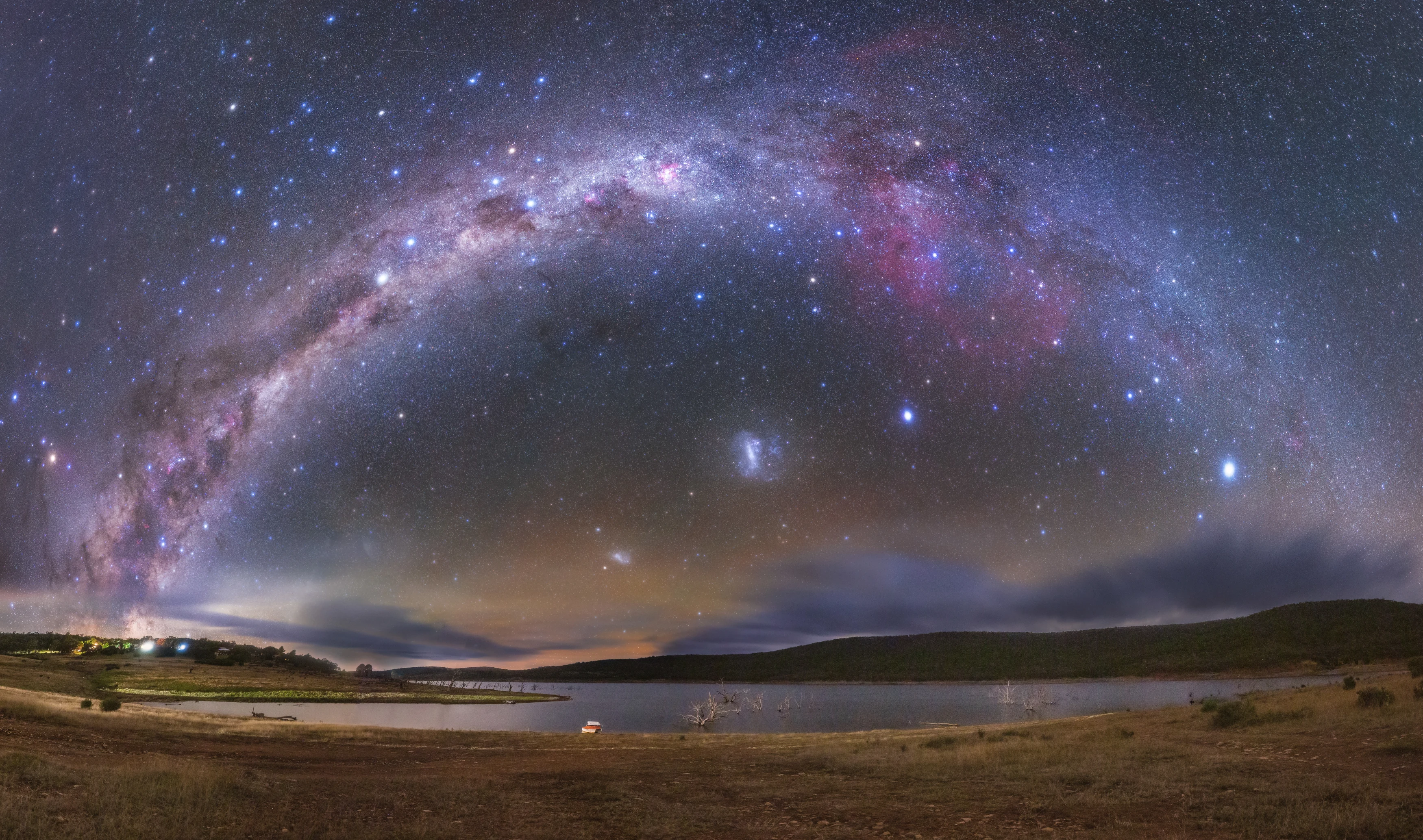
The Milky Way arching over a dark southern hemisphere landscape with the Southern Cross, pointer stars, and Magellanic Clouds visible
Astrotourism

NamibRand: what the sky looks like from a Bortle 1 desert at 25° south

NamibRand Nature Reserve covers 2,150 km² of Namib Desert roughly 400 km southwest of Windhoek. In 2012, the International Dark-Sky Association gave it Gold Tier International Dark Sky Reserve status — the second site in the world to receive the designation, and the first in Africa. The reserve records Bortle 1 sky conditions on a continuously logging Unihedron SQM-LE, with the nearest meaningful light dome more than 70 km away. If you’ve only ever observed from mid-northern latitudes and wonder what the Milky Way looks like when its core passes through your zenith, this is the place to find out. ...

June 20, 2026 · 6 min · Andreas Ioannou
Milky Way Untangled
Gear

How to choose a star tracker for Milky Way season

The Milky Way core is above the horizon from the northern hemisphere between roughly May and September. From my latitude in Nicosia (35°N), the galactic center tops out at about 26° above the southern horizon. Low enough that Troodos at 1,700 m is worth the midnight drive, but high enough to image from anywhere with a clear southern view. If you own a camera and a lens wider than 50 mm, a star tracker is the cheapest single upgrade that turns a noisy 15-second snapshot into a clean, deep wide-field frame. I’ve spent the past few months researching them before committing to one. Here’s what the specs mean and which three models are worth comparing. ...

May 26, 2026 · 7 min · Andreas Ioannou