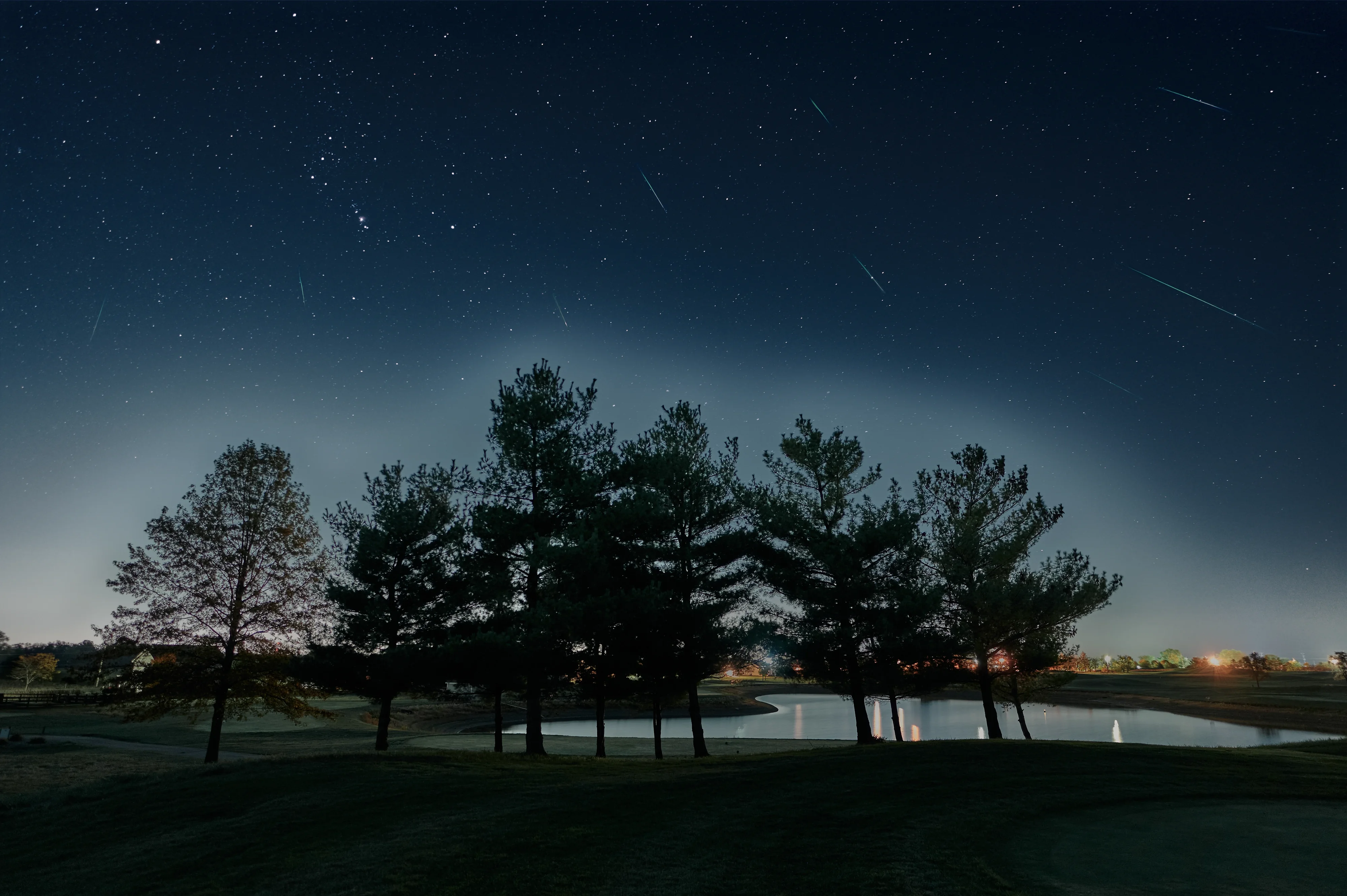
Composite night photograph of the Orionid meteor shower: about a dozen thin meteor streaks cross a dark blue starry sky above a row of silhouetted pine trees and a pond, with the constellation Orion visible at upper left.
Celestial event

Orionids 2026: wait out the gibbous Moon, then watch Halley's meteors until dawn

The Orionid meteor shower peaks on the night of October 21–22, 2026, and this year the Moon decides when you go out. A waxing gibbous Moon, about 80% lit, hangs over the evening sky and doesn’t set until 02:55 local time in Cyprus (23:55 UT) on the peak morning. After that you get roughly two and a half hours of properly dark sky before dawn starts at 05:34. Those happen to be the hours when the Orionid radiant is highest anyway. Set an alarm for 03:00, look south, and expect around 10–12 meteors an hour from a dark site, fewer from a town. No equipment needed. ...
October 16, 2026 · 9 min · Andreas Ioannou
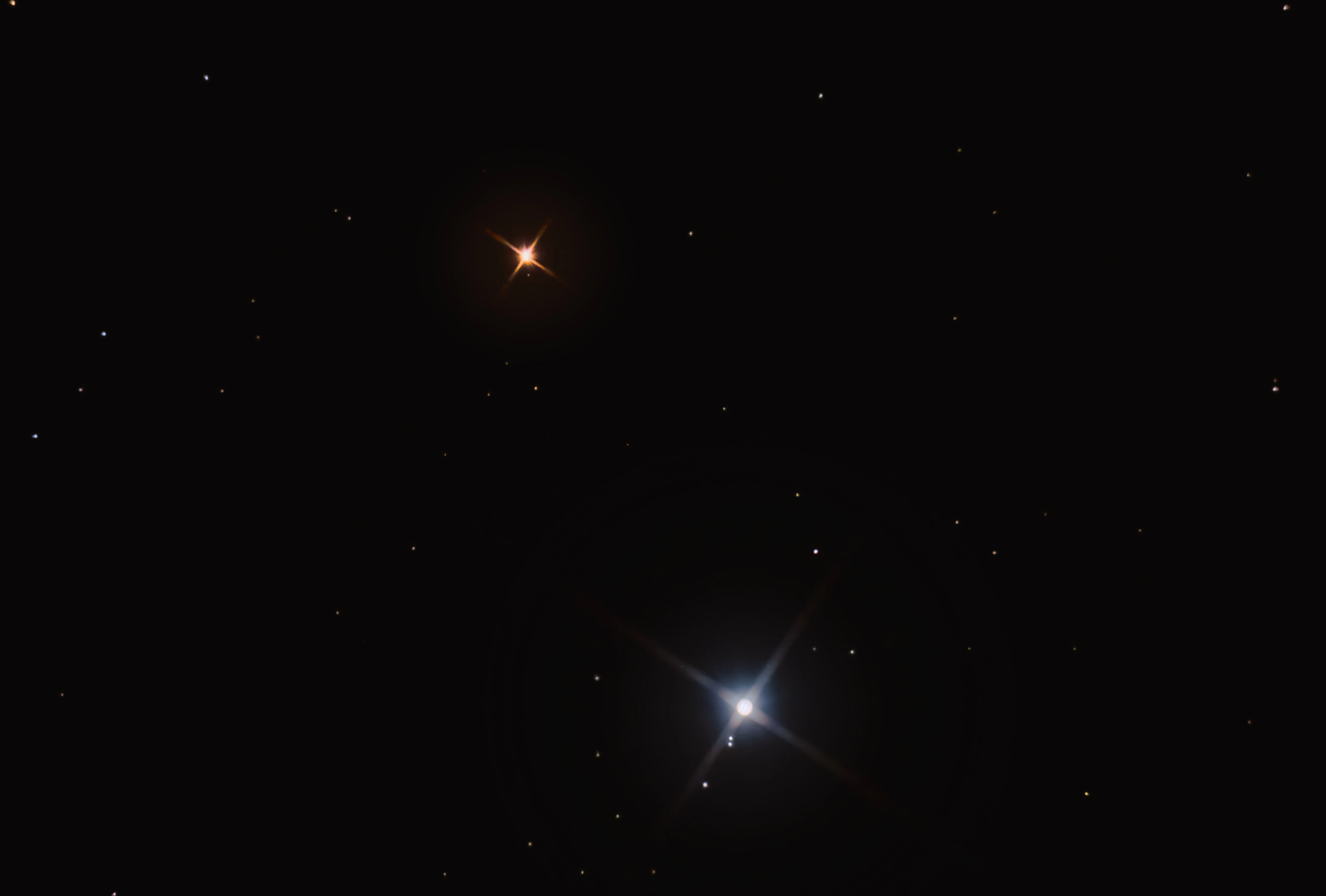
Telescope photograph of Mars and Jupiter close together on a black star field: Mars is a small orange point near the top, Jupiter a brighter blue-white point lower down with tiny dots of its moons beside it, both with four-pointed diffraction spikes.
Celestial event

Mars is closing on Jupiter: watch the gap shrink to 1.2° by November 16

Two bright planets are up before dawn right now, and the gap between them shrinks every morning for the next month. This morning Mars and Jupiter are 12.7° apart, a bit more than a fist held at arm’s length. By the morning of November 16 that gap is down to 1.19°, a little over two full-Moon widths. Closest approach is around 02:00 UT on the 16th, which is 04:00 in Cyprus, with both planets riding high in the south-east. You don’t need any equipment for this one. Pick a morning each week, note how far apart the two points are, and watch Mars catch up. Binoculars add Jupiter’s moons. Around the 16th, a small telescope at its lowest power can just about hold both planets in a single field. ...

October 14, 2026 · 9 min · Andreas Ioannou