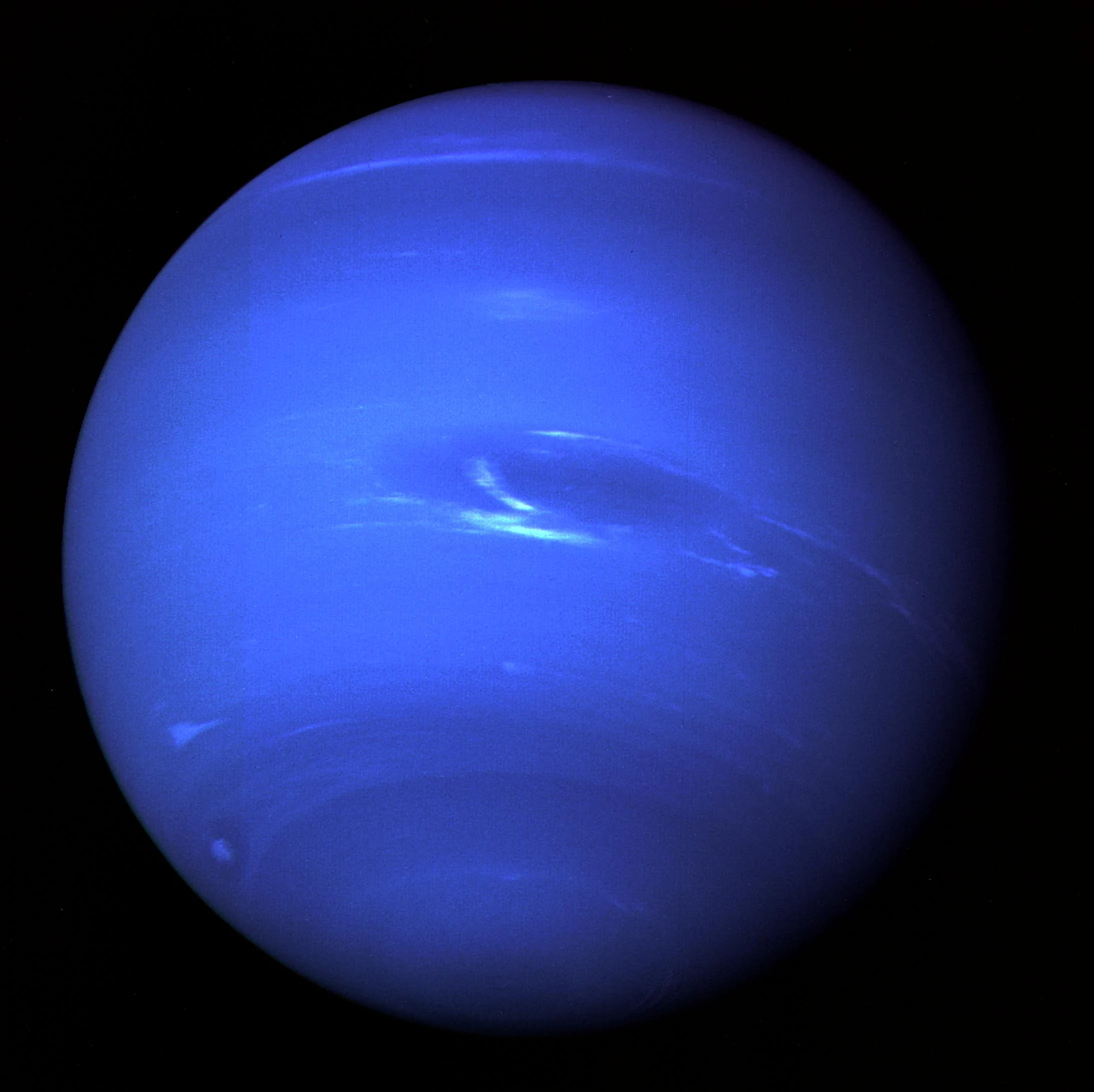
Neptune imaged by NASA's Voyager 2 in 1989 — a deep-blue disc marked by the dark oval of the Great Dark Spot and streaks of white, high-altitude methane-ice cloud.
Celestial event

Neptune at opposition, September 26: how to find the most distant planet

Neptune reaches opposition in the small hours of September 26 (around 00–01 UT), which makes this the best week of the year to track down the solar system’s most distant planet. Opposition just means the planet sits opposite the Sun in our sky: it rises at sunset, climbs highest near local midnight, and stays up until dawn. It’s also as close and as bright as Neptune gets in 2026 — magnitude 7.8, about 28.9 AU away. That brightness still isn’t enough for your eyes alone. Magnitude 7.8 is roughly three times fainter than the dimmest star you can catch with the naked eye under a good sky, so this is a binocular-and-telescope target. What you’re hunting is a single blue-grey point among the faint stars of Pisces, and the whole game is telling it apart from them. ...
September 25, 2026 · 6 min · Andreas Ioannou
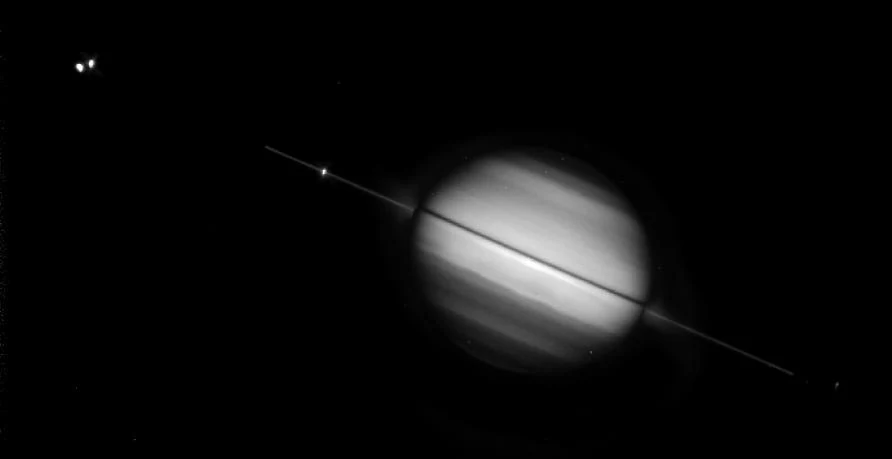
Saturn imaged by the Hubble Space Telescope with its rings turned nearly edge-on, appearing as a thin bright line across the planet's disc, with two of its moons as bright points at upper left.
Gear

How much telescope do you need to see Saturn's rings?

Saturn reaches opposition on October 4, 2026, which is the best night of the year to point anything at it. Around that date the planet sits opposite the Sun in our sky: closest to Earth for the year, brightest for the year at about magnitude 0.3 (apparent), and above the horizon all night. The question I get every autumn is how much telescope you need to actually see the rings. The answer depends entirely on what you mean by “see.” ...

September 21, 2026 · 7 min · Andreas Ioannou