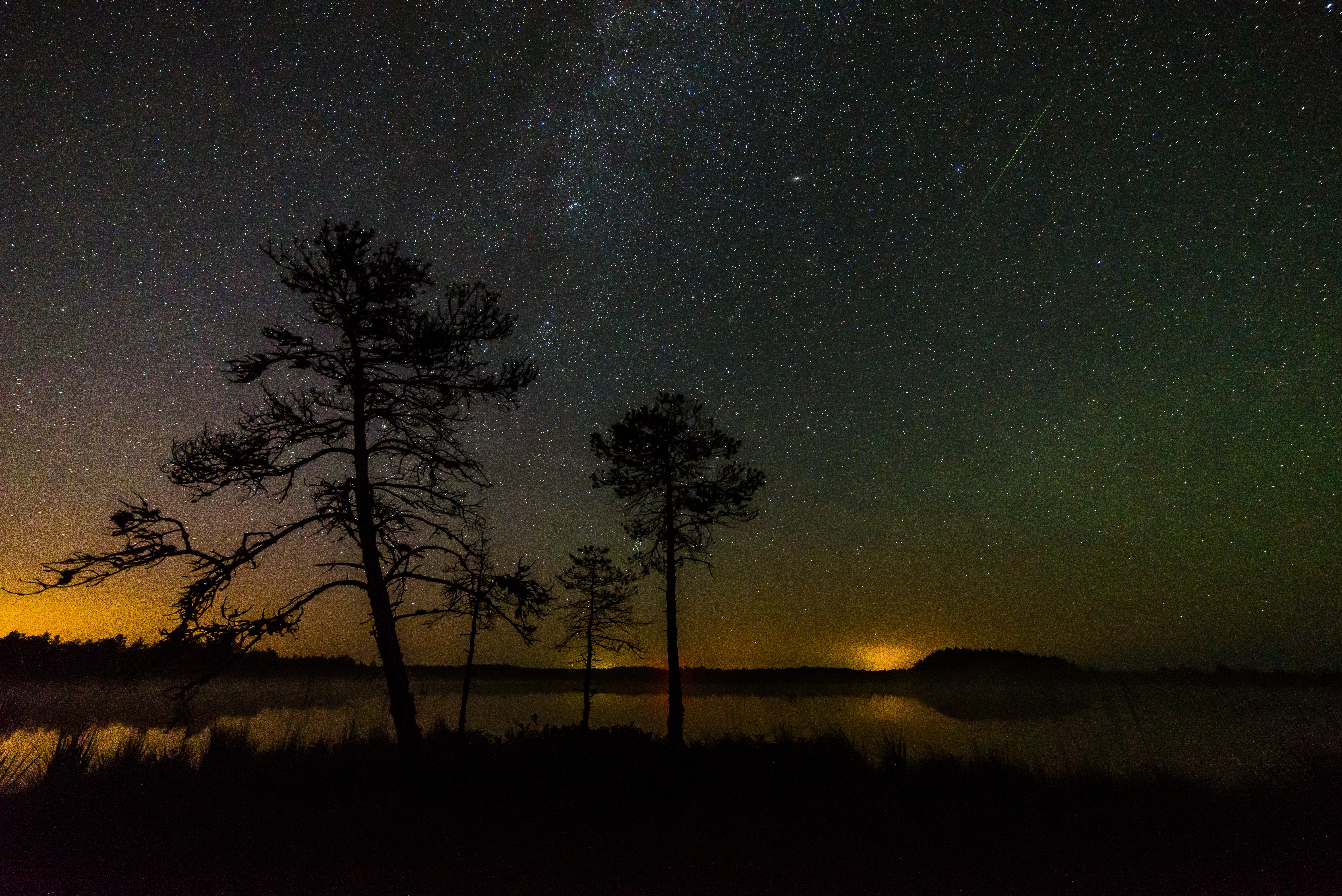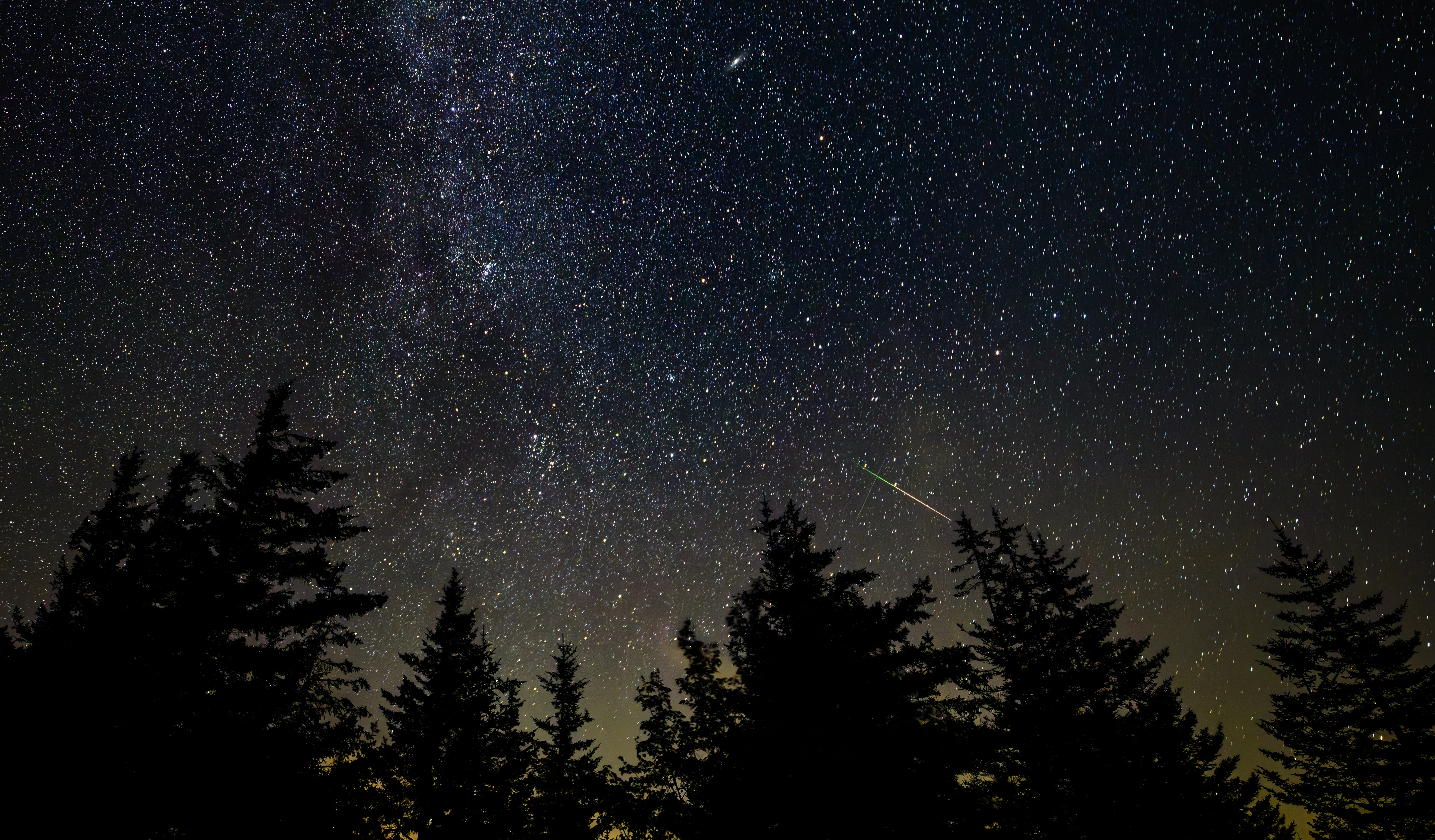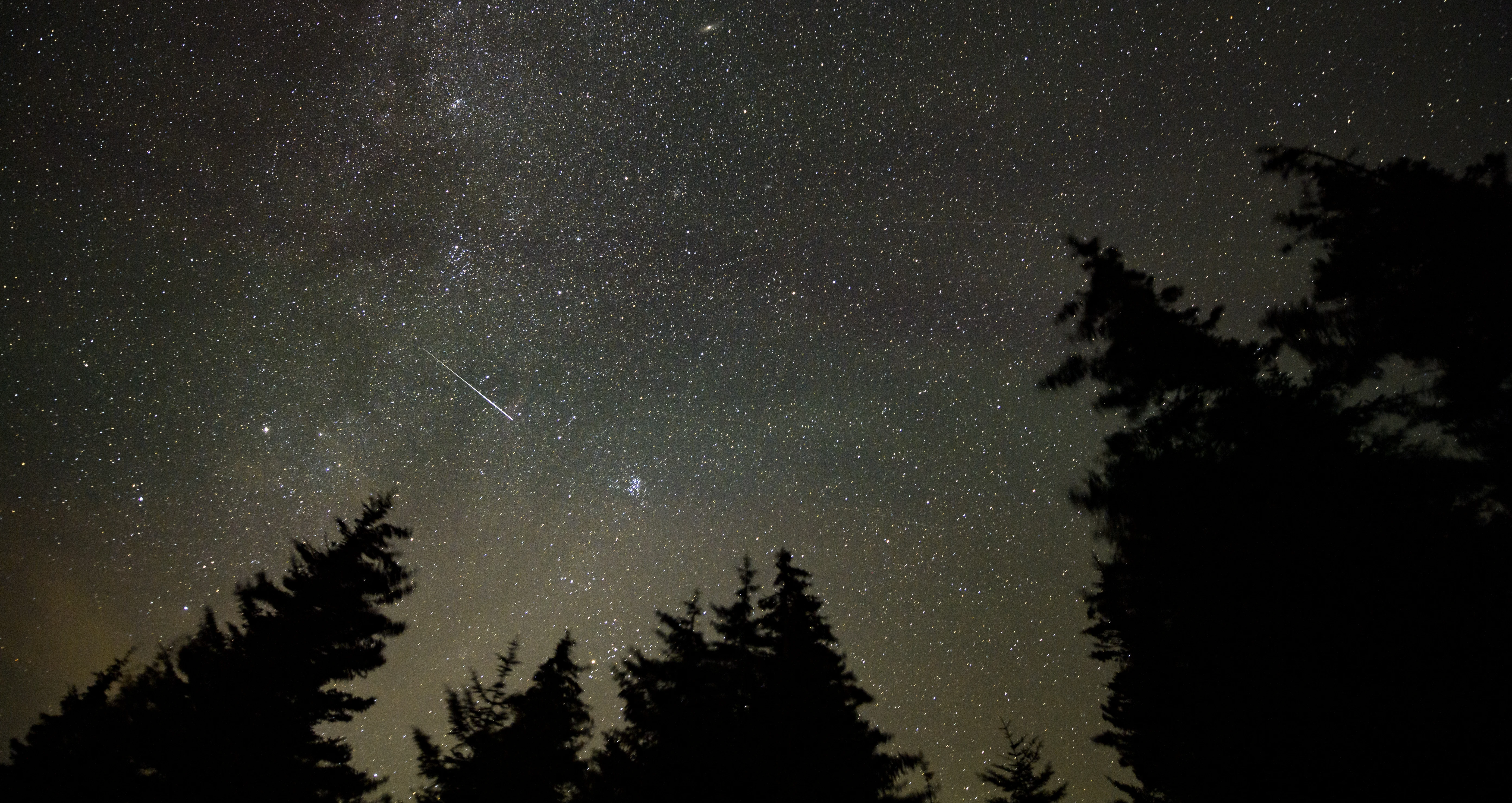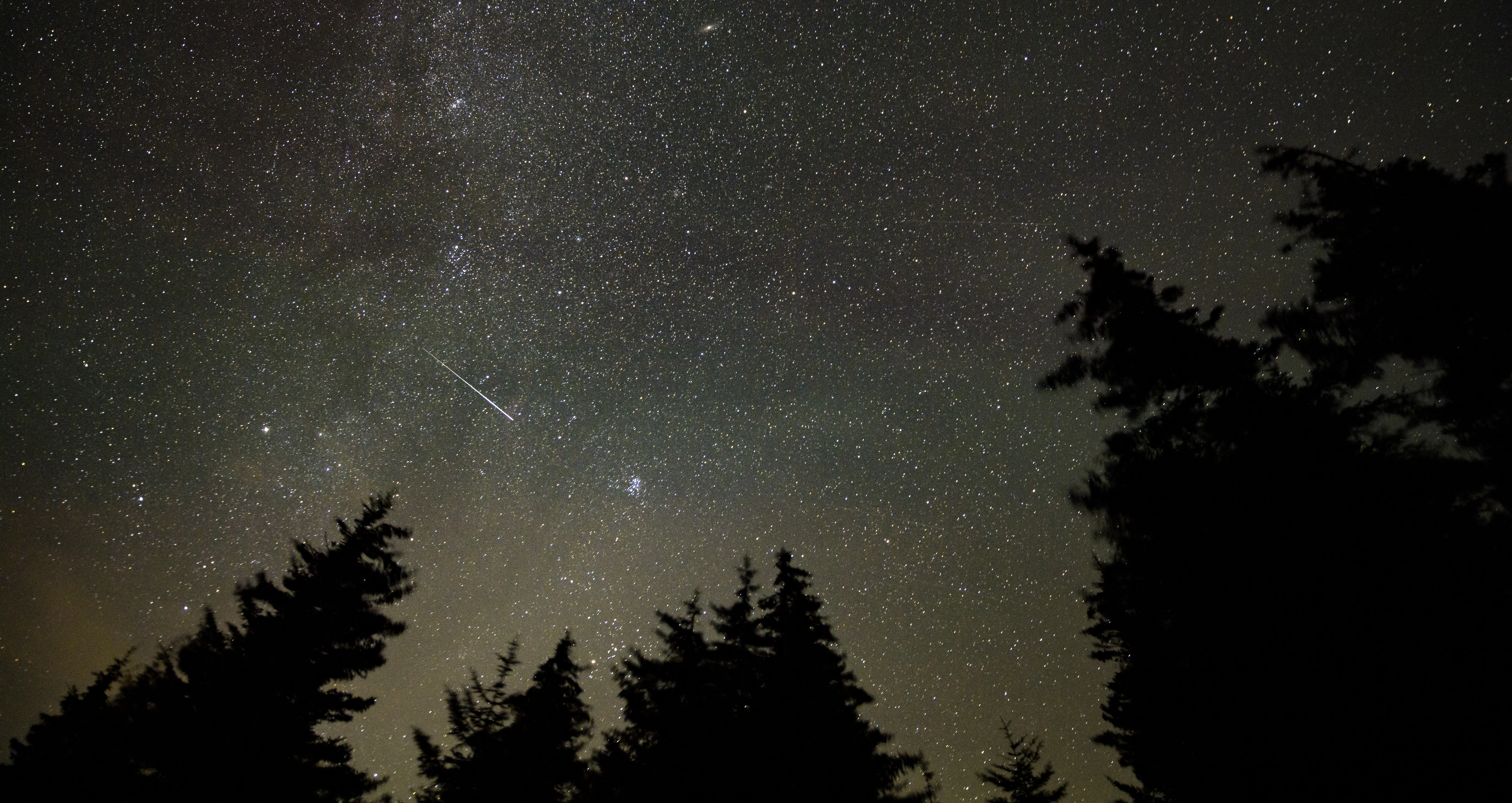
A single Perseid meteor streaks across a star-filled sky in a 30-second exposure above the dark treeline of Spruce Knob, West Virginia
Celestial event

The 2026 Perseids under a new moon: what the peak night gave me from Troodos

The 2026 Perseids peaked overnight on August 12–13 under a new moon, and I drove up to Troodos to catch the plateau’s rise before the sky brightened. The number first: in the darkest hour, with the radiant past 60° altitude, I counted just over 40 meteors. That’s not a storm, but it’s the most I’ve logged from a Perseid night since 2021, and the sky earned every one — no Moon, no haze, and a horizon dark enough to watch the Perseus radiant climb out of the northeast on its own. ...
August 13, 2026 · 6 min · Andreas Ioannou
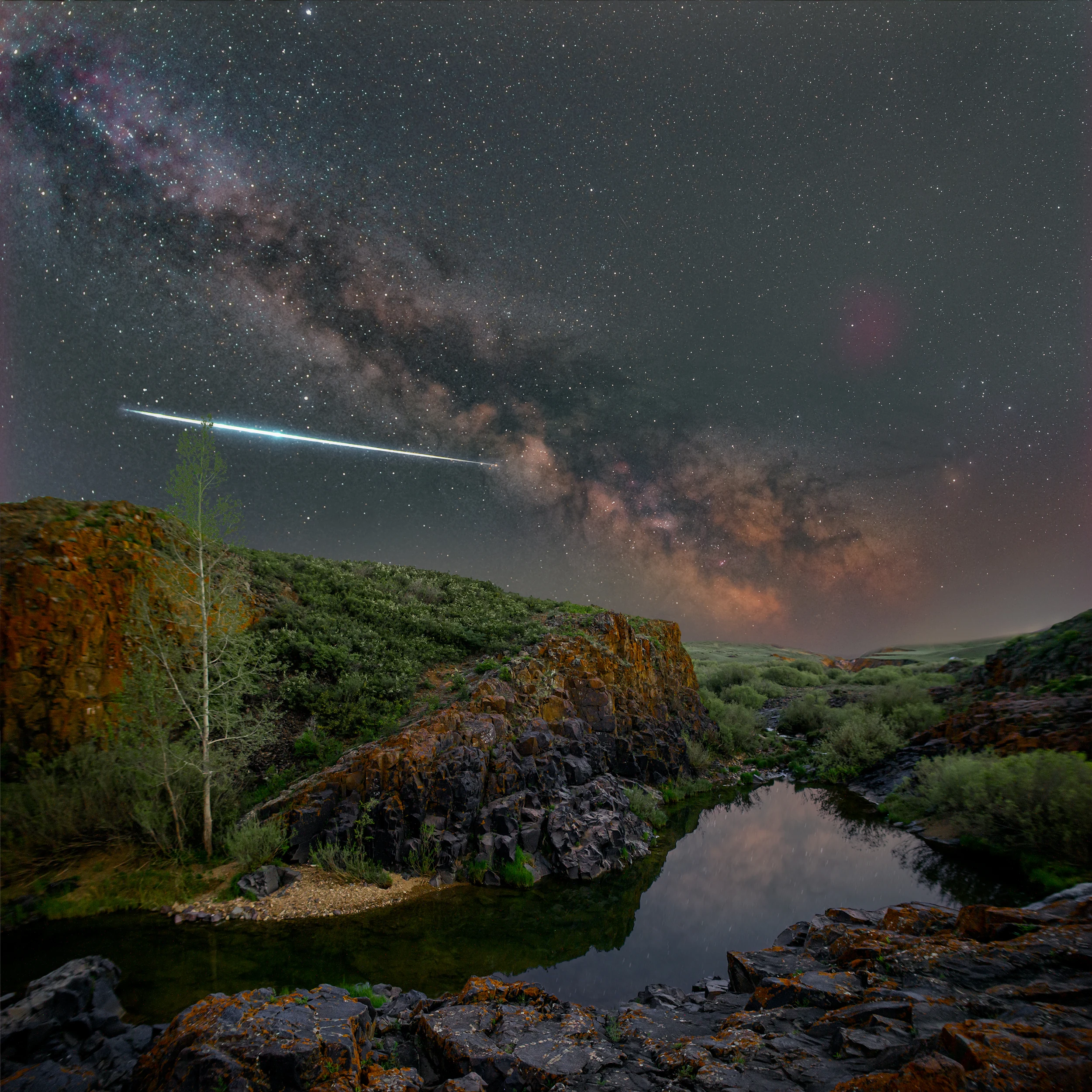
A bright bolide with a blue-green trail streaks across the Milky Way over a rocky canyon and a still reflecting pool.
Gear

You don't need a star tracker to shoot the Perseids: the fixed-tripod setup

The single most useful thing I can tell you before the Perseids peak this week: leave the star tracker at home. For meteors you want the opposite of what a tracker gives you: a wide, fixed field of sky and a long run of short exposures, waiting for something to fall into frame. A camera, a fast wide lens, a sturdy tripod, and a cheap intervalometer will catch Perseids all night. That’s the whole kit. ...

August 11, 2026 · 8 min · Andreas Ioannou
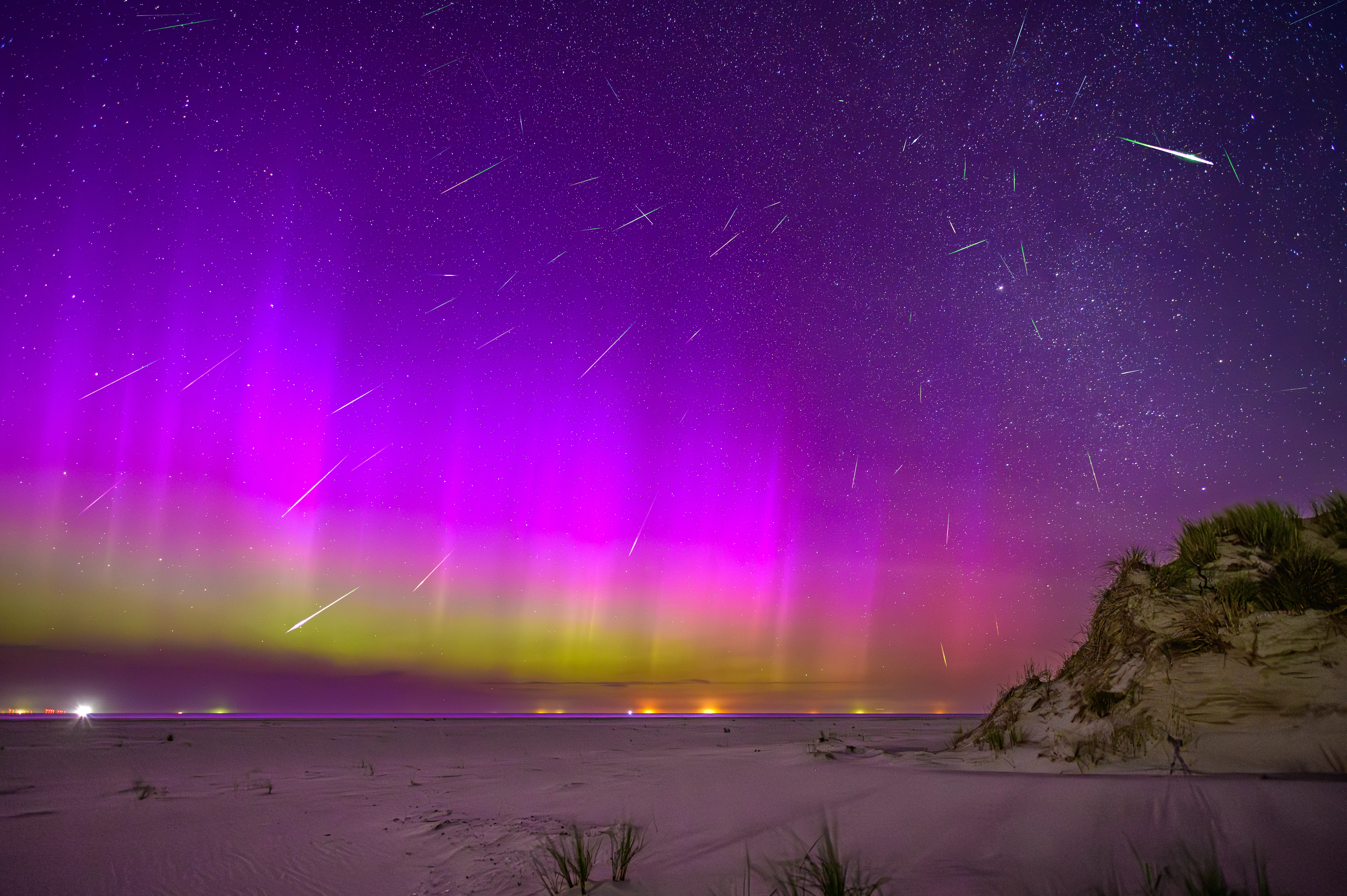
A composite of dozens of Perseid meteors radiating across the night sky over the beach at Norderney, Germany, with green aurora glowing along the horizon
AI × astronomy

How machine learning counts meteors: the neural nets watching the Perseids

In three nights the Perseids peak under a new moon, the darkest Perseid maximum in five years. I’ll be up at Troodos with a reclining chair and a tally sheet, counting by eye the way people have counted meteors for a century. Overhead, a network of more than 1,300 cameras will be counting too, and solving an orbit for every meteor bright enough to trigger two of them at once. What made that automation possible is a piece of software: a neural network that learned to tell a meteor from an aeroplane. ...

August 9, 2026 · 7 min · Andreas Ioannou
A single Perseid meteor crossing the Milky Way with the Andromeda galaxy overhead, above a treeline lit by light pollution on the horizon, at Luhasoo bog in Estonia
Beginner stargazing

Your first meteor shower: how to watch the 2026 Perseids with no gear

If you’ve never sat out on purpose to watch a meteor shower, the night of August 12 into the morning of August 13 is the one to start with. The Perseids peak then, and this year the Moon is new, so there’s no moonlight to drown the fainter streaks. It’s the darkest Perseid peak since 2021. You don’t need a telescope, binoculars, an app, or any skill you don’t already have. You need somewhere reasonably dark, something to lie back on, and about an hour of patience. Here’s exactly what to do with it. ...

August 3, 2026 · 8 min · Andreas Ioannou
A single meteor streaks across a star-filled night sky above the dark treeline of Spruce Knob, West Virginia, during the annual Perseid meteor shower
Celestial event

Perseids 2026: a moonless peak on August 12–13, the best in five years

The Perseids peak overnight on August 12–13, and this year the Moon stays out of the way entirely. It turns new on August 12 at 17:37 UT, so the peak night is as dark as any night gets. That combination, the richest summer shower landing on a moonless sky, is what observers wait years for, and it hasn’t happened since 2021. If you clear a single night for meteors in 2026, make it this one. Here’s when to be out, where to point your eyes, and why the eclipse dominating everyone’s calendar that same day is, for those of us in the eastern Mediterranean, the less interesting half of August 12. ...

July 29, 2026 · 7 min · Andreas Ioannou
A single meteor streaks over the dark forested ridgelines of Spruce Knob, West Virginia, against a star-filled night sky
Celestial event

The Delta Aquariids peak July 30, but a full moon will drown them this year

Two meteor showers reach their peak on the night of July 30: the Southern Delta Aquariids and the Alpha Capricornids. In a good year that’s a fine reason to drive up to Troodos and lie back for a couple of hours. This is not a good year. The Buck Moon turns full on July 29 at 14:36 UT, and two nights later it’s still 96% lit and up from dusk to dawn, parked in the same corner of the southern sky the meteors come from. The plan, then: don’t waste a special trip on July 30. Learn what these two showers are, catch a few of the brighter ones in the darker nights beforehand, and save your effort for August 12, when the Moon disappears entirely. ...

July 19, 2026 · 7 min · Andreas Ioannou
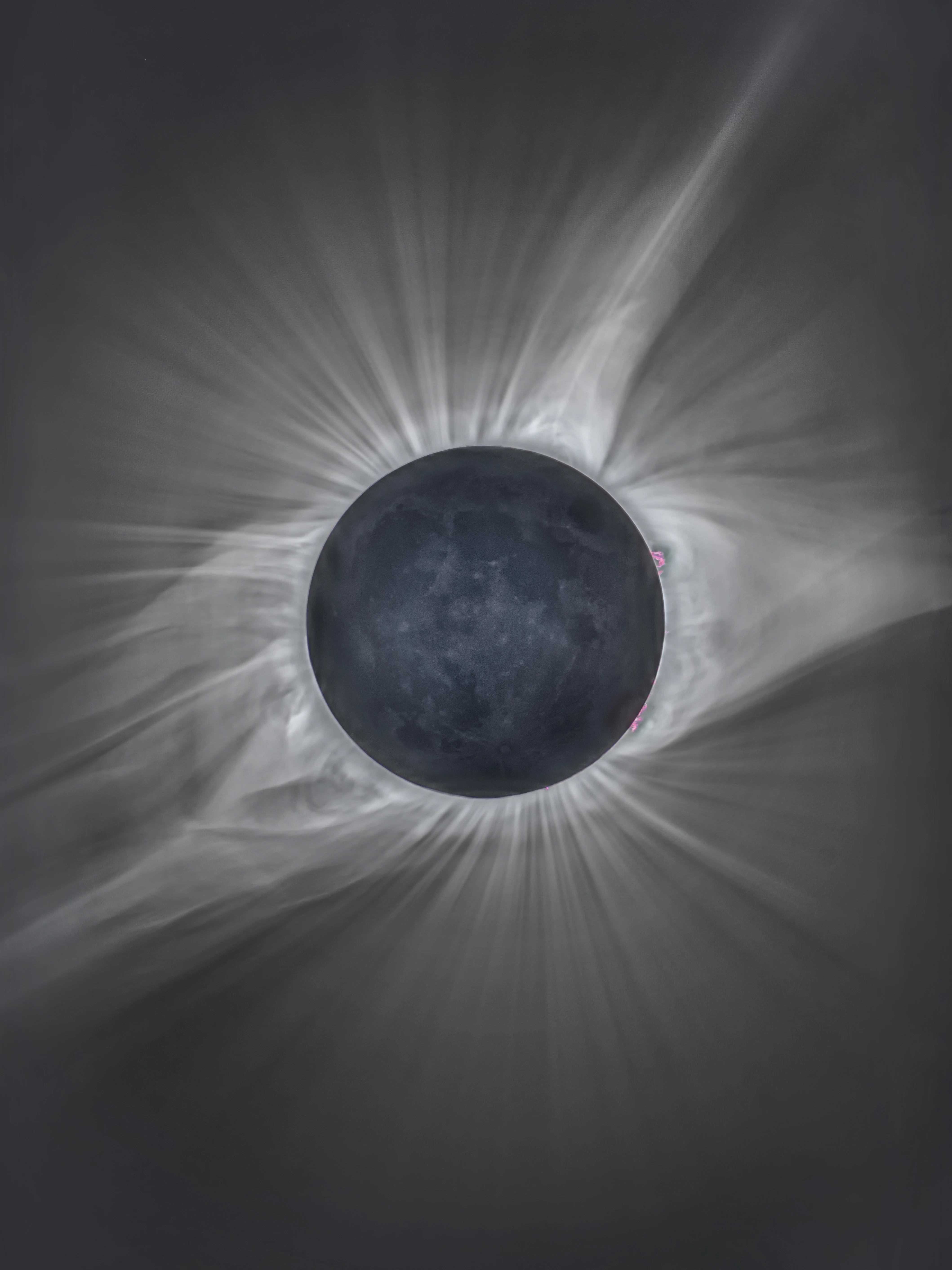
Total solar eclipse showing the Sun's corona radiating outward from behind the Moon's dark silhouette
Celestial event

Europe's first total solar eclipse in 27 years arrives on August 12 — at sunset

On August 12, 2026, at 18:28 UT, the Moon’s shadow will touch down on the coast of Galicia in northwestern Spain. For about 1 minute 50 seconds in Oviedo — less in Bilbao, more in León — the Sun will disappear behind the Moon while sitting roughly 10° above the western horizon. It will be the first total solar eclipse visible from mainland Europe since August 11, 1999. Totality happens at sunset, during the Perseid meteor shower peak, under a new moon. For anyone in the path, the sequence is: watch the Sun vanish near the horizon, turn east, and count Perseids across a moonless sky all night. ...

June 13, 2026 · 7 min · Andreas Ioannou