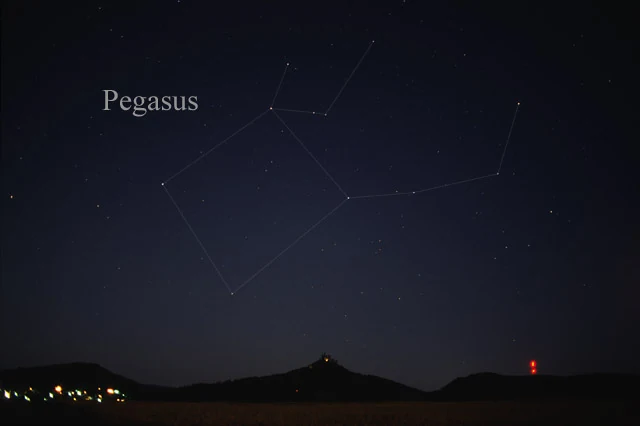
The constellation Pegasus over a dark horizon at night, its four Great Square stars and the horse's neck joined by faint drawn lines and labelled 'Pegasus', with a hilltop silhouette and distant town lights below
Beginner stargazing

How to find the Great Square of Pegasus, the autumn sky's biggest signpost

Go outside after dark this week and look east. There’s a big, slightly lopsided square of four stars climbing over the rooftops, and you need nothing to find it but your eyes. That’s the Great Square of Pegasus, and for the next two months it’s the easiest landmark in the sky. Learn it once and it becomes your key to the whole autumn sky: it points the way to the Andromeda galaxy, it doubles as a ruler and a dark-sky meter, and it marks the season turning over. ...
September 13, 2026 · 6 min · Andreas Ioannou
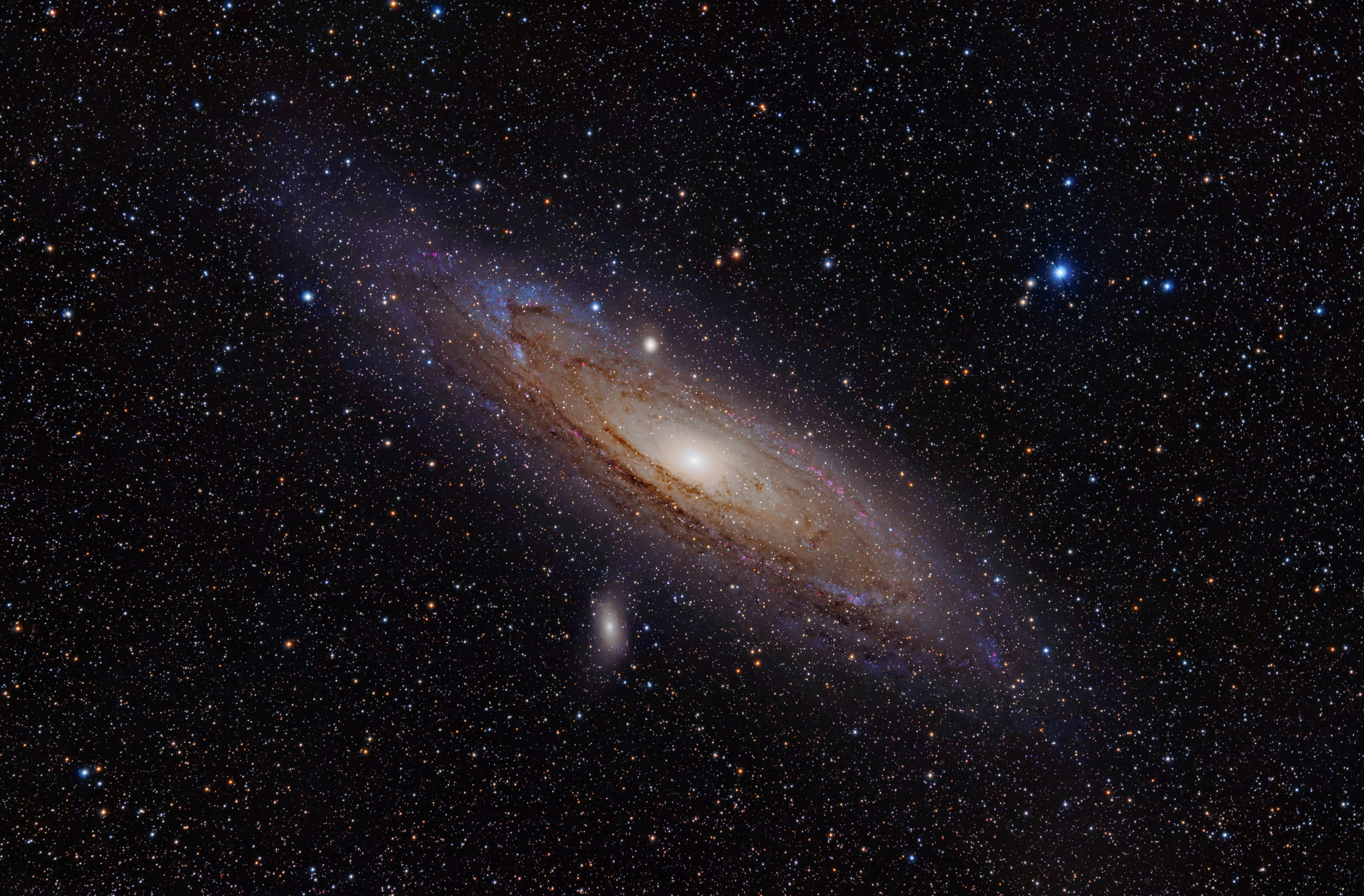
The Andromeda Galaxy (M31): a bright oval core wrapped in tilted spiral arms, with the small companion galaxies M32 and M110 nearby, in a hydrogen-alpha filtered long exposure.
Beginner stargazing

How to find the Andromeda Galaxy with your naked eye

The most distant thing you can see without any equipment is a galaxy 2.5 million light-years away, and autumn is the season to find it. The Andromeda Galaxy (M31) climbs into the evening sky through September and October, and from a reasonably dark spot it looks like a small, elongated grey smudge in the constellation Andromeda. No telescope, no binoculars, no app subscription. Just your eyes, a little patience, and knowing where to point them. ...

August 17, 2026 · 7 min · Andreas Ioannou
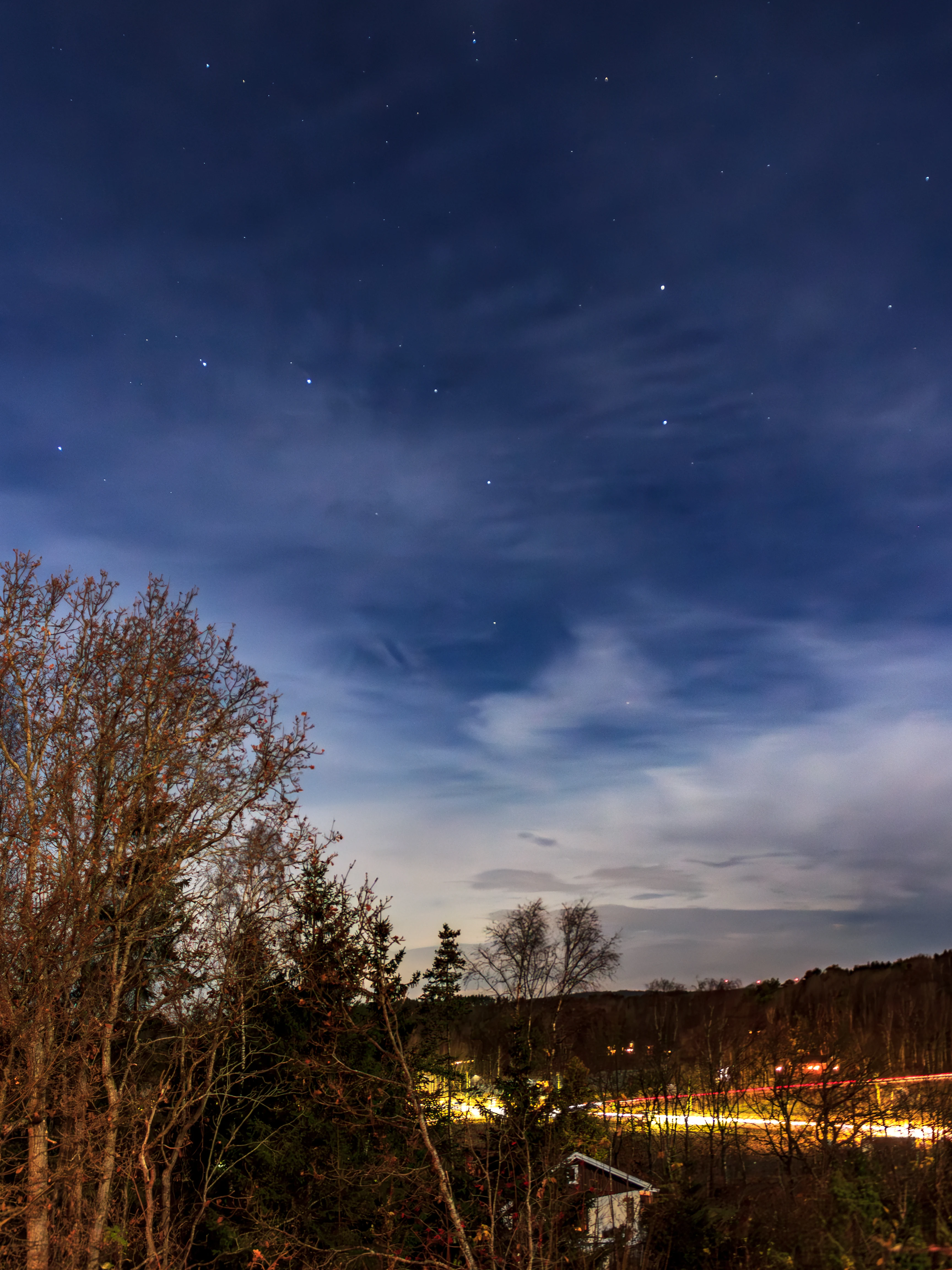
The Big Dipper asterism above trees at night, with thin clouds, over Brastad, Sweden
Beginner stargazing

Five star-hops from the Big Dipper: a beginner's map to the May sky

You don’t need an app tonight. You need one pattern. The Big Dipper sits almost directly overhead on May evenings from mid-northern latitudes, and its seven stars — all between magnitude +1.8 and +3.3, easy to spot even under suburban light pollution — form the single best starting point for learning the rest of the sky. Five hops, no telescope, about ten minutes. What star-hopping is Star-hopping is the oldest navigation trick in observational astronomy: use a pattern you already recognise to find something you don’t. Point your eyes at a known bright star, move a known angular distance in a known direction, and land on the next target. ...

May 14, 2026 · 6 min · Andreas Ioannou